

7 Benefits of Coconut Oil for Dogs and the Drawbacks
If you’ve heard dog owners rave about coconut oil for itchy skin and dull coats, you might wonder whether it actually works or if it’s just another trend. Some effects are well documented, while bigger claims rely on limited sources. Coconut oil contains lauric acid and medium-chain fatty acids that have real effects on skin, coat, and digestion in dogs, but it is calorie-dense enough to cause problems for certain dogs.
Some benefits are well documented. Others come from a small number of sources and need more study before anyone calls them settled science.
Key Takeaways
- Coconut oil is used by dog owners for skin, coat, digestion, and oral health, applied topically or fed orally in small amounts.
- Some sources suggest coconut oil can help with itchy skin, but results vary by dog and it is not a cure-all.
- The application method matters: topical and oral use carry different safety considerations.
- Dogs prone to weight gain, or dogs with pancreatitis or other fat-sensitive conditions, should see a vet before starting.
- Choosing virgin over refined coconut oil matters for both effectiveness and what your dog is exposed to.
Explore More
A clear guide to different coconut oil types and which are best for topical and dietary uses.
Pros And Cons Of Coconut Oil For Dogs at a Glance
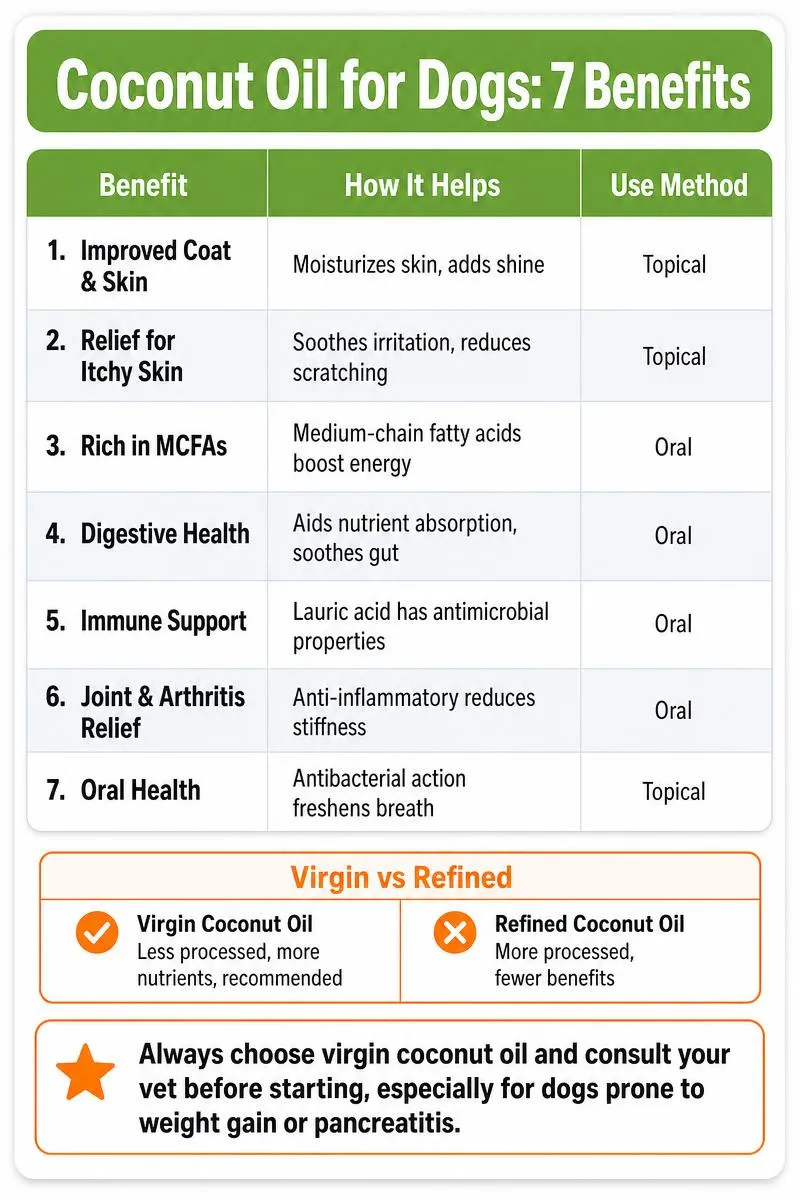
| Benefit | How It Helps | Use Method |
|---|---|---|
| Improved Coat & Skin | Moisturizes skin, adds shine | Topical |
| Relief for Itchy Skin | Soothes irritation, reduces scratching | Topical |
| Rich in MCFAs | Medium-chain fatty acids boost energy | Oral |
| Digestive Health | Aids nutrient absorption, soothes gut | Oral |
| Immune Support | Lauric acid has antimicrobial properties | Oral |
| Joint & Arthritis Relief | Anti-inflammatory reduces stiffness | Oral |
| Oral Health | Antibacterial action freshens breath | Topical |
7 Benefits of Coconut Oil for Dogs
Here are seven benefits coconut oil may offer your dog, from skin and coat improvements to oral health.
1. Improved Coat and Skin Health
Coconut oil contains lauric acid, a medium-chain fatty acid that penetrates hair shafts and skin layers more effectively than longer-chain fats. For dogs with dry, flaky skin or a dull coat, lauric acid can moisturize from the outside in when applied topically.
Owners who use coconut oil regularly on dry-coated breeds often report softer fur within a short period. Dogs with naturally oily coats may not see the same benefit, since their skin already produces enough sebum.
2. Relief for Itchy Skin
Topical coconut oil may reduce itching in some dogs by moisturizing dry, irritated skin and forming a barrier against environmental irritants. The lauric acid in coconut oil also has documented antimicrobial properties, which can help when itching stems from minor bacterial or fungal skin issues.
Does coconut oil stop itching completely? It depends on the cause. Allergies, fleas, and underlying infections need targeted treatment. Coconut oil can soothe symptoms, but it will not resolve the root cause of allergy-driven itching.
3. Rich in Medium-Chain Fatty Acids
Coconut oil is predominantly saturated fat, with a large portion coming from medium-chain fatty acids like lauric acid and capric acid. Unlike long-chain fatty acids, medium-chain fatty acids are metabolized more directly by the liver, which is why some sources suggest they provide quicker energy.
The tradeoff: coconut oil is calorie-dense. A small amount goes a long way, and overweight dogs do not need extra fat in their diet. If your dog is already at a healthy weight and gets adequate exercise, the fat profile is less of a concern.
4. Supports Digestive Health
Some dog owners feed small amounts of coconut oil orally to support digestion. The medium-chain fatty acids in coconut oil are absorbed differently than long-chain fats, which may make them easier for sensitive stomachs to tolerate.
Dogs with occasional loose stools or mild digestive upset are the ones owners most commonly report improvement in. Dogs with chronic digestive conditions should not rely on coconut oil as a treatment without veterinary guidance.
5. May Support the Immune System
Some sources suggest that lauric acid in coconut oil supports immune function in dogs. Lauric acid has documented antimicrobial and antiviral properties in laboratory settings, which is where the immune-supporting claims originate.
The evidence in living dogs specifically is limited. The antimicrobial activity is real, but how much that translates to meaningful immune support in a healthy dog eating a balanced diet is not well established.
6. Joint Health and Arthritis Relief
Senior dogs with stiffness and reduced mobility are sometimes given coconut oil orally by their owners. The rationale is that medium-chain fatty acids may help reduce joint inflammation, which is a factor in joint discomfort for aging dogs.
The anti-inflammatory connection is plausible but not well studied in dogs specifically. Owners of senior dogs sometimes report less stiffness after consistent use, but those reports are anecdotal and should not replace veterinary joint care.
7. Oral Health Benefits
Coconut oil is sometimes used for dog oral health through a practice similar to oil pulling. The lauric acid in coconut oil has antimicrobial properties that may reduce oral bacteria responsible for plaque buildup and gum inflammation.
Applying a small amount to your dog’s teeth and gums, or letting your dog chew a coconut-oil-coated toy, are the most common approaches. Dog owners commonly use coconut oil on teeth and gums, and the FAQ below addresses common questions about dosing and safety for oral use.
How to Apply Coconut Oil to Your Dog’s Skin
Topical application is straightforward, but a few details change how well it works and how safe it is for your dog.
Warm a small amount of virgin coconut oil between your palms until it softens from solid to liquid. The oil melts at skin temperature, so body heat is usually enough. Massage the softened oil directly into your dog’s coat and down to the skin, focusing on dry or flaky areas.
Avoid applying coconut oil near your dog’s eyes, inside the ears, or on open wounds. The oil can irritate sensitive eye tissue, and ear canals trap moisture in ways that may worsen existing ear problems.
For most dogs, a thin layer applied a couple times per week is enough. Dogs with severely dry skin may benefit from more frequent application, but too much oil leaves the coat greasy and can attract dirt.
How to Choose and Use Coconut Oil for Dogs Safely
The type of coconut oil you buy and how much you give your dog both affect safety and results.
1. Virgin vs. Refined Coconut Oil
Virgin coconut oil is pressed from fresh coconut meat without chemical processing, and it retains lauric acid and other medium-chain fatty acids at their natural levels. Refined coconut oil is processed to remove the coconut taste and smell, which also strips some of those compounds.
For dogs, virgin coconut oil is the better choice. The refining process can involve bleaching and deodorizing, and while the fat content remains similar, virgin oil keeps more of the lauric acid intact. Always choose unrefined, virgin coconut oil for topical or oral use with your dog.
2. Oral Dosage Guidance
Start with a very small amount and increase gradually over time while monitoring stool consistency and weight. Small dogs should begin with less than larger dogs. Increase the amount gradually over time only if your dog tolerates it well.
Daily use is fine for most healthy dogs, but watch for loose stools or weight gain as signals to cut back. If either appears, reduce the amount and consult your vet before continuing.
3. Dogs Who Should Avoid Coconut Oil
Dogs with pancreatitis, dogs prone to weight gain, and dogs with fat-sensitive digestive conditions should avoid coconut oil or use it only under veterinary supervision. Coconut oil is high in saturated fat, which can trigger flare-ups in dogs with pancreatic issues.
If your dog has a history of digestive upset, skin reactions to new foods, or any chronic health condition, talk to your vet before adding coconut oil to their routine.
You Might Also Like
Explains refined vs. unrefined processing – useful when choosing safe, food-grade oils for dogs.
FAQs About Coconut Oil for Dogs
Can I give my dog coconut oil every day?
Yes, for most healthy dogs. Start with a small amount and monitor stool consistency and weight. Daily use is common, but dogs with pancreatitis or weight problems should not receive coconut oil without veterinary approval.
Is coconut oil good for dogs with itchy skin?
It can help. Topical application moisturizes dry skin and the lauric acid has antimicrobial properties that may reduce minor irritation. If your dog’s itching is caused by allergies, fleas, or infection, coconut oil will soothe symptoms but will not address the underlying cause.
Does coconut oil help with fleas on dogs?
Some sources suggest coconut oil may repel fleas due to lauric acid content, but the evidence is limited and inconsistent. Coconut oil should not replace veterinarian-recommended flea prevention. If you want to try it alongside a flea prevention plan, a small topical application is unlikely to cause harm.
Can coconut oil improve my dog’s teeth and gums?
The lauric acid in coconut oil has antimicrobial properties that may reduce oral bacteria associated with plaque and gum inflammation. Applying a small amount to your dog’s teeth or letting your dog chew a coconut-oil-coated toy can help support oral hygiene. Coconut oil is not a replacement for brushing or professional dental cleanings.
Where should I not apply coconut oil on my dog?
Avoid the eye area, inside the ears, and on open wounds. Coconut oil can irritate eye tissue and trap moisture in the ear canal. On broken skin, the oil may slow healing or trap bacteria.
What kind of coconut oil is best for dogs?
Virgin, unrefined coconut oil is the best choice for dogs. It retains the highest levels of lauric acid and other medium-chain fatty acids, and it skips the bleaching and deodorizing that refined coconut oil undergoes. Look for cold-pressed virgin coconut oil with no added ingredients.
Is coconut oil safe for dogs to eat?
Yes, in small amounts for most healthy dogs. The main concerns are calorie density and saturated fat content. Dogs with pancreatitis, weight issues, or fat-sensitive digestion should avoid coconut oil unless a vet approves it.
Keep Reading
Benefits of coconut oil pulling
Summarizes antimicrobial properties and supporting studies that readers may want when evaluating health claims.
Final Thoughts
Coconut oil has real benefits for skin, coat, and digestion in dogs, driven by lauric acid and medium-chain fatty acids that do specific things in the body. The cautions are equally real: calorie density, saturated fat, and limited evidence for some of the bigger immune and joint claims.
Start small, watch how your dog responds, and talk to your vet if your dog has any health condition. The simplest first step is to buy virgin coconut oil and try a small topical application on a dry, flaky patch of skin. If your dog’s coat softens and the flaking improves, you have your answer.
External References
- Is Coconut Oil Good for Dogs? – Nowfresh
- Virgin coconut oil (VCO) is rich in medium-chain fatty acids … – Instagram
- The Use of Coconut Oil Pulling in the Prevention and … – Umk
- Successful Management of Canine Atopic Dermatitis in Dog – Researchgate
- The benefits of coconut oil | Plant-based dog food advice – Co
- article – The Glens Veterinary Hospital – Co