

Coconut Oil vs Fish Oil for Dogs: Which Is Better?
Two oils, one dog, and a lot of different advice. Coconut oil and fish oil both come up when dog owners look for something to help with dry skin, itching, or a daily supplement routine. They work differently, and they’re not interchangeable.
The choice comes down to the problem you’re trying to solve, how each oil is given, what the safety picture looks like, and how much to use. No single winner exists across every situation, and some dogs need a vet’s input before either one goes near their food bowl.
Key Takeaways
- Coconut oil is not toxic to dogs, but too much causes diarrhea and weight gain.
- Fish oil comes as dog-specific supplements with dosing directions; coconut oil is a kitchen product you measure yourself.
- Coconut oil can go right on itchy skin; fish oil is oral only.
- No universal winner exists: whether you need a topical treatment or a daily supplement decides.
- Safe amounts vary by dog size and health status; confirm with your vet before starting.
A focused look at the pros and cons of using coconut oil on dogs, including topical benefits and common cautions.
Quick Comparison: Coconut Oil Vs Fish Oil For Dogs
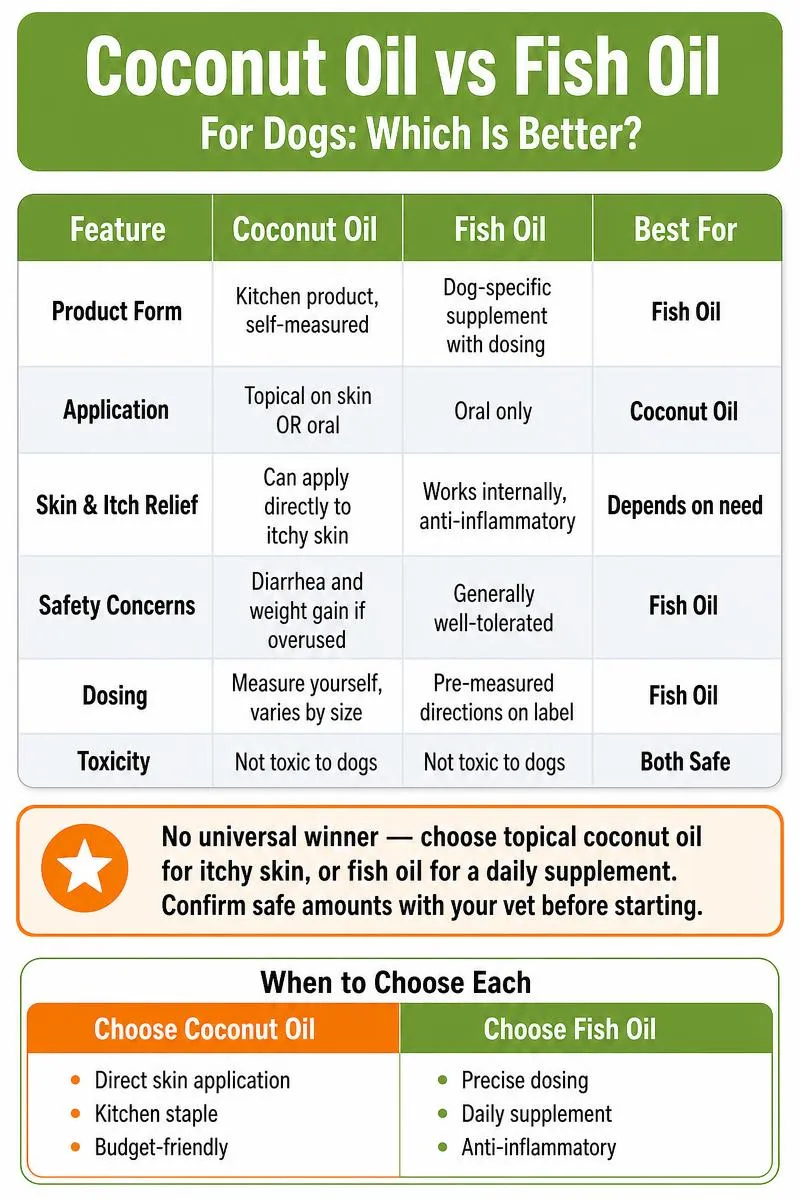
| Feature | Coconut Oil | Fish Oil | Best For |
|---|---|---|---|
| Product Form | Kitchen product, self-measured | Dog-specific supplement with dosing | Fish Oil |
| Application | Topical or oral | Oral only | Coconut Oil |
| Skin & Itch Relief | Apply directly to itchy skin | Internal, anti-inflammatory | Depends on need |
| Safety Concerns | Diarrhea & weight gain if overused | Generally well-tolerated | Fish Oil |
| Dosing | Measure yourself, varies by size | Pre-measured dosing on label | Fish Oil |
| Toxicity | Not toxic to dogs | Not toxic to dogs | Both Safe |
What Is Coconut Oil?
Coconut oil is pressed from coconut meat. Dog owners use it on skin and in food, sometimes for the same dog.
Best uses: Rubbing on dry, itchy spots, and giving small oral amounts if a vet agrees.
Key strengths: You can apply coconut oil directly to the skin, and it’s easy to find in any grocery store.
Key weaknesses: It’s easy to overdo. Coconut oil is high in saturated fat, mostly lauric acid, and safe oral amounts for dogs aren’t well established in standard veterinary dosing references.
What Is Fish Oil?
Fish oil is an oral supplement made from fish tissue, often sold as soft gels or liquid formulated specifically for dogs.
Best use: A daily addition to meals, typically for skin and coat support over time.
Key strengths: Fish oil contains omega-3 fatty acids, specifically EPA and DHA. Products made for dogs include weight-based dosing directions on the label.
Key weaknesses: Some veterinarians have raised caution questions around fish oil, including potential contamination with heavy metals and the effect of oxidation in products stored too long or at high temperatures.
Coconut Oil vs Fish Oil: Skin and Itch Relief
Some sources suggest coconut oil soothes itching when rubbed directly onto irritated skin. The lauric acid in coconut oil may provide some relief for dry, flaky patches. You can apply a thin layer to the affected spot as needed.
Fish oil works from the inside out. The EPA and DHA in fish oil may support skin health over weeks of daily use, but fish oil cannot be applied topically. If you need to treat a specific itchy spot right now, an oral supplement won’t act on that area directly.
A localized dry patch responds to something you can put on it. Generalized skin dryness may benefit from a daily oral supplement.
Winner: coconut oil, for direct application.
Keep Reading
Fractionated coconut oil vs coconut oil
Explains the differences between fractionated and regular coconut oil and which form is better for topical use on pets.
Coconut Oil vs Fish Oil: Safety and Side Effects
Coconut oil is not toxic to dogs. Too much – whether eaten or licked off the skin – can cause diarrhea, vomiting, and weight gain. The high saturated fat content stresses the digestive system when introduced too fast or in large amounts.
Fish oil also carries risks. Oxidized fish oil may do more harm than good, and some products have tested positive for heavy metal contamination. Dogs with clotting disorders or those taking anticoagulant medications need a vet’s clearance before starting fish oil, because EPA and DHA can affect blood clotting.
Dogs with pancreatitis, liver disease, or sensitive stomachs need a vet’s OK before either oil. Both products add fat to a dog’s intake, and that matters for dogs with conditions where fat intake is restricted.
Winner: neither is without risk; the dog’s health status decides.
Coconut Oil vs Fish Oil: Dosing and Daily Use
Fish oil products made for dogs print dosing directions on the label, usually based on the dog’s weight. That gives you a clear starting point and a way to adjust.
Coconut oil doesn’t come with dog-specific dosing. General guidance from some veterinarians suggests starting with a small amount and increasing gradually, but there’s no standard reference dose. Too much too fast causes loose stools, so any oral use requires careful observation.
Coconut oil can be given every day in theory, but the lack of established dosing makes daily oral use harder to manage safely. Fish oil, with labeled instructions and dog-specific formulations, is easier to dose consistently.
Winner: fish oil, since pet products include dosing directions.
Coconut Oil vs Fish Oil: Product Choice and Vet Guidance
When choosing a fish oil for dogs, look for a product that specifies EPA and DHA content on the label, is formulated for dogs, and comes from a manufacturer that tests for heavy metals. Your vet may recommend a specific brand or formulation based on your dog’s health history.
Coconut oil is a simpler purchase. Unrefined, cold-pressed coconut oil from the grocery store works for topical use. You don’t need a pet-specific product, but you do need to read the label and avoid added ingredients.
Winner: depends on preference for a dog-specific product or a simple oil.
Explore More
Guides readers through different types of coconut oil and which varieties are suitable for consumption-helpful when…
Which Should You Choose?
- Itchy spots to treat directly: Coconut oil. Rub a thin layer on the dry or irritated area.
- A daily supplement in meals: Fish oil. Choose a dog-specific product with dosing directions.
- Health issues or medication: Vet first, then a vet-recommended fish oil if appropriate.
- Constipation questions: Coconut oil, after a vet call. Some sources suggest small amounts may help, but confirm the approach and amount with your vet.
- A simple first try from home: Coconut oil. It’s already in many kitchens and can go on the skin immediately.
FAQs About Coconut Oil and Fish Oil
Is fish oil good for dogs?
Yes, for many dogs. Fish oil provides EPA and DHA, omega-3 fatty acids that may support skin, coat, and joint health. Dogs on blood-thinning medication or with clotting disorders need a vet’s OK first.
Is coconut oil toxic to dogs?
No, coconut oil is not toxic to dogs. Large amounts can cause digestive upset and weight gain due to the high saturated fat content.
How much coconut oil or fish oil should I give my dog?
Fish oil labels include weight-based dosing directions. Coconut oil has no standard dog dose, so start with a small amount and confirm with your vet before increasing.
Can I give my dog coconut oil every day?
You can, but daily oral use lacks clear dosing guidance. Watch for loose stools or weight gain, and check with your vet about an appropriate amount for your dog’s size.
Is coconut oil safe to put on my dog’s skin?
Yes, coconut oil is generally safe for topical use on dogs. Apply a thin layer to dry or itchy spots. Your dog may lick it off, and ingesting small amounts is not harmful.
Will coconut oil help my dog’s dry, itchy skin?
Some sources suggest it may. Rubbing coconut oil onto dry patches can provide a moisturizing barrier. If the itching persists or spreads, the underlying cause may need a vet’s evaluation.
What happens if I put too much coconut oil on my dog?
Excess coconut oil on the skin can leave a greasy coat and get licked off in large amounts, which may cause diarrhea. Use a thin layer and wipe off any excess if your dog tends to lick treated areas.
Are there risks to giving my dog fish oil?
Yes. Oxidized fish oil can be harmful, and some products have shown heavy metal contamination. Dogs on anticoagulant medication or with clotting disorders should not start fish oil without a vet’s approval.
What should I look for in a fish oil for dogs?
Look for a product formulated specifically for dogs, with EPA and DHA amounts listed on the label, from a manufacturer that tests for heavy metals. Your vet can recommend a specific product if you’re unsure.
Final Verdict
Coconut oil wins for topical relief: it goes right on the skin, it’s easy to find, and you don’t need a specialty product. Fish oil wins for daily supplementation: dog-specific formulations come with dosing directions and provide EPA and DHA.
If your dog is small, has a health condition, or takes medication, talk to your vet before starting either oil. The next step is a phone call to confirm an amount and make sure the choice fits your dog’s health picture.
External References
- Responses of dogs to dietary omega-3 fatty acids – Researchgate
- Expert Advice on Copious Amount of Coconut Oil Ingestion … – Justanswer
- Review of the toxic trace elements arsenic, cadmium, lead … – NIH
- What to look for when buying pet supplement fish oils? – Wellytails
- Original table of contents page – PMC – NIH – NIH