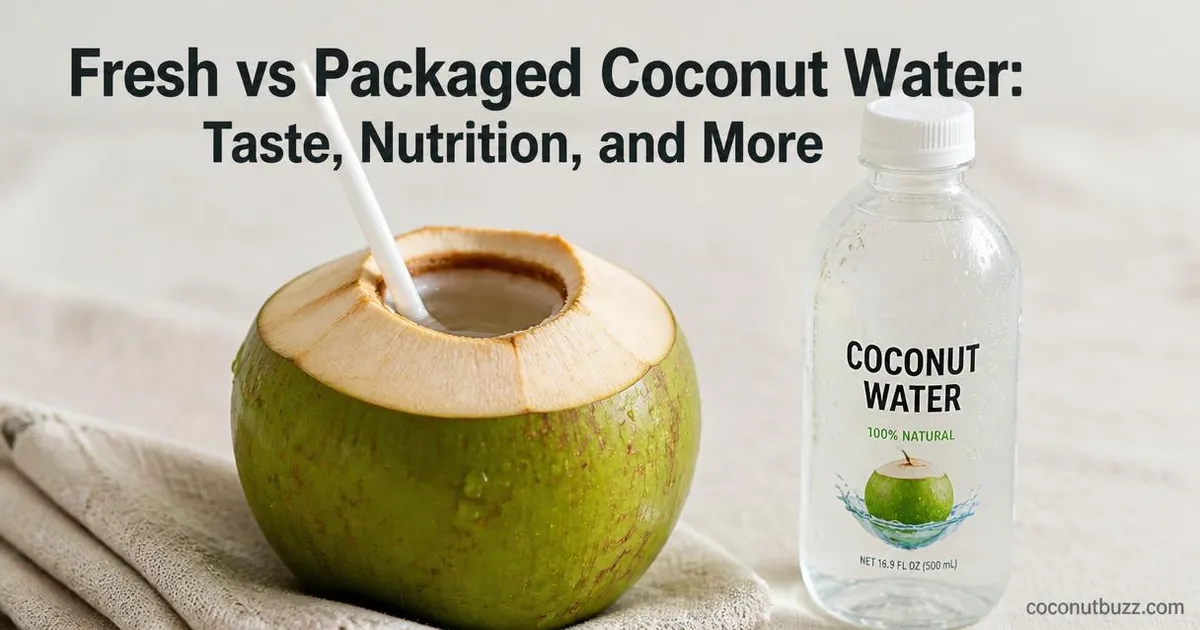
Fresh vs Packaged Coconut Water: Taste, Nutrition, and More
You’re standing in the grocery store with two options: a young green coconut in the produce aisle or a bottle of coconut water in the drink aisle. Both come from the same fruit, but they take very different paths before reaching your hand.
The differences between the two come down to taste, nutrition, processing, and storage. One isn’t automatically better than the other. The right pick depends on what you value most and how you plan to use it.
Key Takeaways
- Fresh coconut water tastes closest to the coconut itself but spoils within days of opening the coconut.
- Processing drives most of the differences between fresh and packaged, not the coconut variety.
- Pink coconut water signals minimal processing, not spoilage.
- Nutrition starts from the same source; the processing method determines what changes.
- Storage needs differ by brand: fresh needs refrigeration, and so do some packaged brands.
Explore More
An overview of coconut varieties and how different types affect coconut water flavor, sweetness, and nutrient profile.
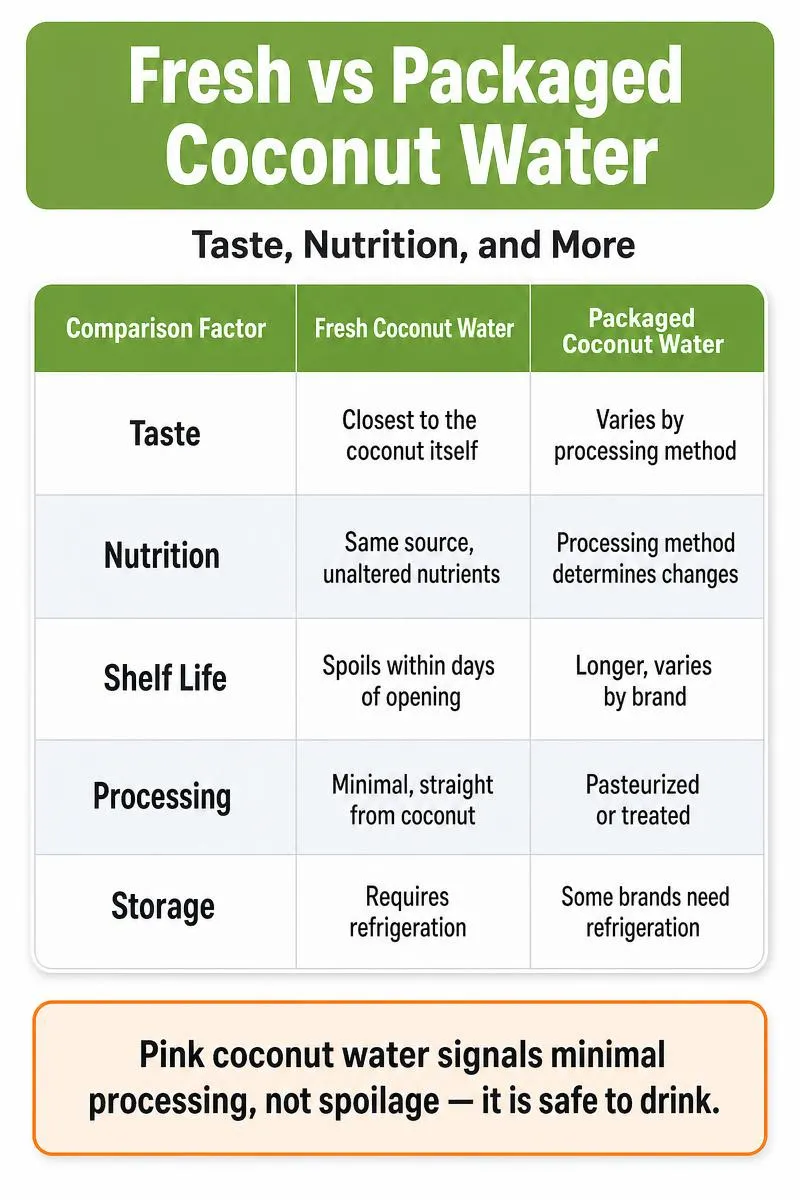
Fresh Vs Packaged Coconut Water Quick Comparison
| Comparison Factor | Fresh Coconut Water | Packaged Coconut Water |
|---|---|---|
| Taste | Closest to the coconut itself | Varies by processing method |
| Nutrition | Same source, unaltered nutrients | Processing method determines changes |
| Shelf Life | Spoils within days of opening | Longer; varies by brand |
| Processing | Minimal, straight from coconut | Pasteurized or treated |
| Storage | Requires refrigeration | Some brands need refrigeration |
What Is Fresh Coconut Water?
Fresh coconut water is the liquid poured straight from a young green coconut. Nothing gets added, and nothing gets removed. You crack the coconut and drink what’s inside.
The strength of fresh coconut water is purity. The flavor is clean, delicate, and exactly what the coconut produced. There are no additives, no preservatives, and no filtering steps between the coconut and your glass.
The weakness is shelf life. Fresh coconut water spoils within days, even refrigerated. Availability is also limited unless you live somewhere coconuts grow or your store carries whole young coconuts consistently. Once you crack the coconut, the clock starts ticking.
What Is Packaged Coconut Water?
Packaged coconut water is coconut water extracted from young coconuts, filtered, and sealed in bottles, cartons, or cans. The liquid goes through a processing step designed to kill bacteria and extend shelf life.
Processing ranges from heat pasteurization to cold pressure methods. Heat pasteurization uses high temperatures to sterilize the liquid. Cold pressure methods, like high pressure processing, use pressure instead of heat to achieve the same goal. The method a brand chooses affects how close the final product tastes to fresh coconut water.
The strengths of packaged coconut water are shelf life, availability, and consistency. You can find it in most grocery stores, and an unopened bottle lasts months. The weakness is that flavor drifts from fresh, and quality varies widely between brands depending on how the coconut water is processed and whether anything gets added.
Fresh Coconut Water vs Packaged Coconut Water: Taste
Fresh coconut water sets the flavor benchmark. The taste is lighter and more delicate than anything you’ll find in a bottle. There’s a subtle sweetness and a clean finish that comes from drinking the liquid exactly as the coconut produced it.
Heat pasteurization flattens the flavor of packaged coconut water. The high temperatures alter volatile compounds responsible for the fresh taste, leaving a cooked or muted profile. Cold-processed packaged brands stay closer to fresh because they skip the heat.
If you’ve ever tasted a packaged coconut water and thought it seemed “off” compared to what you remember from a real coconut, heat processing is usually why.
Winner: fresh. Nothing matches the taste of coconut water straight from the coconut.
A comparison of palms that helps explain growing conditions and regional differences that influence the taste and…
Fresh Coconut Water vs Packaged Coconut Water: Nutrition and Calories
Both fresh and packaged coconut water start from the same source, so the base calories and nutrients are the same before processing begins. The coconut doesn’t know whether it’s heading for a bottle or a cup.
The processing method determines whether anything changes between the coconut and the container. Heat processing can reduce levels of heat-sensitive compounds, while cold-processed brands skip that trade-off entirely.
Some packaged brands add sugar or use concentrate, which changes the calorie content. Check the ingredient list to know what you’re actually getting.
Winner: fresh, by a small margin. The processing method is what tips the scale, not the coconut water itself.
Fresh Coconut Water vs Packaged Coconut Water: Health Benefits
Hydration is the main shared benefit. The liquid contains electrolytes like potassium and sodium, which replenish fluids lost after exercise or in hot weather. Both forms deliver this benefit.
Some sources suggest coconut water benefits skin, possibly through its hydration and electrolyte content. The evidence isn’t strong enough to call it a proven effect. Drinking coconut water contributes to overall hydration, which supports skin health, but a direct link to improved skin remains limited.
Winner: fresh for minimal processing. Packaged wins for hydration anywhere you need it.
Fresh Coconut Water vs Packaged Coconut Water: Processing and Purity
Processing creates the biggest gap between fresh and packaged coconut water. Two methods dominate the packaged market: heat pasteurization and high pressure processing.
Heat pasteurization raises the coconut water to a high temperature to kill bacteria and extend shelf life. The trade-off is that heat also alters flavor and degrades heat-sensitive compounds. High pressure processing, or HPP, uses cold water under extreme pressure to achieve the same bacterial reduction without heat. That distinction matters if you’re choosing based on taste or nutrient retention.
You might notice some coconut water looks pink instead of clear. Pink coconut water signals minimal processing, not spoilage. The pink color comes from phenolic compounds in the coconut water that oxidize when exposed to light and air. Clear coconut water isn’t necessarily lower quality, but pink often indicates the brand chose a gentler process.
Are packaged brands real coconut water? Yes, but quality varies. Some brands use 100 percent coconut water with no additives. Others add sugar, use reconstituted concentrate, or blend in flavorings. If the ingredient list says anything beyond “coconut water” (or “young coconut water”), the product has been modified.
Winner: fresh, though reputable packaged brands run close. A cold-processed brand with no additives comes the closest to what’s inside the coconut.
Worth Reading Next
A look at how processing and fat content change coconut products – useful background when evaluating processing and…
Fresh Coconut Water vs Packaged Coconut Water: Storage and Shelf Life
Fresh coconut water needs immediate refrigeration once the coconut is opened. Even refrigerated, it lasts only a few days before the flavor degrades and the liquid starts to spoil. You’re working with a very short window.
Unopened packaged coconut water lasts months at room temperature. Once opened, refrigerate and consume within a few days, same as fresh.
Cold-pressed brands like Harmless Harvest still need refrigeration, even when unopened. Because these brands skip heat pasteurization, the liquid isn’t shelf-stable. The trade-off for better flavor and compound retention is that you have to keep the bottle cold from store to fridge.
Winner: packaged. The storage flexibility is a practical advantage that fresh can’t match.
Which Should You Choose?
- You live where fresh coconuts are cheap and available: Go fresh. You get the best flavor and zero additives for a lower price than bottled.
- You want a daily hydration drink for work or the gym: Go packaged. It’s portable, shelf-stable (if you choose a heat-pasteurized brand), and won’t spoil in your bag.
- You want to avoid additives and processing: Go fresh, or choose a raw cold-pressed brand. Both skip heat processing. Just plan to refrigerate.
- You drink coconut water occasionally and hate waste: Go shelf-stable packaged. An unopened bottle waits in your pantry until you want it. Fresh coconuts don’t give you that luxury.
- You want the closest thing to fresh without cracking a coconut: Go with a refrigerated cold-processed brand. These brands use high pressure processing instead of heat and skip additives, so the flavor and potassium content stay closer to what’s inside the coconut.
FAQs About Fresh and Packaged Coconut Water
Is fresh coconut water better than bottled?
Fresh coconut water tastes closer to the coconut and skips all processing. Bottled coconut water wins on convenience, shelf life, and availability. “Better” depends on whether you prioritize purity or practicality.
What is the difference between pink and clear coconut water?
Pink coconut water gets its color from phenolic compounds that oxidize when exposed to light and air. The pink color usually means the brand skipped heat processing. Clear coconut water may have been heat-treated or filtered, which removes the compounds that cause the pink tint.
Is Vita Coco real coconut water, and is it healthy?
Yes, Vita Coco is real coconut water. The brand uses a pasteurization process and offers varieties with and without added sugar. Check the label: the original version lists coconut water as the primary ingredient. Flavored or enhanced varieties may include added sugars or other ingredients.
What is the healthiest packaged coconut water brand?
The healthiest packaged coconut water is the one with the shortest ingredient list: 100 percent coconut water, no added sugar, no concentrate. Cold-processed brands that use high pressure processing tend to retain more of the original potassium and electrolyte profile than heat-pasteurized brands.
Does Harmless Harvest coconut water need to be refrigerated?
Yes. Harmless Harvest uses high pressure processing instead of heat pasteurization, so the product isn’t shelf-stable. Keep it refrigerated from store to home. Once opened, drink it within a few days.
Are there downsides to drinking coconut water every day?
Coconut water contains natural sugars and electrolytes, including potassium. Drinking it daily is fine for most people, but if you have a kidney condition or need to limit potassium intake, check with a doctor first. The natural sugar content also adds calories, so factor it into your daily intake.
Is it better to drink coconut water in the morning or at night?
There’s no evidence that timing changes the benefits. Coconut water hydrates whenever you drink it. Choose based on when you’re most likely to need electrolyte replenishment, such as after a morning workout or during a hot afternoon.
Does coconut water have benefits specifically for women?
Some sources suggest coconut water helps with hydration during pregnancy or menstruation due to its electrolyte content, but no specific research data confirms gender-specific benefits. The hydration and potassium content benefit anyone, regardless of gender.
Is coconut water good for your skin?
Some sources suggest coconut water benefits skin, possibly through hydration and electrolyte content. No statistics back this claim. Drinking coconut water contributes to overall hydration, which supports skin health, but direct evidence linking coconut water to improved skin is limited.
Final Verdict
Fresh coconut water is the better choice when access and price allow. Packaged coconut water is the practical choice for reliability, portability, and storage. Both come from the same coconut, and the processing method is what separates them.
A few things to keep in mind: pink color is not spoilage, added sugar on labels means the product has been modified, and refrigeration needs vary by brand. Cold-processed brands like Harmless Harvest need refrigeration even when unopened; shelf-stable brands don’t.
Your next step: check the ingredient list before you buy. Look for 100 percent coconut water with no added sugar. That single habit narrows the field more than any brand name or marketing claim.
External References