Coconut Creamer vs Oat Creamer: Which Should You Pick?
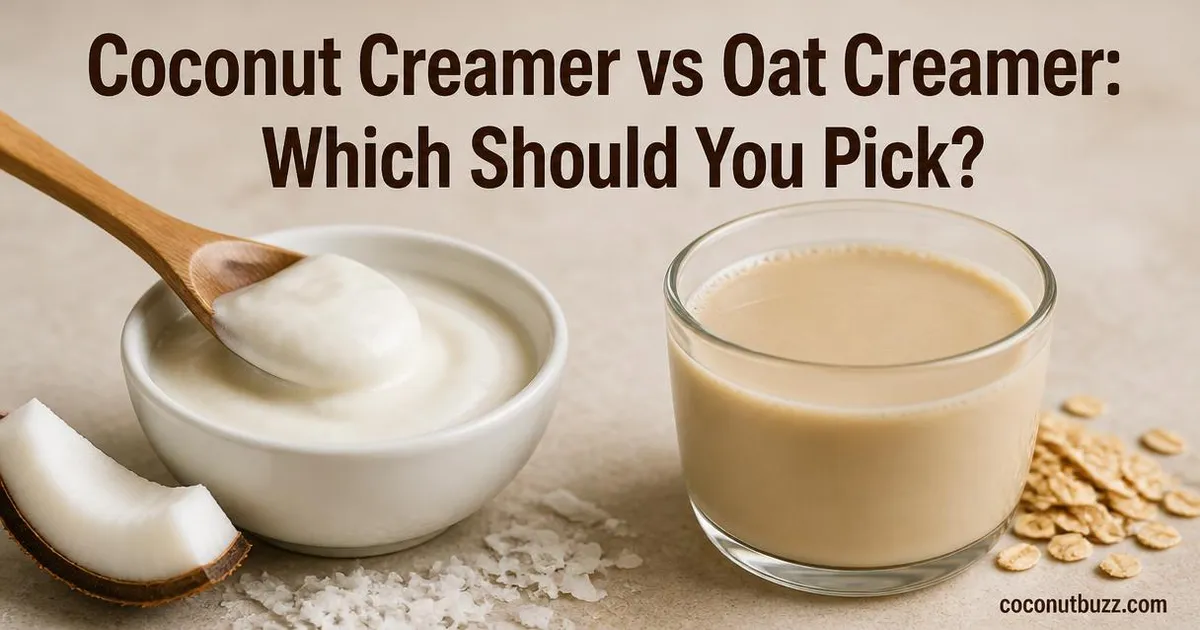
Two creamers sit in the dairy-free aisle, and both pour into plenty of morning coffees. One tastes like the coconut it came from. The other barely tastes like anything at all. That difference alone decides a lot, but taste is only the start.
Texture, nutrition, diet fit, and uses beyond coffee all factor into the coconut creamer vs oat creamer question. Neither one wins every category. The right pick depends on what you put in your cup and what you need your creamer to do.
Key Takeaways
- Oat creamer tastes mild and gently sweet; coconut creamer carries a distinct coconut flavor into every sip.
- Coconut creamer pours richer and thicker; oat creamer can run thin, especially over ice, and brand quality swings widely.
- Watching saturated fat? Oat creamer is the easier daily pick.
- Both are vegan and dairy-free. Coconut is reliably gluten-free; oat needs a certified label to confirm it.
- Coconut creamer pulls double duty in hot chocolate, tea, and smoothies.
Coconut Creamer Vs Oat Creamer Compared
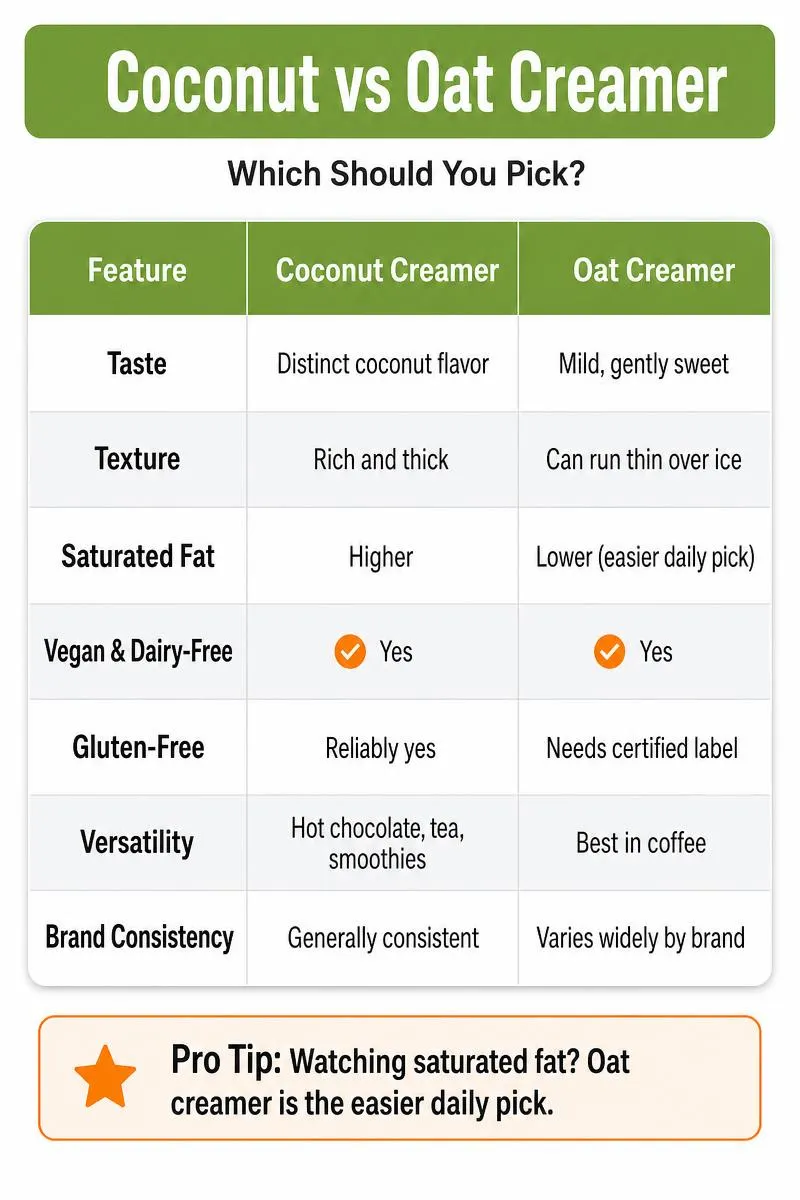
| Feature | Coconut Creamer | Oat Creamer |
|---|---|---|
| Taste | Distinct coconut flavor | Mild, gently sweet |
| Texture | Rich and thick | Can run thin over ice |
| Saturated Fat | Higher | Lower (easier daily pick) |
| Vegan & Dairy-Free | Yes | Yes |
| Gluten-Free | Reliably yes | Needs certified label |
| Versatility | Hot chocolate, tea, smoothies | Best in coffee |
| Brand Consistency | Generally consistent | Varies widely by brand |
What Is Coconut Creamer?
Coconut creamer starts with coconut milk or coconut cream as its base. Many brands add coconut oil for extra body, and you will find both sweetened and unsweetened versions on shelves.
It works well in coffee, hot chocolate, tea, and smoothies. If you make drinks like a cinnamon latte at home, coconut creamer blends into those recipes easily.
The creamy texture is the main draw. Coconut creamer is naturally vegan and gluten-free, which makes label reading simple. On the downside, it can separate and needs stirring or frothing to blend smoothly into hot coffee.
Worth Reading Next
A product option for readers wanting to add MCT oil to coffee or creamers for extra creaminess and energy.
What Is Oat Creamer?
Oat creamer blends an oat base with water and often adds oils or sweeteners. The oat starches break down during processing into simpler sugars, which gives oat creamer its naturally mild sweetness without added sugar.
Oat creamer shines in everyday coffee and iced coffee where a neutral taste matters. In cold drinks specifically, it stays out of the coffee’s flavor profile in a way that lets the roast come through.
Mild flavor, easy availability, and wide brand selection are the strengths. The weaknesses are real too. Gluten-free status varies because oats are often processed in facilities that handle wheat.
Coconut Creamer vs Oat Creamer: Taste in Coffee
Oat creamer brings a neutral, gently sweet flavor that fades into the background of your coffee. Coconut creamer brings a pronounced coconut taste that competes with the coffee itself. Brand swings are real on both sides – some oat creamers taste surprisingly oaty; some coconut creamers taste artificial or overly sweet.
If coffee should taste like coffee, oat creamer stays out of the way. If you genuinely like coconut flavor and want it in your cup, coconut creamer delivers.
Winner: oat creamer for neutral taste. Coconut creamer if you are a coconut fan.
Coconut Creamer vs Oat Creamer: Creaminess and Texture
Coconut cream and coconut oil give coconut creamer a thicker, richer pour. The fat content creates a mouthfeel closer to half-and-half. Oat creamer often reads thin, and that thinness becomes more obvious in iced coffee where cold temperatures mute whatever body the creamer has.
Some oat creamers add gums or oils to thicken the pour, while others stay minimal and pour watery. Coconut creamer is more consistent in this category because the coconut fat does the work.
Winner: coconut creamer for richness and texture.
Explains how full‑fat and lighter coconut milks differ-useful when deciding on coconut creamer thickness and fat…
Coconut Creamer vs Oat Creamer: Nutrition and Health
Coconut oil gives coconut creamer its body, but coconut oil is high in saturated fat. Some sources suggest that the saturated fat in coconut oil may be a concern for heart health. Oat creamers avoid that saturated fat flag entirely.
Neither creamer is a health food. Oat creamers can carry added sugar, and sweetened versions of both types add calories you may not expect. Compare labels carefully, especially if you use creamer more than once a day.
Winner: oat creamer on the saturated fat question. Neither wins on overall nutrition.
Coconut Creamer vs Oat Creamer: Diet Compatibility
Both creamers are vegan and dairy-free, so either works for plant-based diets. Coconut creamer is reliably gluten-free because coconut does not share processing lines with wheat the way oats often do. Oat creamer needs a certified gluten-free label to confirm it is safe for celiac or gluten-sensitive readers.
Winner: coconut creamer for fewer label checks and broader diet compatibility.
Which Should You Choose?
- Want coffee that tastes like coffee? Oat creamer.
- Want a rich, latte-style cup? Coconut creamer.
- Limiting saturated fat? Oat creamer.
- Need vegan plus reliable gluten-free? Coconut creamer.
- Making hot chocolate or smoothies? Coconut creamer.
Keep Reading
Compares coconut and dairy kefir for gut health and dairy‑free options-helpful for readers weighing probiotic,…
FAQs About Coconut Creamer and Oat Creamer
What is coconut creamer made of?
A coconut milk or coconut cream base, often with coconut oil added for body. Sweetened versions include cane sugar or other sweeteners. Unsweetened versions keep it to the coconut base plus stabilizers like guar gum or sunflower lecithin.
Can oat milk work as a creamer?
Yes, but oat milk is thinner than oat creamer by design. Creamer formulations add oils and thickeners to mimic dairy half-and-half. If you use oat milk as a creamer, expect a lighter pour and check the brand, because viscosity varies significantly.
Is coconut creamer healthy, or inflammatory?
The saturated fat in coconut oil is the main concern, as some sources link high saturated fat intake to heart health issues. Added sugar in sweetened versions adds another layer to watch. Unsweetened coconut creamer in moderate amounts is reasonable for most people.
Why do cardiologists warn about coconut oil?
Coconut oil is high in saturated fat, specifically lauric acid. Some cardiologists flag saturated fat as a driver of elevated LDL cholesterol, which is associated with heart disease risk. The evidence is debated, but the concern is real enough that many heart-health organizations recommend limiting saturated fat intake.
Can coconut creamer affect digestion?
Individual responses vary. Coconut milk contains medium-chain fatty acids, which some people digest more easily than long-chain fats. Others experience bloating or discomfort from the fat content or from additives like guar gum. Start with a small amount if you have not used coconut creamer before.
What can I substitute for coconut cream?
Creamed coconut works as a direct swap. Oat creamer, almond milk creamer, and soy creamer all work in coffee if you accept a lighter texture. For recipes like curries or desserts, canned full-fat coconut milk is the closest substitute for coconut cream.
What is the best unsweetened non-dairy creamer?
Look for short ingredient lists, no added sugar, and a texture that works in your coffee. Brands like Califia, Natural Bliss, and MALK make unsweetened non-dairy creamers that fit those criteria. The best one depends on whether you want neutral taste, creaminess, or minimal processing.
How do I make coconut milk creamer at home?
Combine full-fat canned coconut milk with a small amount of hot water to reach pouring consistency. Add a pinch of salt and sweetener if you want it. Blend or whisk thoroughly before adding to hot coffee to prevent separation. Store leftovers refrigerated and shake before each use.
Final Verdict
If you want a neutral creamer that stays out of the way, oat is the default. If you want richness, coconut flavor, and a creamer that works in recipes beyond coffee, coconut creamer does more. Strict gluten-free needs favor coconut. Heart-conscious readers watching saturated fat favor oat.
Buy a small carton of each and try both in your morning coffee.
External References