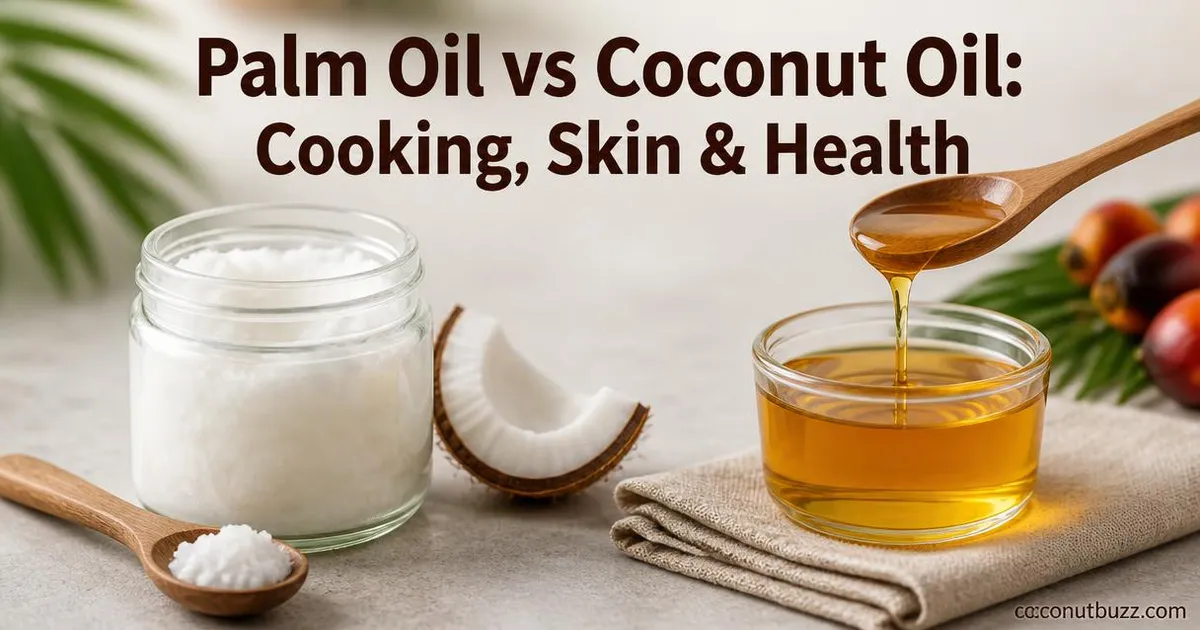
Palm Oil vs Coconut Oil: Cooking, Skin & Health
Palm oil and coconut oil both come from tropical trees, both land on “use sparingly” lists from cardiologists, and both carry baggage about what their production does to rainforests. Yet one dominates grocery-store ingredient panels while the other fills keto pantries and bathroom shelves.
Palm oil delivers tocotrienols and stays cheap enough for commercial bakeries; coconut oil supplies lauric acid and medium-chain triglycerides that keto eaters prize. Neither earns a clean bill of health for your arteries, and neither sidesteps environmental trade-offs.
Here’s what separates them when you’re deciding which bottle to buy – or whether the one hiding in your packaged foods matters.
Key Takeaways
- Palm oil supplies tocotrienols and beta-carotene; coconut oil offers more lauric acid and medium-chain triglycerides.
- Some sources suggest palm oil promotes heart health, though cardiologists debate whether any high-saturated-fat oil belongs in a heart-friendly diet.
- Coconut oil suits keto meal plans and DIY skin care; palm oil costs less and appears in most processed snacks and margarines.
- Palm oil expansion drives deforestation in Indonesia and Malaysia; coconut farming faces land pressure from palm encroachment and smallholder economic struggles.
- Treat both as occasional fats if cardiovascular risk is a concern – total saturated-fat intake matters more than which tropical oil you choose.
Creamed coconut vs coconut cream
A clear comparison of coconut product forms and how each is used in cooking and recipes – useful for readers wanting…
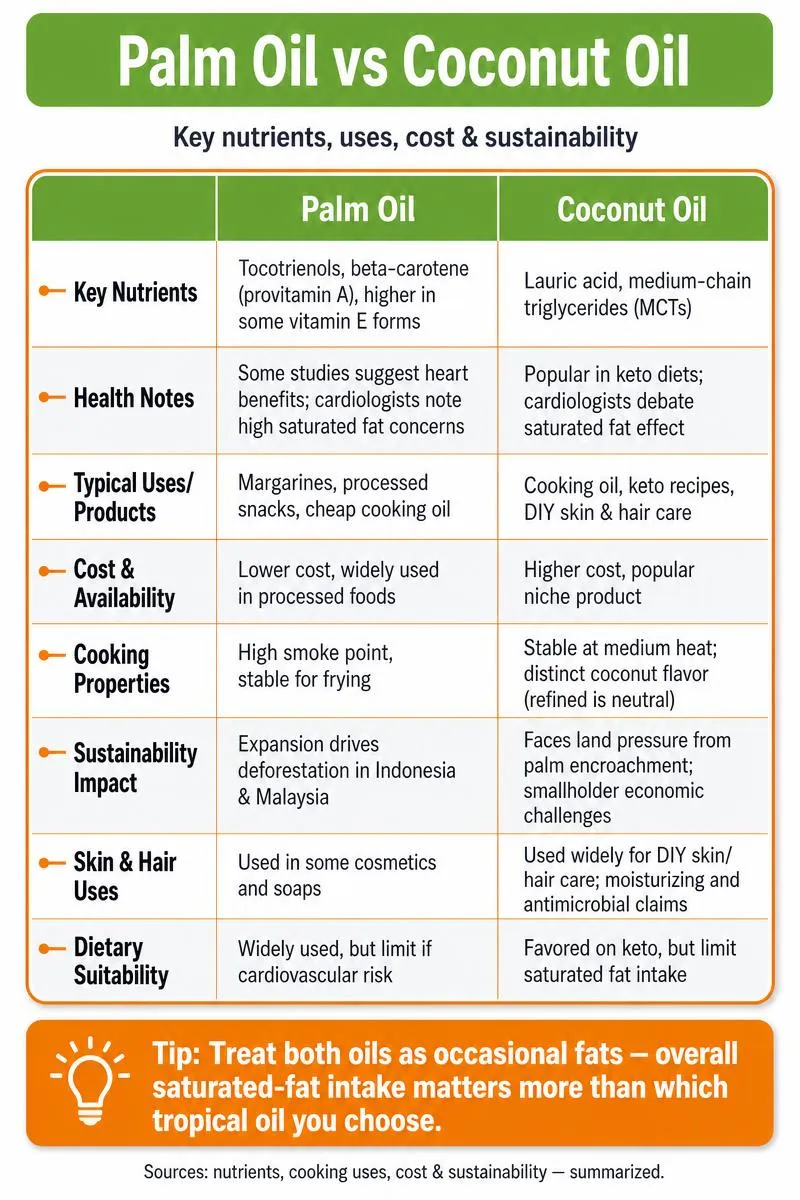
Palm Oil Vs Coconut Oil Quick Comparison
| Feature | Palm Oil | Coconut Oil |
|---|---|---|
| Key Nutrients | Tocotrienols, beta‑carotene, vitamin E forms | Lauric acid, medium‑chain triglycerides (MCTs) |
| Health Notes | Some studies suggest heart benefits; cardiologists note high saturated‑fat concerns | Popular in keto diets; cardiologists debate saturated‑fat effects |
| Typical Uses/Products | Margarines, processed snacks, cheap cooking oil | Cooking oil, keto recipes, DIY skin & hair care |
| Cost & Availability | Lower cost; widely used in processed foods | Higher cost; popular niche product |
| Cooking Properties | High smoke point; stable for frying | Stable at medium heat; distinct coconut flavor (refined is neutral) |
| Sustainability Impact | Expansion drives deforestation in Indonesia & Malaysia | Land pressure from palm encroachment; smallholder challenges |
| Skin & Hair Uses | Used in some cosmetics and soaps | Widely used for DIY skin/hair; moisturizing & antimicrobial claims |
| Dietary Suitability | Widely used; limit if cardiovascular risk | Favored on keto; limit saturated‑fat intake |
What Is Palm Oil?
Palm oil comes from the fruit of oil palm trees, pressed into a semi-solid fat that stays stable at room temperature and tolerates repeated heating. Commercial kitchens and food manufacturers use palm oil for frying, baking, and formulating margarine because it doesn’t require hydrogenation to stay solid.
The oil contains tocotrienols – a form of vitamin E – and beta-carotene. Refined palm oil loses most of the color and becomes the neutral, nearly flavorless fat you see often listed as “vegetable oil” rather than named as palm on snack wrappers and frozen-pizza boxes. Unrefined red palm oil keeps its orange tint from beta-carotene.
Environmental groups link palm oil to rainforest clearing in Southeast Asia, where oil palm plantations replace native forest and peatland. That reputation has triggered consumer boycotts, though palm oil remains the world’s most widely consumed vegetable oil. You’ll find it in crackers, cookies, instant noodles, and shelf-stable spreads.
What Is Coconut Oil?
Coconut oil is extracted from the meat of mature coconuts, sold as refined or unrefined depending on whether it’s been bleached and deodorized. Unrefined coconut oil – sometimes called virgin – keeps a coconut aroma and works in sweet recipes, smoothies, and beauty routines. Refined coconut oil tastes neutral and handles high-heat cooking without smoking or adding flavor.
The oil is high in medium-chain triglycerides, especially lauric acid, technically a medium-chain fatty acid but digests more like a long-chain fat. Keto and paleo eaters favor coconut oil because medium-chain triglycerides may support ketone production.
Cardiologists often warn against coconut oil because it raises LDL cholesterol, though individual lipid responses vary widely. Coconut oil also shows up in homemade lotions, hair masks, and oil-pulling routines.
Palm Oil vs Coconut Oil: Nutrition
Palm oil contains less saturated fat than coconut oil and provides tocotrienols, a form of vitamin E that some animal studies link to cholesterol management and antioxidant activity. Unrefined red palm oil also supplies beta-carotene, a precursor to vitamin A.
Coconut oil is higher in saturated fat and richer in lauric acid, a saturated fatty acid that raises both LDL and HDL cholesterol. Some researchers argue that the HDL boost offsets the LDL increase; others say total LDL still matters more for cardiovascular risk. Medium-chain triglycerides make up a smaller share of coconut oil than many keto advocates assume – lauric acid dominates, and it digests more slowly than shorter-chain fats like caprylic or capric acid.
Neither oil is proven superior for heart health – both raise LDL in controlled studies, so treat them as occasional fats rather than daily staples. If you want tocotrienols and carotenoids, palm oil delivers them. If you want lauric acid and medium-chain triglycerides, coconut oil provides more.
Winner: Condition-based – palm oil for tocotrienols, coconut oil for medium-chain triglycerides.
Explore More
A practical look at cooking substitutions and nutrition when swapping coconut-based cream for dairy – helpful after the…
Palm Oil vs Coconut Oil: Cooking
Both oils tolerate frying and baking because their high saturated-fat content resists oxidation at high heat. Refined versions taste neutral enough for savory dishes; unrefined coconut oil adds a coconut flavor that limits its use to sweet recipes or dishes where that taste belongs. Unrefined red palm oil has an earthy, slightly sweet flavor that works in West African stews but clashes with most Western recipes.
Coconut oil is preferred for home keto cooking because it supplies medium-chain triglycerides and fits the high-fat, low-carb framework. Palm oil dominates commercial snacks, margarines, and bakery goods because it costs less and blends easily with other fats. Professional kitchens often favor canola, sunflower, or rice bran oil for all-purpose frying, reserving tropical oils for specific applications where stability or flavor matters.
Refined coconut oil and refined palm oil perform similarly for home frying. For keto meal plans, coconut oil makes more sense.
Winner: Coconut oil for home keto cooking; palm oil for commercial neutral baking.
Palm Oil vs Coconut Oil: Sustainability
Palm oil expansion drives deforestation in Indonesia and Malaysia, where oil palm plantations replace peat swamp forest and lowland rainforest. That clearing releases stored carbon, destroys orangutan and tiger habitat, and displaces Indigenous and local communities. Consumer boycotts and certification programs like RSPO (Roundtable on Sustainable Palm Oil) exist, but certified sustainable palm oil represents a small share of global production, and enforcement varies.
Coconut farming faces pressure from palm encroachment and smallholder economic struggles in Southeast Asia and the Pacific. Coconut palms grow on less land than oil palms. Coconut farming isn’t impact-free – monoculture coconut plantations replace diverse ecosystems.
Certified sustainable palm oil exists but remains harder to verify than organic or fair-trade labels. Coconut oil lacks a broad certification system, so tracing its environmental and social impact depends on individual brands volunteering supply-chain details.
Winner: Coconut oil by reputation, though neither is impact-free.
Palm Oil vs Coconut Oil: Skin and Hair
Coconut oil is popular for DIY moisturizers, hair masks, and makeup removers because it spreads easily, absorbs without a greasy residue, and costs less than argan or jojoba oil. Lauric acid gives coconut oil mild antimicrobial properties, which some people credit for reducing scalp flaking or body acne. Others find that coconut oil clogs pores, especially on facial skin, because it has a high comedogenic rating.
Palm oil appears more often in soaps, shampoos, and formulated lotions than as a standalone beauty product. It contributes lather and hardness to bar soap, but people rarely apply palm oil directly to skin or hair the way they do with coconut oil. Unrefined red palm oil contains beta-carotene and tocotrienols, but its orange tint stains skin and fabric.
For DIY face oils and hair treatments, coconut oil is the more common choice. Palm oil also appears in store-bought soaps and lotions as a thickener or emulsifier.
Winner: Coconut oil for home use; palm oil for formulated products.
Explore More
A plant-milk comparison that breaks down nutrition and uses of coconut milk versus an alternative – useful for readers…
Which Should You Choose?
Keto or paleo: Coconut oil supplies medium-chain triglycerides and fits the high-fat framework both diets emphasize.
Inexpensive neutral baking fat: Palm oil costs less per pound and blends into recipes without adding flavor.
Vitamin E and carotenoids: Palm oil – especially unrefined red palm oil – provides tocotrienols and beta-carotene that coconut oil lacks.
DIY hair and skin: Coconut oil works as a standalone moisturizer, hair mask, or makeup remover; palm oil is rarely used neat for beauty routines.
Avoiding deforestation: Choose certified sustainable palm oil or coconut oil from brands that disclose sourcing.
FAQs About Palm Oil and Coconut Oil
Is palm oil healthy?
Palm oil contains less saturated fat than coconut oil and supplies tocotrienols and beta-carotene, but it still raises LDL cholesterol in controlled studies. Some researchers argue that tocotrienols offset cardiovascular risk; others say total saturated fat intake matters more. Use palm oil occasionally rather than as your primary cooking fat if heart health is a concern.
Which is better for cooking: palm oil or coconut oil?
Both tolerate high heat without oxidizing, so frying and baking work equally well with either oil. Coconut oil fits keto meal plans and adds a mild coconut flavor when unrefined; palm oil costs less and tastes neutral when refined. Choose based on whether you want medium-chain triglycerides or a budget-friendly neutral fat.
What are the disadvantages of palm oil?
Palm oil expansion drives deforestation in Southeast Asia, destroying rainforest and peatland habitat. It also appears in ultra-processed snacks and often appears as “vegetable oil” on labels, making intake hard to track. Nutritionally, palm oil raises LDL cholesterol, though less than coconut oil does.
Why do cardiologists warn against coconut oil?
Coconut oil contains high saturated fat, and controlled trials show it raises LDL cholesterol in most people. Some studies also show an HDL increase, but cardiologists prioritize LDL reduction for cardiovascular risk. People with high cholesterol or heart disease should limit coconut oil in favor of unsaturated oils like olive or avocado.
Why do some people avoid palm oil?
Environmental concerns drive most palm oil boycotts – oil palm plantations replace rainforest in Indonesia and Malaysia, threatening orangutans, tigers, and Indigenous land rights. Certified sustainable palm oil exists, but it represents a small share of the market.
How do palm oil and coconut oil affect cholesterol?
Both raise LDL cholesterol because of their high saturated-fat content. Coconut oil also raises HDL cholesterol, which some researchers view as protective; others argue that LDL still predicts cardiovascular risk better. Palm oil raises LDL less than coconut oil does, but more than unsaturated oils like olive or canola.
Which is better for skin and hair: palm oil or coconut oil?
Coconut oil is more common for DIY beauty routines because it spreads easily and absorbs without staining. Palm oil appears in formulated soaps and lotions but rarely gets used neat – unrefined red palm oil stains skin and fabric orange. Coconut oil may clog pores on some skin types.
Which costs more: palm oil or coconut oil?
Palm oil costs less per pound and dominates commercial food production for that reason. Coconut oil typically costs more at retail, especially if it’s labeled virgin or organic.
What is the unhealthiest cooking oil?
Partially hydrogenated oils – the source of artificial trans fats – are the unhealthiest. Among common oils, those high in saturated fat with few redeeming compounds raise the most concern for cardiovascular health. Coconut oil, palm kernel oil, and butter all fall into that category. But total diet and overall saturated-fat intake predict heart risk better than any single ingredient.
Final Thoughts
No universal winner exists between palm oil and coconut oil. Coconut oil fits keto meal plans and DIY beauty routines; palm oil wins on cost and delivers tocotrienols and beta-carotene.
For cardiovascular risk management, use both sparingly and focus on total saturated-fat intake rather than picking one over the other. Unsaturated oils like olive and avocado remain safer for daily cooking.
Check your pantry labels to see which oil you already use most, then decide whether switching aligns with your health goals, budget, or sustainability priorities.
External References