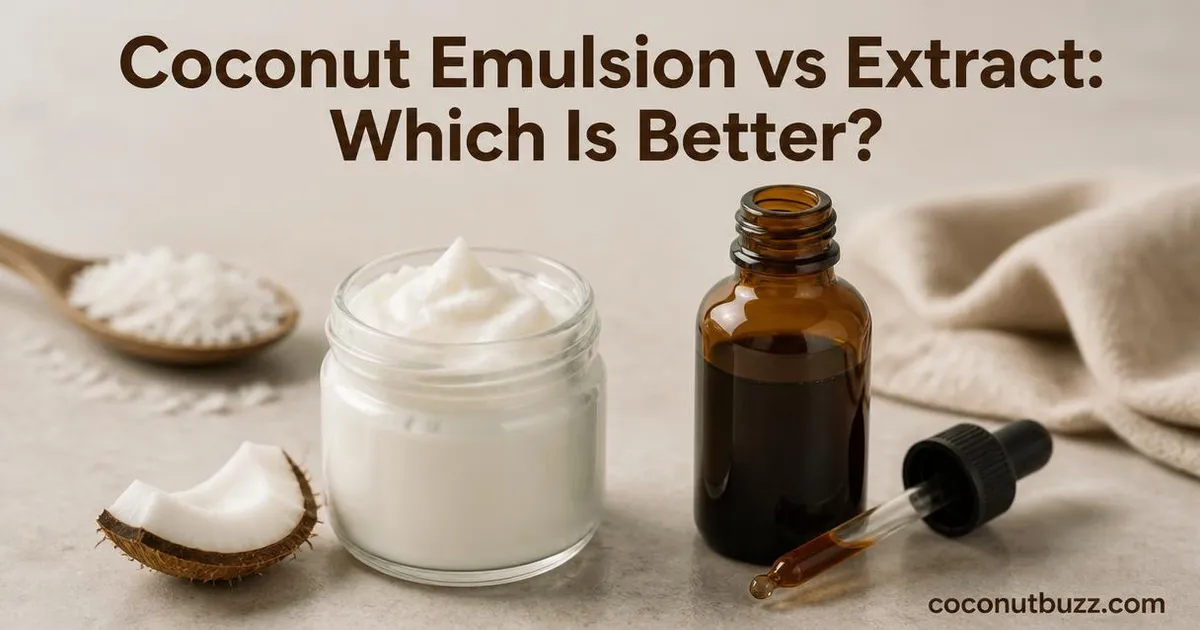
Coconut Emulsion vs Extract: Which Is Better?
Coconut emulsion and coconut extract both deliver coconut flavor, but they behave differently once they hit your mixing bowl. The difference comes down to what carries that flavor: water and an emulsifier in one case, alcohol in the other. That single distinction changes how each one performs under heat, how concentrated the flavor tastes, and where you should reach for one over the other.
If you’ve ever baked a coconut cake and wondered why the flavor seemed to disappear in the oven, the culprit is likely alcohol evaporation from your extract. Emulsions solve that problem. But emulsions also bring a thicker texture that doesn’t always suit a delicate mousse or a cold beverage.
Key Takeaways
- Coconut emulsion is water-based and bake-stable; extract is alcohol-based and can lose potency in the oven as the alcohol evaporates.
- Emulsions typically deliver stronger, more consistent flavor in baked goods because the flavor compounds stay locked in during heating.
- Extracts work well in no-bake desserts, beverages, and recipes where flavor is added after cooking.
- You can substitute one for the other, but you may need to adjust the amount depending on concentration and heat exposure.
- Emulsions have a thicker, more syrupy consistency, while extracts are thinner and pour like standard vanilla extract.
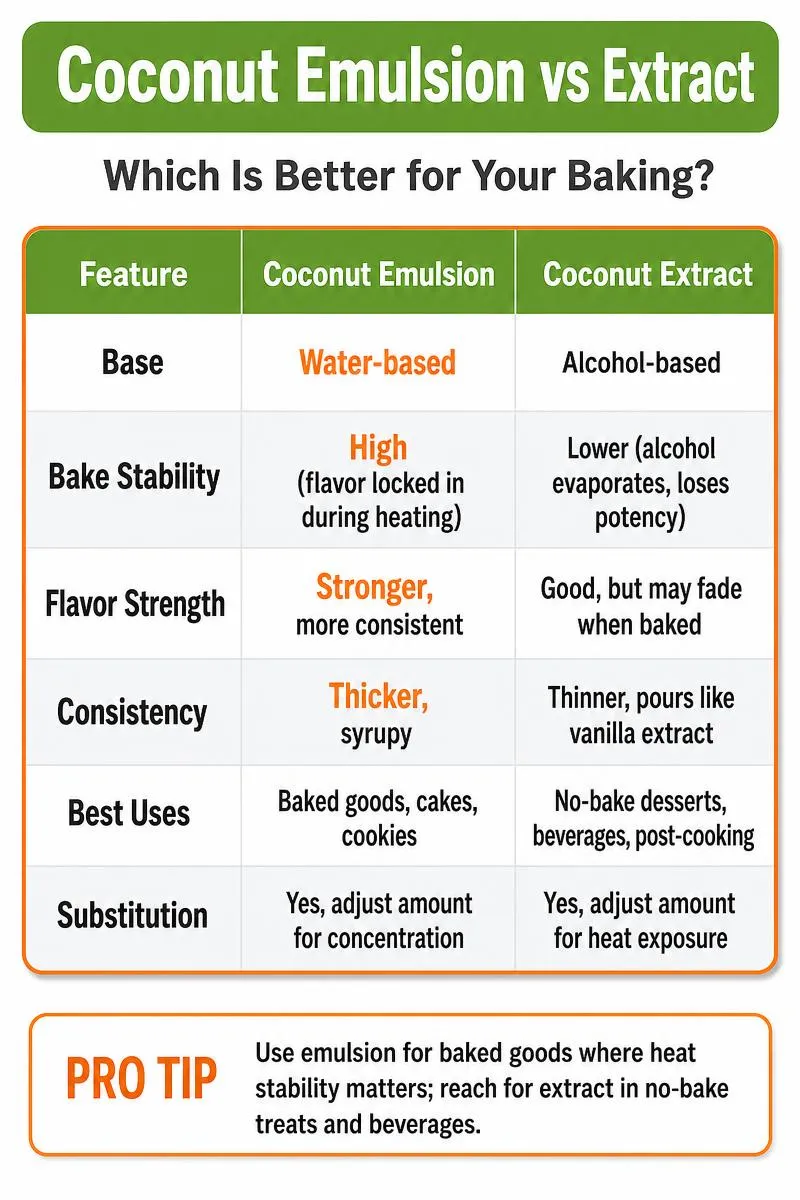
Quick Comparison: Coconut Emulsion Vs Extract
| Feature | Coconut Emulsion | Coconut Extract |
|---|---|---|
| Base | Water-based | Alcohol-based |
| Bake stability | High — flavor locked in | Lower — may lose potency |
| Flavor strength | Stronger, more consistent | Good, may fade when baked |
| Consistency | Thicker, syrupy | Thinner, pours like vanilla |
| Best uses | Baked goods, cakes, cookies | No-bake desserts, beverages, post-cooking |
| Substitution | Yes — adjust for concentration | Yes — adjust for heat exposure |
What Is Coconut Emulsion?
Coconut emulsion is a water-based flavoring where coconut oil is suspended in water using an emulsifier. The emulsifier keeps the oil and water blended together rather than separating, which gives the product a thick, consistent texture that mixes easily into batters and doughs.
Best for high-heat baking like cakes, cookies, and muffins, where the water-based formula holds up during extended oven time.
Strengths: Bake-stable under high heat, concentrated flavor per teaspoon, and a thicker texture that blends smoothly into batters and doughs.
Weaknesses: Less traditional as a flavor carrier compared to alcohol-based extracts. The thicker consistency can alter texture in delicate no-bake recipes where you want minimal added thickness.
Also Worth Checking Out
A focused comparison of shredded coconut forms and their texture/moisture differences to help match emulsion or extract…
What Is Coconut Extract?
Coconut extract is an alcohol-based flavoring made by steeping coconut in alcohol. The alcohol draws out the flavor compounds from the coconut, acting as the primary carrier for the taste and aroma.
Best for no-bake desserts, icings, ice cream, and beverages where the alcohol doesn’t need to survive heat. Since there’s no oven involved, the alcohol stays put and carries the full coconut flavor into the finished dish.
Strengths: Classic coconut flavor profile that most bakers recognize. Widely available in grocery stores. Pours easily into liquid applications like smoothies, cocktails, and ice cream bases.
Weaknesses: Alcohol can evaporate during baking, which means the coconut flavor gets weaker as the oven temperature rises. The thin, liquid consistency also dilutes more easily in thick batters.
Coconut Emulsion vs Extract: Baking Performance
When the recipe goes into the oven, emulsion and extract diverge quickly.
Emulsion wins for high-heat recipes because the water-based formula is bake-stable. The emulsion’s water base means nothing evaporates, so the flavor intensity stays consistent from bowl to oven to plate.
Extract can lose potency in the oven as the alcohol carrier evaporates at baking temperatures. The flavor compounds that were dissolved in alcohol disperse or weaken, leaving you with a subtler coconut note than you intended.
But if you’re adding coconut flavor to a no-bake frosting or filling, either product performs well because there’s no heat to drive off the alcohol in the extract.
Coconut Emulsion vs Extract: Best Uses
Emulsion is the better choice for cookies, cakes, and bread – anything that spends time in the oven. The bake-stable formula means your coconut flavor survives the heat intact.
Extract is the better choice for ice cream, pudding, and drinks where the alcohol carrier doesn’t need to withstand heat. The thin consistency pours easily into cold mixtures and beverages.
For frostings and fillings, either can work. The deciding factor is whether you want the thicker texture the emulsion adds or the thin pour of the extract. Emulsion contributes body to a frosting; extract keeps the consistency lighter.
Explore More
Sweetened vs unsweetened coconut
Explains how added sugars affect coconut’s flavor and sweetness-useful when adjusting emulsion or extract amounts in…
Coconut Emulsion vs Extract: Flavor and Consistency
Emulsion has a thicker, more syrupy consistency and delivers more concentrated flavor per unit. The emulsifier holds the coconut oil and water together in a stable suspension, so each spoonful carries a dense hit of flavor.
Extract is thinner and pours like standard vanilla extract. The alcohol base makes it flow freely, which works well when you need to add flavor to a liquid without changing its texture.
The winner here depends entirely on what your recipe needs. If you want a thick blend that integrates into a batter, emulsion is your match. If you need a liquid splash into a beverage or cold mixture, extract pours cleanly and evenly.
Coconut Emulsion vs Extract: Substituting One for the Other
You can swap emulsion and extract in most recipes, but the substitution isn’t one-to-one.
When replacing extract with emulsion, use slightly less emulsion than the recipe calls for. Emulsion is more concentrated, so the same volume delivers a stronger coconut flavor.
When replacing emulsion with extract, you may need to add more extract to compensate for the potential alcohol bake-off. If the recipe is headed for the oven, the extract will lose some of its punch during baking, so starting with extra helps preserve the intended flavor level.
In no-bake recipes, the alcohol in extract won’t evaporate, so you can use a roughly equivalent amount and adjust to taste from there.
Which Should You Choose?
- Baking cookies, cakes, or muffins at high heat: Choose coconut emulsion. The water-based formula survives the oven and delivers consistent flavor.
- Making ice cream, pudding, or no-bake desserts: Choose coconut extract. The alcohol carrier works perfectly in cold applications.
- Mixing frosting or fillings that will not be baked: Either works. Emulsion adds thickness and body; extract keeps things lighter.
- Adding coconut flavor to beverages: Choose coconut extract. The thin consistency mixes into liquids without altering texture.
- You want the most concentrated flavor with minimal added liquid: Choose coconut emulsion. You get more coconut taste per teaspoon.
Worth Reading Next
Compares coconut and almond flours for baking substitutions and texture, helping readers decide which flavoring…
FAQs About Coconut Emulsion and Coconut Extract
Is coconut extract the same as coconut emulsion?
No. Coconut extract uses alcohol as its flavor carrier, while coconut emulsion uses water and an emulsifier to suspend coconut oil. They perform differently under heat and have different consistencies.
Can I use coconut emulsion instead of coconut extract?
Yes. Use slightly less emulsion than the extract called for, since emulsion is more concentrated. In no-bake recipes, start with an equivalent amount and adjust to taste.
Which is better for baking, coconut emulsion or extract?
Coconut emulsion is better for baking. The water-based formula is bake-stable, meaning the flavor compounds survive oven temperatures. Extract relies on alcohol, which can evaporate during baking and weaken the coconut flavor.
What is the difference between coconut extract and coconut essence?
Coconut extract is made by steeping coconut in alcohol, which pulls real flavor compounds from the coconut. Coconut essence is typically a synthetic flavoring that mimics coconut flavor without using actual coconut as the source. Extract generally delivers a more authentic flavor.
Which is better, coconut essence or extract?
Coconut extract is generally better for authentic flavor because it derives from real coconut. Essence can work in a pinch, but the flavor profile is less true to actual coconut. If you have a choice, reach for extract.
How much coconut extract or emulsion should I use?
Start with a small amount and adjust to taste based on how strong you want the coconut flavor. With emulsion, start with slightly less since it’s more concentrated.
Where can I buy coconut emulsion?
Coconut emulsion is available at specialty baking stores, craft store baking aisles, and online retailers. It’s less common in standard grocery stores than coconut extract, so you may need to plan ahead.
Does coconut extract bake off in the oven?
Yes, partially. The alcohol in coconut extract can evaporate at baking temperatures, which weakens the coconut flavor in the finished product. This is why emulsion is the preferred choice for baked goods.
Final Verdict
If you’re baking, go with coconut emulsion. If you’re making something cold or no-bake, coconut extract does the job. The one rule that covers the edge cases: if a recipe calls for one and you only have the other, start with a small amount and taste as you go.
Test both in your favorite coconut cake or cookie recipe and compare the results side by side. You’ll taste the difference immediately.
External References
- The Relationship Between Food Emulsifiers and Gut Health – – Tinyhealth
- What Are Emulsifiers? And Are They Safe? – Healthline
- FDA Natural Flavor Regulations (21 CFR 101.22) |… – Mosaicflavors
- FDA Removes 7 Synthetic Flavoring Substances from Food … – Fda
- FDA on Top Allergen Labels: Coconut Off List, Milk … – Allergicliving