Fractionated Coconut Oil vs Coconut Oil
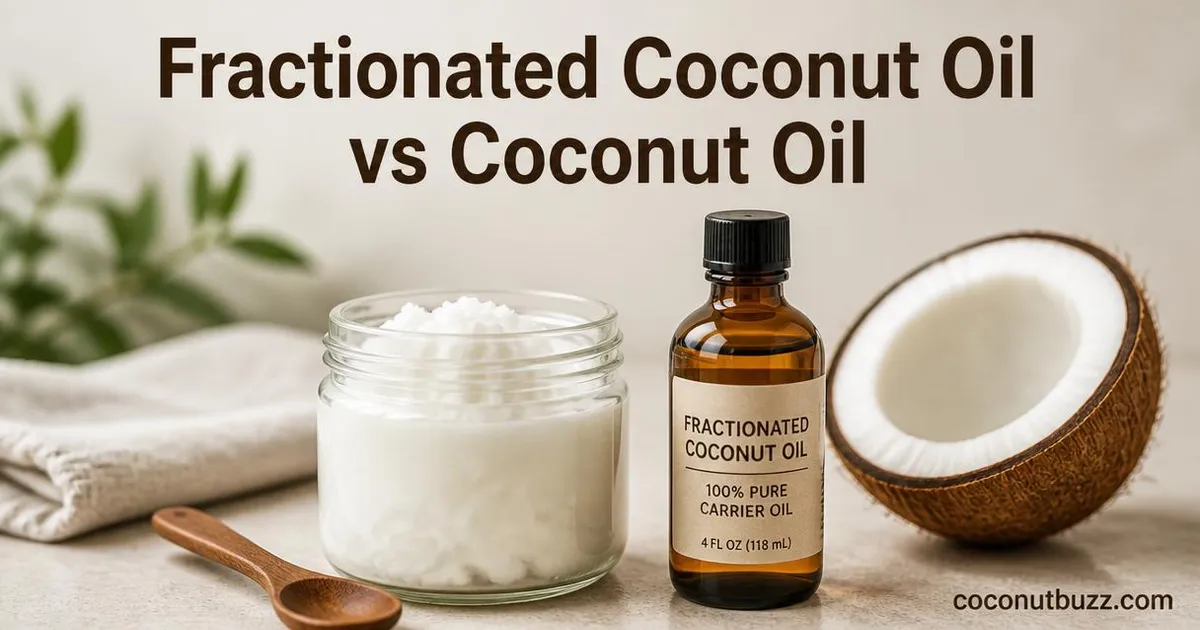
Fractionated coconut oil and regular coconut oil come from the same source but behave like completely different products. One stays liquid in your refrigerator and absorbs into skin in seconds. The other solidifies on cool countertops and carries the aroma most people associate with coconut.
The difference comes down to processing. Fractionated coconut oil has its long-chain fatty acids stripped out, leaving only medium-chain triglycerides like caprylic and capric acids. Regular coconut oil keeps everything – including lauric acid, which makes up a significant portion of its fatty acid content and solidifies at cool temperatures.
Key Takeaways
- Fractionated coconut oil remains liquid at all temperatures because manufacturers remove long-chain fatty acids during processing; regular coconut oil turns solid when cool.
- Most fractionated coconut oils contain almost no lauric acid, while regular coconut oil typically contains substantial lauric acid by weight.
- Some sources suggest fractionated coconut oil may support weight loss through concentrated medium-chain triglycerides, though the oil lacks several compounds present in regular coconut oil.
- Fractionated coconut oil resists oxidation and rancidity longer than regular coconut oil because unstable long-chain fatty acids are removed during fractionation.
- You cannot make fractionated coconut oil at home – the process requires industrial equipment to separate and remove specific fatty acid chains.
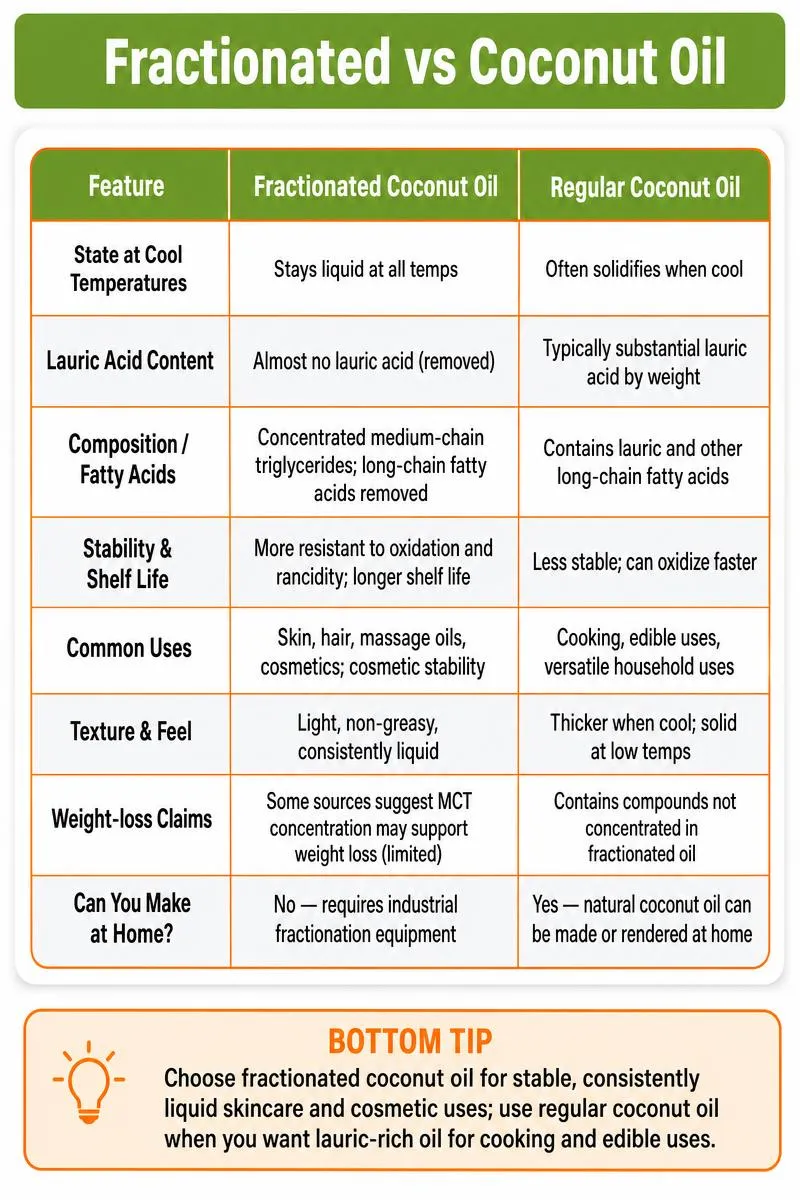
Fractionated Coconut Oil Vs Coconut Oil Quick Comparison
| Feature | Fractionated Coconut Oil | Regular Coconut Oil |
|---|---|---|
| State at Cool Temperatures | Stays liquid at all temps | Often solidifies when cool |
| Lauric Acid Content | Almost no lauric acid (removed) | Typically substantial lauric acid by weight |
| Composition / Fatty Acids | Concentrated medium-chain triglycerides; long-chain fatty acids removed | Contains lauric and other long-chain fatty acids |
| Stability & Shelf Life | More resistant to oxidation and rancidity; longer shelf life | Less stable; can oxidize faster |
| Common Uses | Skin, hair, massage oils, cosmetics; cosmetic stability | Cooking, edible uses, versatile household uses |
| Texture & Feel | Light, non-greasy, consistently liquid | Thicker when cool; solid at low temps |
| Weight-loss Claims | Some sources suggest MCT concentration may support weight loss (limited) | Contains compounds not concentrated in fractionated oil |
| Can You Make at Home? | No — requires industrial fractionation equipment | Yes — natural coconut oil can be made or rendered at home |
What Is Fractionated Coconut Oil?
Fractionated coconut oil is regular coconut oil put through a refining process that removes long-chain triglycerides, leaving primarily caprylic acid and capric acid. These medium-chain triglycerides stay liquid even in cold temperatures and have no coconut scent.
The fractionation process uses heat, pressure, or both to separate fatty acids by molecular weight, then removes the heavier chains. What remains is a colorless, odorless oil that absorbs quickly and doesn’t leave a greasy film.
This makes fractionated coconut oil ideal as a carrier oil for essential oils, a base for massage oils, an ingredient in facial serums, and a stable component in DIY cosmetics. The oil won’t clog most pores and rinses out of fabric more easily than regular coconut oil.
The main tradeoff: fractionated coconut oil loses lauric acid and the longer-chain fatty acids found in unrefined coconut oil.
Keep Reading
Benefits of coconut oil for weight loss
A breakdown of evidence about coconut oil and weight loss, including studies and practical tips readers may want when…
What Is Coconut Oil?
Coconut oil is fat extracted from coconut meat, available in two main forms: virgin (unrefined) or refined. Virgin coconut oil keeps its coconut scent and flavor because it skips bleaching and deodorizing. Refined coconut oil goes through those extra steps and ends up neutral in smell and taste.
Both types contain lauric acid, caprylic acid, capric acid, and longer-chain fatty acids. The mix of chain lengths is what makes coconut oil solid at cool temperatures and liquid when warm.
Regular coconut oil works for cooking, baking, deep hair conditioning, oil pulling, and general skin moisturizing. Virgin coconut oil adds coconut flavor to recipes; refined coconut oil cooks without changing the taste of your food.
The downsides: coconut oil solidifies in cool kitchens, can stain fabric if used heavily on skin or hair, and oxidizes faster than fractionated coconut oil. Unrefined versions spoil more quickly than refined.
Fractionated Coconut Oil vs Coconut Oil: Skin, Hair, and Face Care
Fractionated coconut oil absorbs faster and leaves almost no residue, which makes it better for daytime facial use and body massage. The oil spreads easily, doesn’t clog most pores, and won’t stain pillowcases or clothing.
Regular coconut oil creates a heavier barrier on skin and hair. That thickness works well for deep hair conditioning treatments and overnight moisturizing, especially on dry elbows, heels, and cuticles. Virgin coconut oil also carries a coconut scent that some people prefer and others find too strong for facial application.
For makeup removal and quick body moisturizing after a shower, fractionated coconut oil rinses cleanly and doesn’t leave you feeling greasy. For intensive hair masks and protective moisture barriers, regular coconut oil stays in place longer and penetrates hair shafts more slowly.
The winner depends on your use case: fractionated for daily face and body application; regular for intensive hair treatments and deep moisture where you want a protective layer.
Fractionated Coconut Oil vs Coconut Oil: Cooking and Everyday Uses
Regular coconut oil handles heat well and adds flavor to baked goods, sautéed vegetables, and curries. Refined coconut oil has a high smoke point; virgin coconut oil tolerates moderate heat. Both versions work for most cooking methods.
Fractionated coconut oil is generally not recommended for cooking. The oil lacks lauric acid and the longer-chain fats that give regular coconut oil its heat tolerance. Manufacturers market fractionated coconut oil for cosmetic and therapeutic use, not culinary application.
Outside the kitchen, fractionated coconut oil dominates in cosmetic formulations, aromatherapy blends, and industrial applications where shelf stability and neutral scent matter. Regular coconut oil appears in homemade deodorants, lip balms, and body butters where solid texture at room temperature is an advantage.
The winner for kitchen use: regular coconut oil. The winner for cosmetic and therapeutic applications: fractionated coconut oil.
Keep Reading
Benefits of coconut oil pulling
A practical guide to coconut oil pulling-how it works, benefits, and usage tips that pair well with the skin, hair, and…
Fractionated Coconut Oil vs Coconut Oil: Texture, Shelf Life, and Stability
Fractionated coconut oil pours like water at any temperature. The oil is colorless, nearly odorless, and never solidifies. Regular coconut oil is white and firm when cool, clear and liquid when warm, and smells like coconut when unrefined.
Fractionated coconut oil resists oxidation and rancidity longer than regular coconut oil because the long-chain fatty acids that oxidize most easily are removed during processing. Unopened fractionated coconut oil can last for years; regular coconut oil typically stays fresh for an extended period when unopened.
Once opened, both oils degrade faster, but fractionated coconut oil still outlasts regular versions. Virgin coconut oil spoils more quickly than refined coconut oil because it retains the longer-chain fatty acids it retains.
The winner for stability and shelf life: fractionated coconut oil. The texture winner depends on whether you need a liquid oil that stays pourable or a solid fat that melts on contact with warm skin.
Fractionated Coconut Oil vs Coconut Oil: Composition and Fatty Acids
Fractionated coconut oil contains mainly caprylic acid (C8) and capric acid (C10), both medium-chain triglycerides. The fractionation process removes lauric acid (C12) and longer chains, leaving an oil that’s nearly pure medium-chain triglycerides.
Regular coconut oil contains significant lauric acid – a substantial portion of total fatty acid content – plus caprylic acid, capric acid, myristic acid, palmitic acid, and small amounts of other fatty acids. This broader range gives regular coconut oil its solid state at cool temperatures and its coconut aroma when unrefined.
Some sources suggest that concentrated medium-chain triglycerides in fractionated coconut oil may support weight loss and provide quick energy because these fatty acids metabolize differently than long-chain fats. Regular coconut oil contains medium-chain triglycerides too, but in lower concentration alongside other fatty acids.
Lauric acid converts to monolaurin in the body, a compound that some research links to antimicrobial activity. Fractionated coconut oil lacks this compound.
The winner: regular coconut oil if lauric acid and a full fatty acid spectrum matter to you; fractionated coconut oil if you want concentrated caprylic and capric acids.
Which Should You Choose?
Choose fractionated coconut oil for liquid carrier oils in aromatherapy, massage oil that rinses cleanly, or DIY skincare products that need to stay stable and won’t stain fabrics.
Choose regular coconut oil for cooking and baking where you want coconut flavor and the benefits of lauric acid. Refined coconut oil cooks without adding coconut taste; virgin coconut oil brings aroma and flavor.
Choose fractionated coconut oil for a lightweight face oil that absorbs quickly, stays liquid in cool bathrooms, and doesn’t leave residue on your pillowcase. The oil suits oily and combination skin types better than heavier moisturizers.
Choose regular coconut oil for a less processed option when deep conditioning hair, moisturizing very dry skin, or using coconut oil around your home. The solid texture at room temperature makes it easier to scoop and apply in controlled amounts.
Choose fractionated coconut oil if maximum shelf life and resistance to rancidity are top priorities. The oil stays fresh longer and tolerates temperature fluctuations better than regular coconut oil.
Worth Reading Next
Is coconut oil good for cholesterol
An examination of coconut oil’s effects on cholesterol and heart health, useful for readers deciding which oil to use…
FAQs About Fractionated Coconut Oil and Coconut Oil
Which is better for your skin, coconut oil or fractionated coconut oil?
Fractionated coconut oil is better for most facial use and daily body moisturizing because it absorbs quickly and doesn’t clog pores as readily. Regular coconut oil works better for intensive moisture treatments, dry patches, and barrier protection where you want a heavier layer that stays on the surface longer.
Is fractionated coconut oil healthier than regular coconut oil?
Neither is universally healthier – fractionated oil concentrates medium-chain triglycerides but drops lauric acid, while regular oil keeps the full fatty acid profile. Regular coconut oil is less processed and retains a broader fatty acid profile. Choose based on your intended use, not a general health ranking.
Does fractionated coconut oil go rancid?
Yes, but much more slowly than regular coconut oil. Fractionated coconut oil resists oxidation because manufacturers remove the long-chain fatty acids that spoil most quickly. Unopened bottles can last for years; opened bottles stay fresh for an extended period when stored properly away from heat and light.
Can I put fractionated coconut oil on my face?
Yes, for most skin types. Fractionated coconut oil absorbs quickly, doesn’t leave a greasy film, and is less likely to clog pores than regular coconut oil. People with very oily or acne-prone skin should patch test first, as any oil can trigger breakouts in some individuals.
Can I turn coconut oil into fractionated coconut oil?
No. Fractionation requires industrial equipment to separate fatty acids by molecular weight using heat, pressure, or both. Home methods can melt, filter, or refine coconut oil, but you cannot remove specific fatty acid chains without specialized processing.
What are the side effects of fractionated coconut oil?
Fractionated coconut oil is generally safe for topical use. Main exception: coconut allergy, which can cause redness, itching, or rash. Some people experience breakouts when using any oil on their face. Ingesting large amounts may cause digestive discomfort, though the oil is not typically marketed for consumption.
Which is better for hair, fractionated coconut oil or regular coconut oil?
Regular coconut oil is better for most hair treatments. The oil’s larger molecular structure and lauric acid content help it penetrate hair shafts and provide deep conditioning. Fractionated coconut oil absorbs too quickly and doesn’t create the protective barrier that makes regular coconut oil effective for repairing dry or damaged hair.
Can you use fractionated coconut oil for cooking?
No, fractionated coconut oil is not recommended for cooking. Manufacturers market the oil for cosmetic and therapeutic use, not culinary application. Regular coconut oil handles heat better and contains the fatty acid profile suited for cooking, baking, and frying.
Final Thoughts
Neither oil is universally better – your choice depends on whether you need cosmetic stability and quick absorption or whole-food nutrition and versatility in the kitchen. Fractionated coconut oil wins for facial use, massage, and shelf stability. Regular coconut oil wins for cooking, deep hair conditioning, and minimal processing.
One edge case: avoid fractionated coconut oil if you want the least processed option available. Prefer fractionated coconut oil if you need a lightweight facial moisturizer that won’t stain fabric or turn solid in cool weather.
Start with the smallest container for your intended use and evaluate performance before buying bulk. One bottle of each covers most situations better than committing to a large quantity of either type.
External References