Avocado Oil vs Coconut Oil: Which Is Right For You?
Avocado oil and coconut oil both come from fruit flesh. Both moisturize skin, condition hair, and sit in kitchen pantries. But they handle heat differently, feel different on your body, and sit differently with cardiologists.
Key Takeaways
- Your best choice depends on whether you’re cooking, moisturizing skin, or conditioning hair
- Avocado oil tends to deliver deeper hydration; coconut oil offers lighter, more superficial moisture
- Some cardiologists advise limiting coconut oil because of its saturated fat content
- High-heat cooking favors avocado oil’s heat stability; coconut oil adds distinct flavor to lower-heat dishes
- Substitution works in most recipes and routines, but expect texture and results to shift
Comparing the Top Avocado Oil Vs Coconut Oil
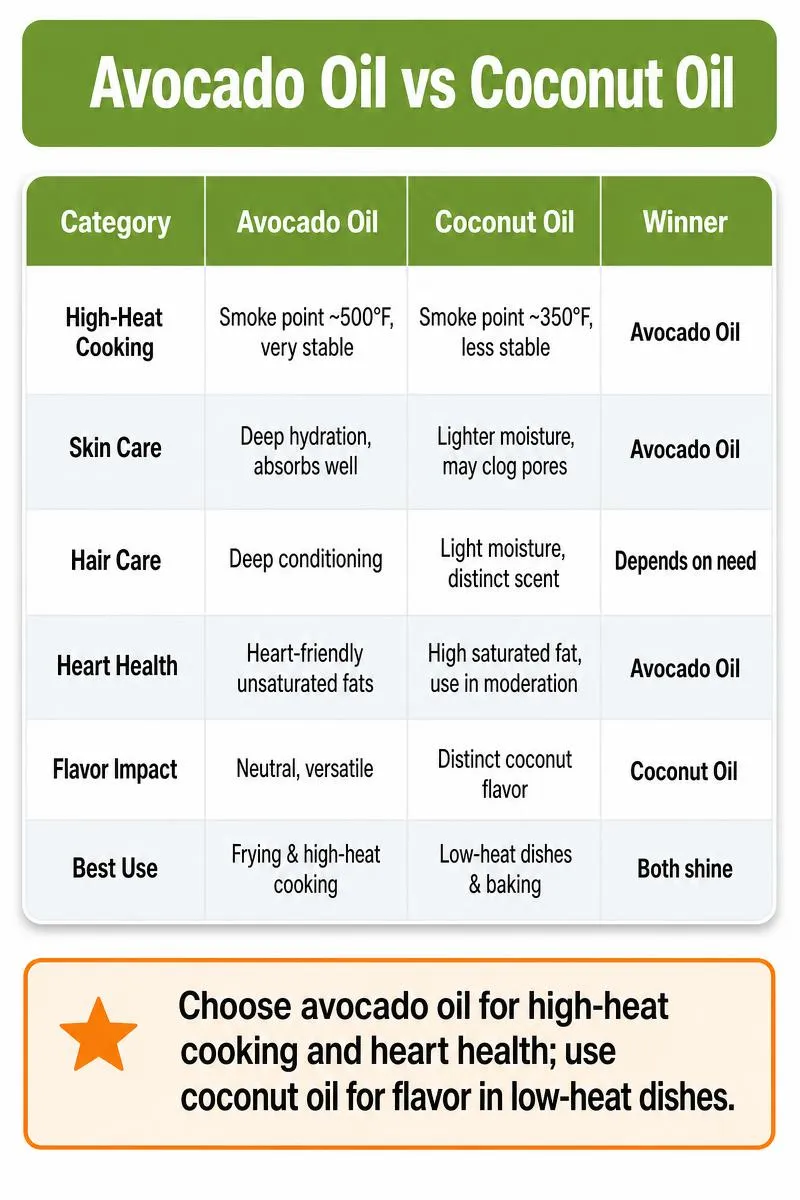
| Category | Avocado Oil | Coconut Oil | Winner |
|---|---|---|---|
| High-Heat Cooking | Smoke point ~500°F, very stable | Smoke point ~350°F, less stable | Avocado Oil |
| Skin Care | Deep hydration, absorbs well | Lighter moisture, may clog pores | Avocado Oil |
| Hair Care | Deep conditioning | Light moisture, distinct scent | Depends on need |
| Heart Health | Heart-friendly unsaturated fats | High saturated fat, use in moderation | Avocado Oil |
| Flavor Impact | Neutral, versatile | Distinct coconut flavor | Coconut Oil |
| Best Use | Frying & high-heat cooking | Low-heat dishes & baking | Both shine |
What Is Avocado Oil?
Avocado oil comes from pressed avocado flesh – not the pit or peel. You’ll find avocado oil in cooking, skin care, and hair care, valued for its mild presence in recipes and its reputation for deeper skin hydration.
The main drawback is price: avocado oil typically costs more than coconut oil. Quality also varies significantly between brands, so the bottle you grab matters.
Related Reading
A concise comparison of MCT oil and coconut oil covering cooking uses, metabolic effects, and when to choose each.
What Is Coconut Oil?
Coconut oil comes from coconut meat, pressed or expelled into the solid white fat you recognize. Refined coconut oil has a neutral flavor and a higher smoke point; unrefined (virgin) coconut oil keeps a distinct tropical taste and aroma.
Coconut oil’s strengths include a long shelf life, lightweight moisture that absorbs without much residue, and multi-use flexibility. You can cook with coconut oil, moisturize with it, and remove makeup from the same jar.
The weaknesses: coconut oil’s saturated fat content draws scrutiny from heart health experts, and some people find the texture too heavy or greasy for their skin type.
Avocado Oil vs Coconut Oil: Cooking and Frying
Avocado oil handles high heat better than coconut oil. Avocado oil’s higher smoke point makes it the stronger pick for frying, searing, and high-heat roasting where stability matters more than flavor.
Coconut oil – especially refined – handles moderate heat well and works for baking, stovetop popcorn, and dishes where a tropical note actually belongs. Unrefined coconut oil has a lower smoke point and a stronger flavor, so reserve unrefined coconut oil for low-heat cooking or finishing.
You can substitute one for the other, but expect changes. Coconut oil solidifies at room temperature, so swapping avocado oil into a baked recipe may produce a different texture. And coconut oil will always announce itself with flavor, while avocado oil stays quiet.
Avocado Oil vs Coconut Oil: Skin Care
Avocado oil absorbs more slowly and penetrates deeper into the skin. For dry, mature, or flaky skin that needs serious hydration rather than a surface layer, avocado oil is the better match.
Coconut oil absorbs faster and more superficially, which suits oily or combination skin types that want moisture without a heavy film. Coconut oil’s lighter feel also spreads and layers more easily under other products.
If your skin feels tight and dry, avocado oil is the safer call. If your skin already produces enough oil and you just want a light barrier, coconut oil feels less heavy.
Related Reading
Explores babassu versus coconut oil for skin and hair applications-useful for readers weighing beauty benefits.
Avocado Oil vs Coconut Oil: Hair Care
Both oils work as hair masks, pre-wash treatments, or leave-in conditioners. How your hair responds depends on its texture and porosity – thicker, more porous hair tends to absorb heavier oils more readily, while finer, low-porosity hair may resist heavier oils and feel weighed down.
Either oil can usually replace the other – you’ll just need to adjust the amount. Start with less than you think you need, especially if you’re switching to a heavier oil than your hair is used to.
Avocado Oil vs Coconut Oil: Heart Health and Safety
Some cardiologists advise limiting coconut oil because of its saturated fat content. Saturated fat can raise LDL cholesterol, and elevated LDL is the type most closely linked to heart disease.
Avocado oil is predominantly monounsaturated fat – the same fat profile found in olive oil that heart-health experts tend to favor. Some sources suggest this makes avocado oil the less commonly flagged option for heart-conscious diets.
Which Should You Choose?
- Dry or aging skin: Avocado oil – deeper hydration that penetrates rather than sitting on top
- Oily or combination skin: Coconut oil – lightweight moisture that absorbs fast
- Daily cooking, frying, and high-heat roasting: Avocado oil – heat stability without flavor interference
- Baking, popcorn, and tropical-flavored dishes: Coconut oil – solid texture and a distinct tropical taste
- A heart-health-focused eating plan: Avocado oil – a fat profile that cardiologists flag less often
Explore More
Compares coconut oil and canola oil for frying, smoke point, and heart-health considerations-handy for choosing the…
FAQs About Avocado Oil and Coconut Oil
Is coconut oil healthy?
Coconut oil has real uses in cooking and skin care, but coconut oil’s saturated fat content means coconut oil isn’t the heart-healthy oil some marketing once claimed. Use coconut oil in moderation and for the right purpose – flavor, skin moisture, or hair conditioning – rather than as your primary cooking fat.
Why do some cardiologists advise against coconut oil?
Because coconut oil is high in saturated fat, which can raise LDL cholesterol. Elevated LDL is linked to heart disease, so cardiologists who focus on heart health tend to recommend oils with more monounsaturated fat instead.
Is there a downside to avocado oil?
Not a health-related one that draws serious concern. The main issues are practical: avocado oil costs more than most cooking oils, and quality varies between brands.
What is the healthiest oil to cook with?
Between avocado oil and coconut oil, avocado oil is the more heat-stable option and carries a fat profile that cardiologists flag less often. For high-heat cooking specifically, avocado oil is the stronger pick.
Can you substitute avocado oil with coconut oil?
Yes, in most recipes and skin care routines. Expect the texture and flavor to change – coconut oil solidifies at room temperature and brings a tropical taste that avocado oil doesn’t.
What is the healthiest oil for the heart?
Between avocado oil and coconut oil, avocado oil is the less commonly flagged option. Avocado oil’s monounsaturated fat profile aligns with what heart-health experts tend to recommend, while coconut oil’s saturated fat content raises more concern.
Should you refrigerate avocado oil after opening?
Refrigeration isn’t required, but a cool, dark place extends avocado oil’s shelf life. Refrigerating avocado oil after opening can help preserve quality if you use avocado oil slowly.
Which oil is better for skin?
Your skin type decides it. Avocado oil suits dry or mature skin that needs deep hydration; coconut oil suits oily or combination skin that wants lighter moisture without a heavy film.
Can you use avocado oil or coconut oil for hair?
Yes – both work as masks, pre-wash treatments, or leave-in conditioners. Hair texture and porosity determine which oil absorbs better, so start with less than you expect and adjust based on how your hair responds.
Final Thoughts
No single oil wins across every use case. The right pick depends on whether you’re cooking, moisturizing, or conditioning hair.
Avocado oil is the practical pick for everyday cooking, high-heat frying, and heart-conscious diets. Coconut oil stays the better choice for lightweight moisture, flavor-driven recipes, and multi-use convenience.
Pick one use case – cooking, skin, or hair – and test both oils to see which your body or recipe actually prefers.
External References
- How to Choose the Best Cooking Oil + Is Oil HEALTHY?! – Whitneyerd
- The Effect of Coconut Oil Consumption on Cardiovascular … – NIH
- Randomised trial of coconut oil, olive oil or butter on blood … – NIH
- Top 11 healthiest cooking oils – Bbcgoodfood
- Evidence-Based Health Benefits of Avocado Oil – Healthline