Cactus Water vs Coconut Water: Which Is Better?
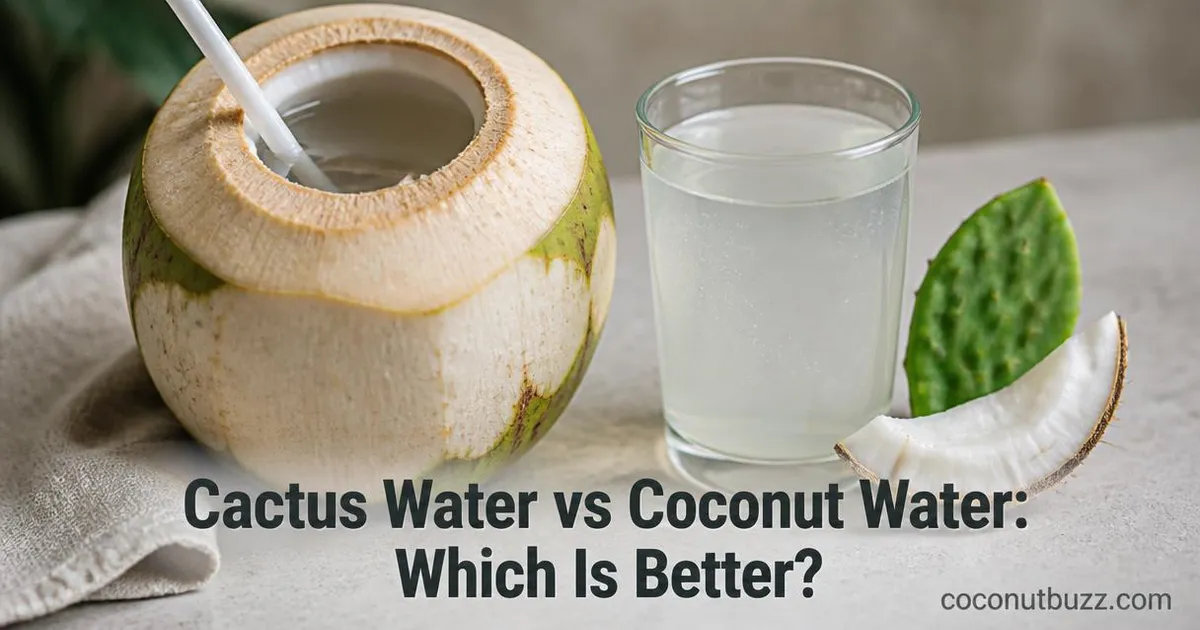
Coconut water built its reputation on potassium and post-workout recovery. Cactus water arrived later, promising antioxidants and a lighter profile. Both hydrate, but they target different priorities – one leans into electrolyte replacement, the other into sustainable refreshment with a milder taste.
Heavy sweating demands robust mineral replacement. Casual hydration might benefit more from a lighter drink with milder flavor that blends into smoothies without competing.
Key Takeaways
- Cactus water and coconut water both hydrate, but coconut water delivers higher potassium while cactus water offers antioxidants from betalains and flavonoids
- Intense endurance athletes often prefer coconut water for electrolyte replacement; casual exercisers may favor cactus water for lighter mineral content and mild flavor
- Cactus water is generally more sustainable – prickly pear grows in arid regions with minimal water, while coconuts require tropical climates and long-distance shipping
- Both drinks carry cautions for people with kidney conditions or those taking blood pressure medications due to their mineral content
- Coconut water has wider retail availability and a familiar tropical taste; cactus water offers subtle berry or melon notes and less sweetness
Comparing the Top Cactus Water Vs Coconut Water
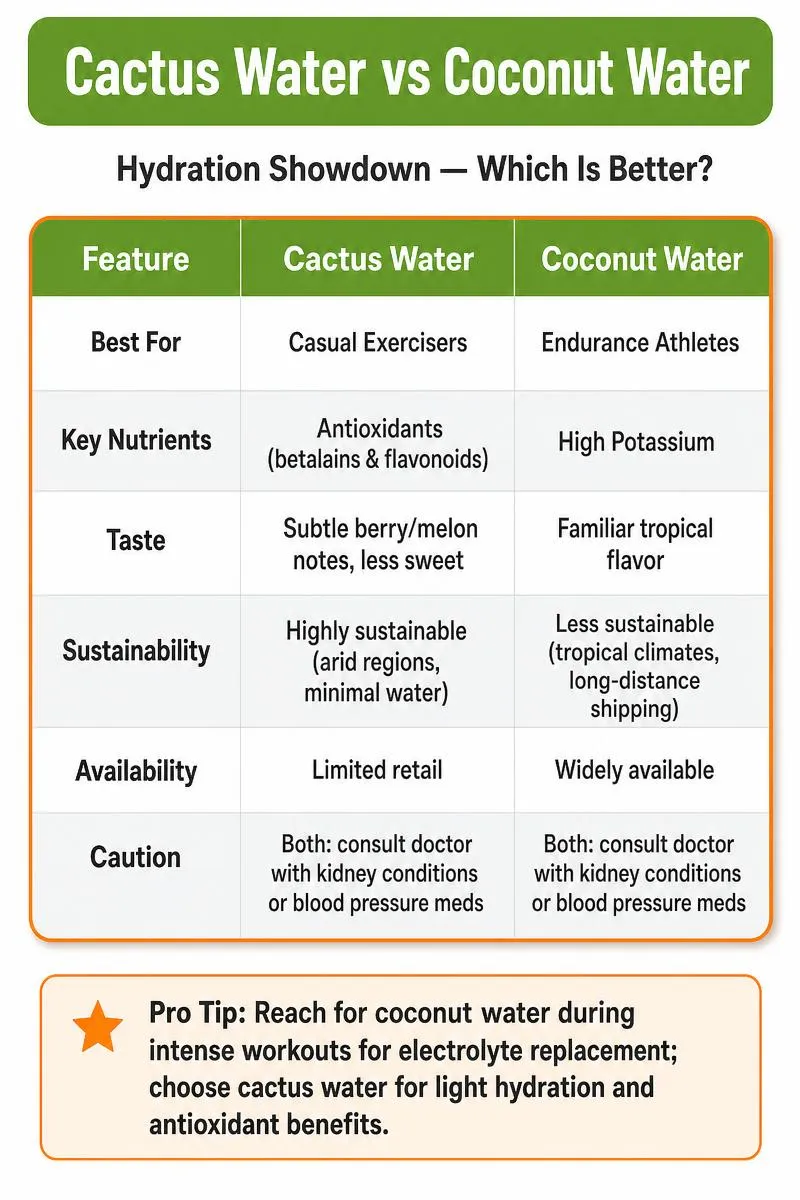
| Feature | Cactus Water | Coconut Water |
|---|---|---|
| Best For | Casual exercisers | Endurance athletes |
| Key Nutrients | Antioxidants (betalains & flavonoids) | High potassium |
| Taste | Subtle berry/melon notes, less sweet | Familiar tropical flavor |
| Sustainability | Highly sustainable (arid regions, minimal water) | Less sustainable (tropical climates, long-distance shipping) |
| Availability | Limited retail | Widely available |
| Caution | Consult doctor if kidney condition or on blood pressure meds | Consult doctor if kidney condition or on blood pressure meds |
What Is Cactus Water?
Cactus water is a drink made from the fruit or pads of the prickly pear cactus. The fruit yields most commercial varieties, though some brands use the paddle-shaped pads themselves. Processing extracts the liquid, which brands often blend with other juices or flavor additions.
The drink works well as post-workout refreshment when you don’t need heavy electrolyte loading, a smoothie base that won’t overpower other ingredients, or everyday light hydration without much sweetness.
Cactus water brings a few clear advantages. The taste stays neutral enough to drink plain or blend into recipes without the tropical signature that coconut water carries. Prickly pear cactus crops need very little water to thrive, making production less resource-intensive than most fruit beverages. The drink is plant-based and naturally fat-free.
Two weaknesses stand out. Retail presence remains smaller – you’ll find coconut water in nearly every grocery store, but cactus water still occupies niche shelf space or online-only distribution in many regions. The category is newer, so fewer long-term studies examine its effects compared to coconut water’s more established research base.
Coconut water vs coconut juice
A clear comparison breaking down how coconut water differs from coconut juice in flavor and processing.
What Is Coconut Water?
Coconut water is the clear liquid extracted from inside young green coconuts, distinct from the white coconut milk made by blending flesh with water. Producers tap young green coconuts before the flesh fully matures.
Athletes use coconut water as natural electrolyte replacement after exercise, and cooks rely on it in tropical recipes where its sweetness and slight nuttiness add dimension. The drink has become a go-to for people looking to rehydrate without reaching for sports drinks.
Coconut water’s strengths are straightforward. Wide availability means you can grab it at gas stations, gyms, and corner stores without planning ahead. Athletes have built trust in its potassium content over years of use, giving the drink an established reputation that newer alternatives lack. The taste profile is familiar to anyone who’s tried coconut products before.
The weaknesses matter to specific groups. The distinct tropical, nutty sweetness is polarizing – some drinkers love it, others avoid it entirely. Coconuts grow only in specific tropical regions, so sourcing and shipping add environmental weight. The naturally occurring sugars aren’t excessive, but they do matter for people monitoring intake carefully.
Cactus Water vs Coconut Water: Hydration
Coconut water earned its hydration reputation through potassium content that rivals or exceeds what you get from a banana. Brands market the drink to endurance athletes and anyone sweating heavily, emphasizing its ability to replace minerals lost during intense activity. The electrolyte profile includes sodium, magnesium, and calcium alongside that marquee potassium.
Cactus water carries lighter mineral content overall. Some sources suggest the drink provides electrolytes, but at lower concentrations than coconut water delivers. The appeal here is hydration without the mineral load – useful when you need fluids but haven’t depleted stores through hard exertion.
The condition that decides your choice is exercise intensity. Intense endurance athletes – marathon runners, cyclists on long rides, anyone sweating heavily for extended periods – often prefer coconut water because replacing potassium and other electrolytes matters as much as replacing fluid. Casual exercisers, people hydrating throughout the day, or anyone who finds coconut water too heavy may favor cactus water for its lighter feel and subtler mineral presence.
Cactus Water vs Coconut Water: Nutrition and Health Benefits
Cactus water emphasizes antioxidants as its main nutritional angle. Prickly pear fruit contains betalains and flavonoids – compounds some sources suggest may reduce inflammation and protect cells from oxidative stress. The antioxidant content varies by brand and processing method, but the category positions itself around these compounds more than mineral replacement.
Coconut water emphasizes natural minerals and electrolytes. Beyond potassium, the drink provides magnesium, which plays a role in muscle function, and small amounts of calcium and phosphorus. Some drinkers report using coconut water to support recovery or manage cramping, though individual responses vary.
No clear winner emerges on nutrition – the drinks target different goals. Choose based on whether you want a lighter drink with antioxidant interest or a mineral-rich option with a strong potassium reputation. Neither replaces a balanced diet, but both offer something beyond plain water.
Related Reading
A deep dive into coconut water’s hydration, electrolytes, and health benefits.
Cactus Water vs Coconut Water: Taste
Coconut water carries tropical, nutty sweetness that announces itself immediately. The flavor is distinct – if you’ve had coconut products before, you’ll recognize the profile. Some batches taste slightly salty due to natural sodium content, and the sweetness level varies depending on coconut maturity and brand.
Cactus water is lighter with subtle berry or melon notes that many drinkers describe as refreshing without being cloying. The taste doesn’t dominate mixed drinks or smoothies, making cactus water easier to incorporate into recipes where you don’t want a strong flavor competing with other ingredients. Some brands add light sweeteners or fruit juice, so check labels if you’re after pure cactus extraction.
The winner depends entirely on preference. If you want bold tropical flavor that feels like a treat, coconut water delivers. If you prefer mild refreshment that hydrates without making a statement, cactus water fits better.
Cactus Water vs Coconut Water: Sustainability
Coconut farming requires tropical climates with consistent rainfall and warm temperatures year-round. Most commercial production happens in Southeast Asia, the Philippines, and parts of South America, then ships globally. The transportation footprint adds environmental cost, and intensive farming in some regions has raised concerns about monoculture and soil depletion.
Prickly pear grows in arid regions with minimal water – deserts and semi-arid zones where few other crops thrive. The cactus tolerates drought, poor soil, and temperature extremes, making cultivation less resource-intensive. Regional adaptability means prickly pear can grow closer to consumption markets in places like the southwestern United States and Mexico, cutting shipping distances.
Cactus water wins on lower resource use and regional adaptability. If environmental impact guides your purchasing decisions, cactus water’s cultivation and distribution generally carry a lighter footprint than coconut water’s tropical-to-global supply chain.
Which Should You Choose?
- If you need robust electrolyte replacement after heavy sweating – long runs, intense gym sessions, outdoor work in heat – coconut water’s potassium content makes it the better match
- If you prefer mild, less sweet flavor that won’t dominate smoothies or mixed drinks, cactus water delivers refreshment without the tropical punch
- If you prioritize lower environmental impact, cactus water’s minimal water needs and regional growing zones reduce the resource footprint
- If you want the widest retail availability, coconut water shows up in nearly every grocery store, convenience shop, and gym
- If you’re looking for a newer plant-based option with antioxidant interest, cactus water offers betalains and flavonoids – compounds some sources suggest may reduce inflammation and support cellular health
An overview of coconut cream’s nutritional uses and how it compares as a richer coconut product.
FAQs About Cactus Water and Coconut Water
How healthy is cactus water compared to coconut water?
Both drinks offer plant-based hydration without added fat. Cactus water provides antioxidants from betalains and flavonoids; coconut water provides higher potassium and other electrolytes. Neither is objectively healthier – the better choice depends on whether you need mineral replacement or prefer a lighter drink with antioxidant compounds.
Why can’t you drink cactus water straight from the cactus?
Raw cactus pads and fruit require careful preparation to remove spines, glochids (tiny hair-like barbs), and potentially irritating compounds. Commercial cactus water goes through processing to extract liquid safely, filter out unwanted material, and sometimes pasteurize for shelf stability. Drinking unprocessed cactus liquid risks physical injury from barbs and digestive upset from compounds that processing neutralizes.
Can you drink coconut water if you have diarrhea?
Yes, for mild cases. Coconut water helps replace fluids and electrolytes lost through diarrhea, and its natural sugars may support energy when appetite drops. Severe or prolonged diarrhea requires medical attention, and people with kidney conditions should check with a doctor before increasing potassium intake from any source.
Is cactus water or coconut water better for weight loss?
Neither drink directly causes weight loss. Both are low in calories compared to soda or juice, making them better hydration choices if you’re cutting caloric beverages. Coconut water contains more naturally occurring sugars than cactus water, so if you’re minimizing sugar intake, cactus water may fit better – but plain water remains the lowest-calorie option.
What happens if you drink coconut water every day?
Most people tolerate daily coconut water without issues. The main caution is potassium accumulation – people with kidney disease or those taking potassium-sparing diuretics, ACE inhibitors, or ARBs should consult a doctor before making coconut water a daily habit. Excessive potassium can cause heart rhythm problems in people whose kidneys can’t regulate mineral balance effectively.
Why do some people feel dizzy after drinking coconut water?
Dizziness may result from a sudden shift in electrolyte balance, especially if you drink large amounts quickly on an empty stomach. Coconut water’s potassium content can temporarily affect blood pressure in sensitive individuals or those taking blood pressure medication. Some people also experience low blood sugar responses if they drink coconut water without food. If dizziness persists, stop drinking and consult a doctor.
What are the main benefits of cactus water?
Cactus water provides hydration with antioxidants from betalains and flavonoids, compounds some sources suggest may reduce inflammation. The drink offers a mild flavor that mixes easily, and prickly pear cultivation requires minimal water compared to most fruit crops. Cactus water contains fewer naturally occurring sugars than coconut water, making it a lighter option for people monitoring intake.
Is cactus water more sustainable than coconut water?
Generally, yes. Prickly pear thrives in arid regions with minimal water, tolerates poor soil, and can grow closer to consumption markets in places like the southwestern United States and Mexico. Coconut farming requires tropical climates and often involves long-distance shipping. Lower water needs and regional adaptability give cactus water an environmental edge.
Can cactus water replace coconut water after exercise?
For light to moderate exercise, cactus water works as a refreshing hydration option. For intense or prolonged exertion that causes heavy sweating, coconut water’s higher electrolyte content – especially potassium – makes it the better replacement choice. Match the drink to your sweat loss: casual workouts don’t demand the mineral load that endurance sessions do.
What is the healthiest coconut water brand to drink?
Look for brands with one ingredient: coconut water. Avoid added sugars, preservatives, or artificial flavors. Some brands pasteurize, which extends shelf life but may slightly alter taste and nutrient content; others use high-pressure processing to maintain freshness. The healthiest option is whichever pure coconut water you’ll actually drink – hydration only works if you consume it.
Final Thoughts
Neither drink is objectively superior. Coconut water suits heavy electrolyte loss from intense exercise or prolonged sweating. Cactus water suits lighter hydration needs, offers sustainability benefits from low-water cultivation, and appeals to drinkers who prefer mild flavor over tropical sweetness.
If you have kidney disease or take blood pressure medication – particularly potassium-sparing diuretics, ACE inhibitors, or ARBs – consult a doctor before making either drink a regular habit. Both contain minerals that affect electrolyte balance, and individual tolerance varies.
Sample both after your next workout and notice which taste and feel you prefer. The best hydration choice is the one you’ll reach for consistently.
External References