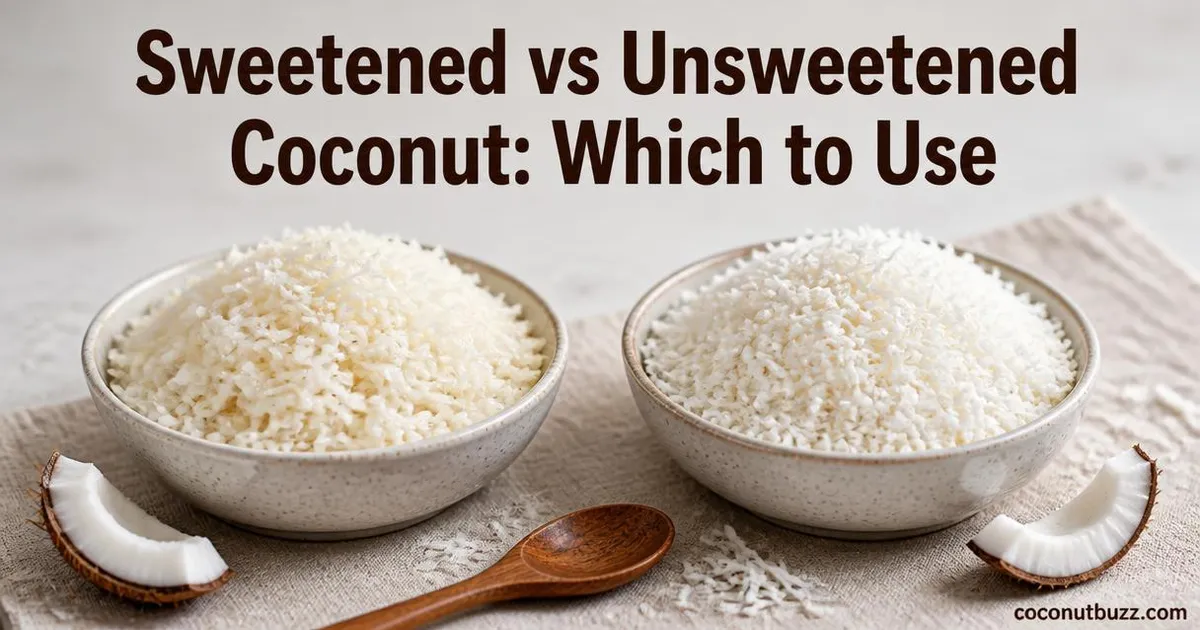
Sweetened vs Unsweetened Coconut: Which to Use
You’re standing in the baking aisle, and two nearly identical bags of coconut sit side by side. One says sweetened, the other doesn’t, and the difference isn’t obvious until you start cooking with them.
Sweetened coconut carries added sugar and extra moisture that change how recipes behave. Unsweetened coconut is just dried coconut meat with nothing added, which gives you more control but a drier result. Most classic American dessert recipes assume you’re using the sweetened version, which is why swapping in unsweetened can produce dry, crumbly baked goods if you don’t adjust.
The choice comes down to three things. What you’re making, how much sweetness you want, and whether you’re willing to tweak a recipe if you only have one type on hand.
Key Takeaways
- Sweetened coconut has added sugar and extra moisture, making it the default in most classic American baking recipes.
- Unsweetened coconut is dried coconut meat with no sugar added, giving you full control over sweetness but a drier texture.
- Substituting unsweetened for sweetened usually means adding sugar and sometimes extra liquid to compensate.
- Sweetened coconut is the safer pick for traditional cookies and macaroons; unsweetened works better in curries, granola, and savory dishes.
- Shredded, flaked, and grated describe the cut size of the coconut, not whether sugar was added, and both sweetened and unsweetened versions come in all three.
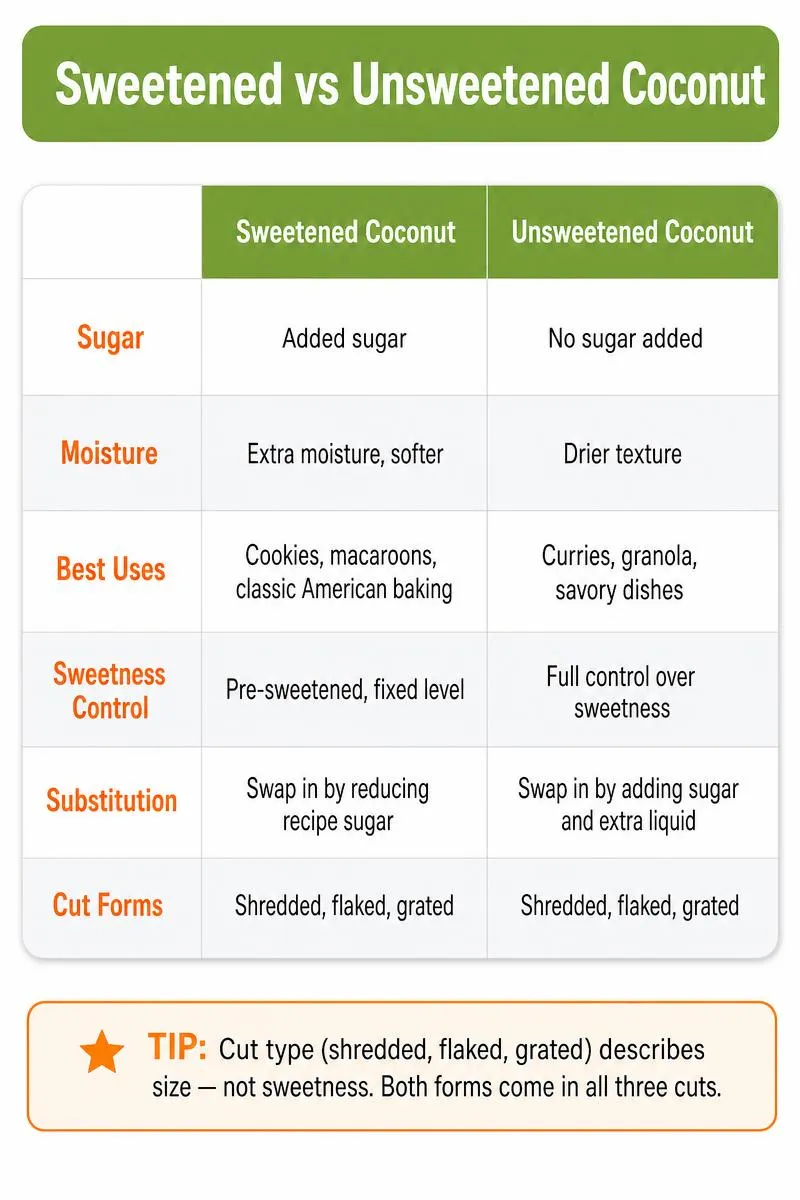
Sweetened Vs Unsweetened Coconut Compared
| Feature | Sweetened Coconut | Unsweetened Coconut |
|---|---|---|
| Sugar | Added sugar | No sugar added |
| Moisture | Extra moisture, softer | Drier texture |
| Best uses | Cookies, macaroons, American baking | Curries, granola, savory dishes |
| Sweetness control | Pre-sweetened, fixed level | Full control over sweetness |
| Substitution | Reduce recipe sugar | Add sugar and extra liquid |
| Cut forms | Shredded, flaked, grated | Shredded, flaked, grated |
What Is Sweetened Coconut?
Sweetened coconut starts as dried coconut meat that gets coated with sugar, typically a simple syrup or granulated sugar, to add sweetness and plump the shreds with moisture. The sugar acts as a humectant, holding extra water in the coconut so it stays soft and chewy rather than brittle.
This version is what most American baking recipes mean when they call for “flaked coconut” or “shredded coconut” without further qualification. Macaroons, coconut cookies, no-bake bars, and classic layer cakes all lean on the predictable sweetness and softer texture that sweetened coconut provides.
You know exactly how sweet the coconut is, and it blends into batter without drying it out. That’s the consistency advantage.
The downside is that the sugar is fixed. You can’t dial it back, and sweetened coconut over-sweetens savory dishes where coconut should taste like coconut rather than dessert.
Keep Reading
Turbinado sugar vs coconut sugar
Compare coconut sugar to turbinado sugar and learn swap-in guidance for sweetening recipes that use sweetened coconut.
What Is Unsweetened Coconut?
Unsweetened coconut is dried coconut meat with no sugar, syrup, or other additives mixed in. What you get is the coconut itself, dried and cut, with nothing added.
Unsweetened coconut works in curries, granola, oatmeal toppings, and savory coatings because it carries coconut flavor without steering everything toward sweet. That’s the flexibility you gain.
When you bake with unsweetened coconut, you control exactly how much sugar goes into the recipe rather than inheriting whatever the manufacturer decided. The coconut flavor also comes through sharper and nuttier without sugar rounding out the edges.
The trade-off is texture. Without added sugar holding moisture, unsweetened coconut is drier and can produce crumbly results if you swap it directly into a recipe designed for sweetened.
Sweetened vs Unsweetened Coconut: Baking and Recipes
Most dessert recipes were developed with sweetened coconut, and that assumption shows up in how the coconut behaves in the oven.
1. Cookies and Macaroons
Classic coconut macaroons depend on the moisture in sweetened coconut to bind egg and coconut together into chewy mounds. Unsweetened coconut, dropped straight into a macaroon recipe, produces a drier cookie that crumbles instead of holding its shape.
Coconut cookies follow the same pattern. The sweetened version keeps the dough soft and helps the cookie spread evenly during baking.
2. Cakes
In cakes, sweetened coconut adds moisture to the batter and produces a tender crumb. The extra sugar helps the coconut retain water during baking, so the cake stays soft rather than drying out at the edges.
Unsweetened coconut can work in cakes if you add sugar and a little extra liquid. The texture won’t perfectly match a recipe built around sweetened, but the structure will hold.
3. When Unsweetened Wins
Unsweetened coconut works best when the recipe doesn’t need added moisture or sugar from the coconut itself. Granola lets you sweeten separately, and curries carry spice that sugar would clash with.
Savory crusts and toppings rely on coconut’s nutty flavor more than softness. That’s where unsweetened coconut does its best work.
Winner: Sweetened for classic desserts. Unsweetened for custom or savory recipes.
Sweetened vs Unsweetened Coconut: Taste
Sweetened coconut tastes like coconut with sugar layered on top. The added sweetness rounds out the coconut’s natural tropical flavor and makes it taste like dessert even before you cook with it.
Unsweetened coconut tastes more like the actual coconut meat. Expect a nutty, slightly oily flavor with a cleaner finish.
Sugar changes more than sweetness, though. Sugar shifts how you perceive the coconut itself, muting the sharper edges and making the flavor rounder and more familiar to most palates. That’s why sweetened coconut tastes “like coconut” to many people, even though unsweetened is technically the more accurate coconut flavor.
Winner: Unsweetened for pure coconut flavor. Sweetened for dessert-ready taste.
Explore More
Young coconut vs mature coconut
Understand how coconut maturity changes texture and natural sweetness, helping you choose between sweetened and…
Sweetened vs Unsweetened Coconut: Substituting One for the Other
The substitution question is where most people get tripped up, and the answer depends on which direction you’re going.
1. Swapping Unsweetened for Sweetened
If your recipe calls for sweetened coconut but you only have unsweetened, you need to add a small amount of sugar and a splash of liquid to replace the missing moisture.
Let the mixture sit for a few minutes so the coconut absorbs the liquid before adding it to your recipe. The swap works well for cookies and bars, but macaroons are riskier because their structure depends on that extra moisture.
2. Swapping Sweetened for Unsweetened
Going the other direction is harder. If a recipe calls for unsweetened coconut and you substitute sweetened, you’re adding sugar that the recipe doesn’t account for.
In a curry or savory dish, that extra sweetness throws off the balance. You’d need to reduce sugar elsewhere in the recipe, which isn’t always possible.
In a baking recipe that already has sugar, the extra sweetness from sweetened coconut is usually less disruptive. The cookie or cake will be sweeter, but the structure will hold.
Winner: Unsweetened can work if you adjust the recipe. Sweetened is harder to swap into savory dishes.
Sweetened vs Unsweetened Coconut: Nutrition and Calories
The nutritional difference between sweetened and unsweetened coconut comes down to added sugar. Unsweetened coconut contains the natural fats and carbohydrates present in coconut meat, while sweetened coconut adds refined sugar on top of that.
Both versions are energy-dense because coconut meat is naturally high in lauric acid and other saturated fats. Coconut also contains small amounts of manganese, copper, and dietary fiber, and these appear in both sweetened and unsweetened forms.
The practical difference is that unsweetened coconut lets you control how much added sugar enters your diet. Sweetened coconut bakes that sugar into every bite, and you can’t separate it back out.
Winner: Unsweetened if you want to avoid added sugar. Otherwise, context matters.
Which Should You Choose?
For classic cookies and macaroons, keep sweetened coconut in the pantry. Most of those recipes were written for it, and the results are more predictable without adjustments.
For curries, granola, or oatmeal, go with unsweetened. Added sugar in sweetened coconut clashes with the spices in curry and over-sweetens granola that you’re already flavoring yourself.
Reducing added sugar? Unsweetened coconut gives you that control. You’ll need to add sugar and sometimes liquid when baking, but you decide how much.
Want one bag for desserts? Sweetened coconut is the grab-and-go option. Sweetened coconut works in the majority of American baking recipes without modification.
Need flexibility across categories? Unsweetened coconut is the more versatile choice. You can always add sugar, but you can’t easily take it back out.
You Might Also Like
See how coconut flour performs in baking compared with oat flour when adapting recipes that call for shredded coconut.
FAQs About Sweetened and Unsweetened Coconut
What’s the difference between sweetened and unsweetened coconut?
Sweetened coconut has sugar added to the dried coconut meat, along with extra moisture that the sugar holds in. Unsweetened coconut is dried coconut meat with no sugar or additives. The difference affects taste, texture, and how each performs in recipes.
Can I substitute unsweetened coconut for sweetened coconut, and how?
Yes, but you need to add a small amount of sugar and a little liquid to replace the missing moisture. Let the coconut absorb the liquid for a few minutes before mixing it into the recipe.
Which coconut is best for cookies and baking?
Sweetened coconut, for most classic American cookie and macaroon recipes. The added sugar and moisture help the dough stay soft and hold together. Unsweetened works if you’re willing to adjust the sugar and liquid in the recipe.
What are some common mistakes when baking with coconut?
Using unsweetened coconut in a recipe designed for sweetened without adding sugar or liquid is the most common mistake. The result is dry, crumbly baked goods. Another is assuming all shredded coconut is sweetened, which leads to double-sweetening when the package was already sweet.
Are shredded coconut and grated coconut the same?
They’re similar but differ in cut size. Shredded coconut comes in thin strips, while grated coconut is finer and smaller. Both terms describe the cut, not whether sugar was added, and both come in sweetened and unsweetened forms.
What’s the difference between sweetened, unsweetened, and shredded coconut?
Sweetened and unsweetened describe whether sugar has been added, while shredded describes the cut size of the coconut. You can have sweetened shredded coconut, unsweetened shredded coconut, sweetened flaked coconut, or unsweetened flaked coconut. The sweetness and the cut are two separate variables.
How do sweetened and unsweetened coconut compare in taste?
Sweetened coconut tastes rounder and more dessert-like, with sugar softening the sharper edges of the coconut flavor. Unsweetened coconut tastes nuttier and more intense, with a cleaner finish that reads as the actual flavor of coconut meat.
What is the healthiest way to eat coconut?
Unsweetened coconut, prepared without added sugar, gives you the natural fats and dietary fiber from coconut meat without the added sugar in sweetened versions. The preparation method also matters. Coconut in curries, granola, or lightly toasted toppings keeps the additions minimal compared to coconut baked into sugar-heavy desserts.
How do sweetened and unsweetened coconut compare in nutrition and calories?
Both are energy-dense because coconut meat contains lauric acid and other saturated fats. The difference is that sweetened coconut adds refined sugar, increasing the carbohydrate content. Unsweetened coconut contains only the natural carbohydrates from the coconut meat itself, with none of the added sugar.
Final Thoughts
Keep sweetened coconut in the pantry if you bake classic American desserts regularly. Macaroons, coconut cookies, and layer cakes all work better with the moisture and sweetness sweetened coconut brings.
Keep unsweetened coconut if you cook across sweet and savory categories. Unsweetened coconut adapts to curries, granola, and custom baking in ways that sweetened coconut can’t.
If you ever need to substitute one for the other, plan to adjust for the missing sugar and moisture. Try the same coconut cookie recipe once with sweetened coconut and once with unsweetened.
External References
- Understanding Moisture Content and Shelf Life in Coconut … – Sagaratco
- Be Smart About Sugar | Healthy Weight and Growth – Cdc
- Is there a place for coconut oil in a healthy diet? – Harvard Health
- The relationship between moisture content and water … – Researchgate
- Coconut oil consumption and cardiovascular risk factors in … – NIH