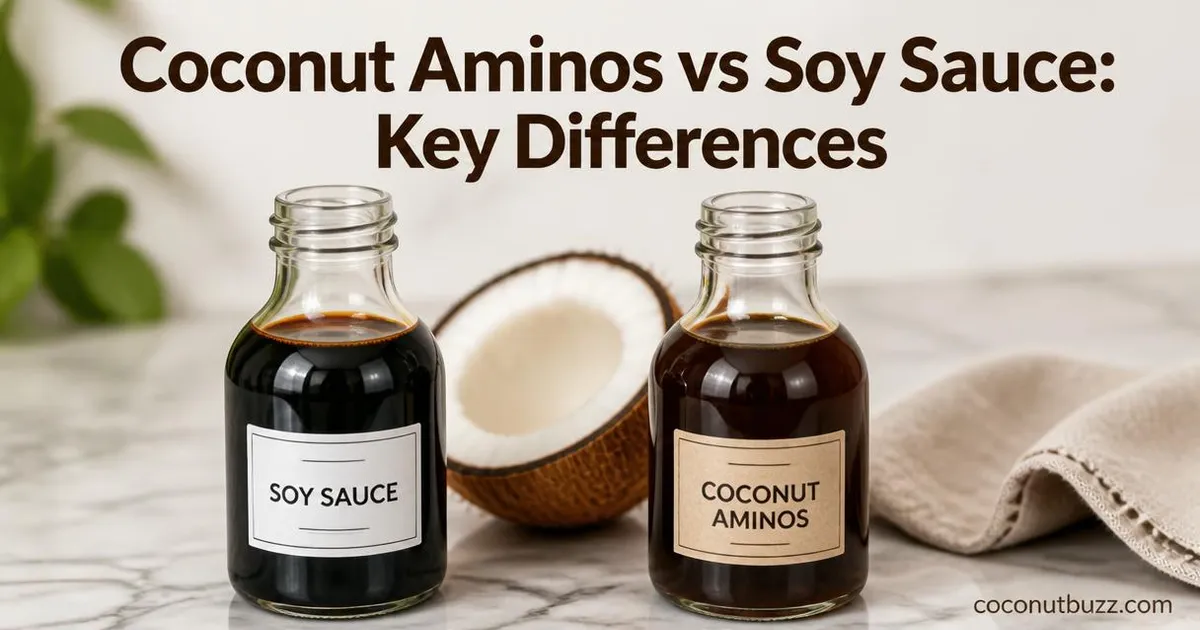
Coconut Aminos vs Soy Sauce: Key Differences
People assume coconut aminos is just soy sauce with a coconut label. It’s not. Coconut aminos comes from the fermented sap of coconut blossoms, while soy sauce comes from fermented soybeans and wheat. Different source, different fermentation, different flavor.
If you’re here, you’re probably weighing these two for a specific reason: a soy or gluten allergy, sodium concerns, or just curiosity about whether the swap is worth it. The differences come down to ingredients, taste, nutrition, cost, and how each one behaves when you cook with it.
Key Takeaways
- Coconut aminos is soy-free, gluten-free, and wheat-free, making it the clear pick for anyone with those allergies or intolerances.
- Sodium content is lower in coconut aminos, but the tradeoff is a sweeter, less salty flavor that changes the profile of your dish.
- Some sources suggest coconut aminos may offer mild anti-inflammatory benefits, though the evidence is early and not conclusive.
- Soy sauce delivers deeper umami and costs noticeably less, especially if you cook with it regularly.
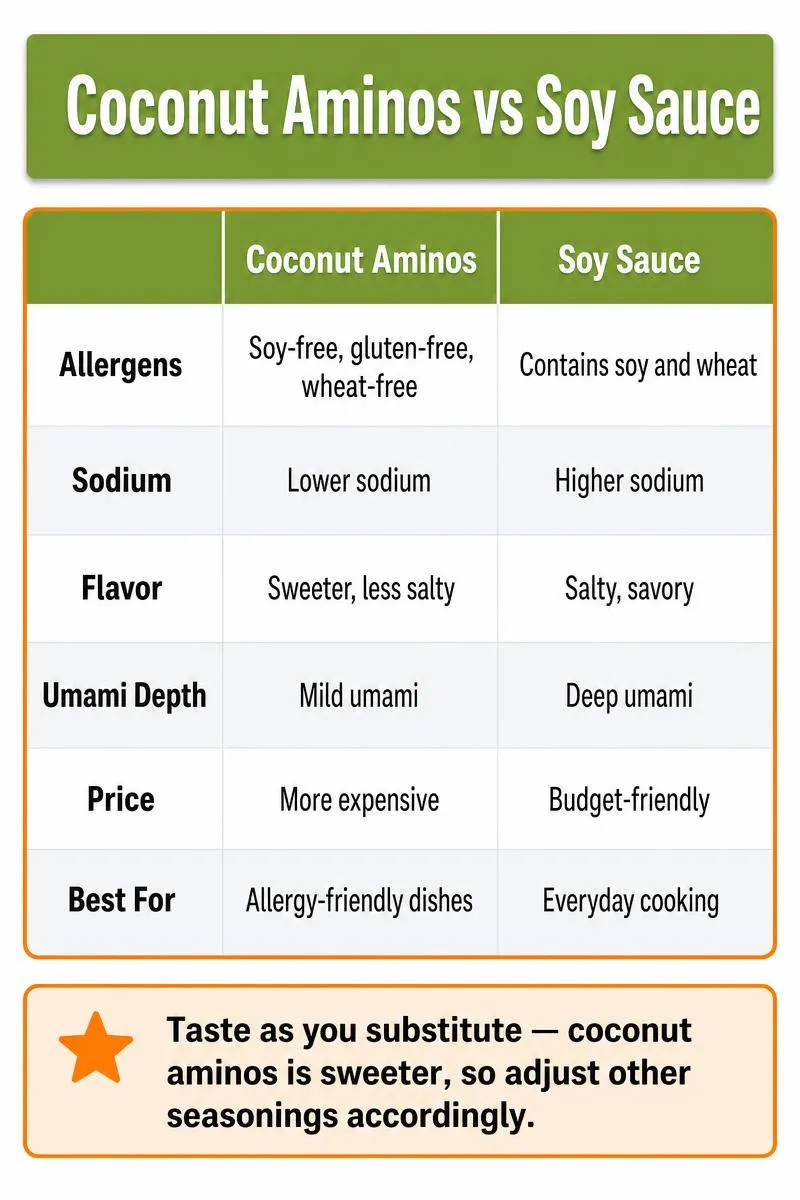
- The swap isn’t exact because coconut aminos is sweeter, so taste as you substitute and adjust other seasonings accordingly.
Coconut Aminos Vs Soy Sauce Side-by-Side
| Characteristic | Coconut Aminos | Soy Sauce |
|---|---|---|
| Allergens | Soy-free, gluten-free, wheat-free | Contains soy and wheat |
| Sodium | Lower sodium | Higher sodium |
| Flavor | Sweeter, less salty | Salty, savory |
| Umami Depth | Mild umami | Deep umami |
| Price | More expensive | Budget-friendly |
| Best For | Allergy-friendly dishes | Everyday cooking |
What Is Coconut Aminos?
Coconut aminos is a savory-sweet sauce made from the sap of coconut blossoms. The sap ferments and reduces into a dark liquid that looks like soy sauce but tastes milder and sweeter. Brands typically add sea salt to the finished product.
This condiment works best for anyone avoiding soy, gluten, or wheat. If you have celiac disease, a soy allergy, or you’re just trying to cut back on sodium, coconut aminos gives you a soy sauce-like experience without the allergens. The flavor leans sweet and mildly salty, which suits marinades, glazes, and lighter stir-fries.
Coconut aminos contains no soy, no wheat, and no gluten. It has less sodium than standard soy sauce. The calorie content is low per serving.
Coconut aminos delivers milder umami than soy sauce, so dishes that rely on deep savory depth may taste flatter. Coconut aminos costs more per bottle and isn’t available in every grocery store, so you may need to seek it out.
Related Reading
A practical comparison of coconut and maple sugar covering nutrition and baking substitutions.
What Is Soy Sauce?
Soy sauce is a fermented condiment made from soybeans, wheat, salt, and a culture of mold and bacteria. The fermentation process can take months, and the result is a dark, salty liquid with deep umami flavor. Soy sauce has been a staple in East and Southeast Asian cooking for centuries.
Soy sauce shines in stir-fries, marinades, braises, and dipping sauces. If you’re cooking traditional Asian dishes, soy sauce provides the savory backbone that those recipes were built around. The umami comes from glutamic acid, which forms during fermentation as proteins in the soybeans break down.
Soy sauce delivers rich, complex umami at a low price. You can find it in nearly every grocery store, and a little goes a long way in building flavor.
Soy sauce contains both soy and wheat, so it’s off the table for anyone with those allergies or intolerances. The sodium content is higher than coconut aminos, which matters if you’re watching your salt intake.
Coconut Aminos vs Soy Sauce: Taste and Flavor
Coconut aminos tastes sweeter and less salty than soy sauce. The sweetness comes from the natural sugars in coconut sap, which remain after fermentation. Soy sauce tastes saltier and more savory, with a deeper umami punch from the glutamic acid produced during soybean fermentation.
If you’re making a traditional stir-fry or a dipping sauce where that salty umami depth is the point, soy sauce wins. The flavor is more complex and more assertive.
If you prefer a milder, slightly sweet profile, or you’re making a marinade where sweetness complements the other ingredients, coconut aminos works well. Some people actually prefer coconut aminos in glazes and dressings where the sweetness is an asset.
Winner: Soy sauce for traditional flavor, coconut aminos for mild sweetness.
Coconut Aminos vs Soy Sauce: Nutrition and Sodium
Coconut aminos contains less sodium than standard soy sauce. If sodium reduction is your goal, coconut aminos is the better choice, though it’s still a salty condiment and not sodium-free.
The calorie content of both condiments is low per serving, and neither adds significant calories to a dish when used in typical amounts. The bigger nutritional difference is in the allergen profile: coconut aminos has no soy and no wheat, while soy sauce has both.
Some sources suggest coconut aminos may have mild anti-inflammatory properties. The evidence here is early, so treat that as a possible bonus rather than a proven benefit. Soy sauce, through its fermentation process, may also contain some bioactive peptides, but neither condiment is a meaningful source of nutrition beyond seasoning your food.
Winner: Coconut aminos for lower sodium and an allergen-free profile.
Worth Reading Next
A side-by-side look at coconut and soy-derived products that highlights ingredient differences and allergy…
Coconut Aminos vs Soy Sauce: Ingredients and Allergies
Soy sauce contains soybeans and wheat as its primary ingredients. If you have a soy allergy, celiac disease, or non-celiac gluten sensitivity, standard soy sauce is off the table.
Coconut aminos replaces both soybeans and wheat with just two ingredients – coconut sap and sea salt. The ingredient list is shorter and free of the two most common allergens people worry about with soy sauce.
If you need a gluten-free or soy-free option, coconut aminos is the clear pick. Some people also choose tamari, which is a Japanese soy sauce that’s typically wheat-free but still contains soy. If you’re avoiding both soy and gluten, coconut aminos is one of the few options that avoids both.
Coconut Aminos vs Soy Sauce: Price and Availability
Coconut aminos costs more than soy sauce, sometimes significantly more per ounce. The production process is smaller in scale, and fewer brands make it, which drives up the price.
Soy sauce is cheap and everywhere. Every grocery store carries it, usually in several varieties, from light to dark to low-sodium. Coconut aminos is getting easier to find, but you may need to check the natural foods aisle or a specialty store, and not every supermarket stocks it.
If you cook with soy sauce regularly and budget matters, soy sauce is the practical choice. Coconut aminos is worth the extra cost if you need the allergen-free profile, but for someone with no dietary restrictions, the price gap is hard to justify for everyday cooking.
Winner: Soy sauce for budget and convenience.
Coconut Aminos vs Soy Sauce: Cooking and Substitution
You can swap coconut aminos and soy sauce in roughly equal amounts, but the flavor difference means you should taste as you go. Coconut aminos brings sweetness that soy sauce doesn’t, so if a recipe already includes sugar, honey, or another sweetener, you may want to reduce that sweetener when using coconut aminos.
For stir-fries, soy sauce provides the salty umami that makes the dish taste right. Coconut aminos works in stir-fries too, but the result will be sweeter and less intensely savory. If you’re making a traditional Asian recipe that calls for soy sauce, the flavor won’t be the same with coconut aminos.
For marinades, both work well. Coconut aminos adds a sweetness that caramelizes nicely when you cook the marinated protein, which some people actually prefer for grilled or roasted dishes.
For dipping sauces, soy sauce gives you that sharp, salty bite that pairs with dumplings and sushi. Coconut aminos makes a milder dipping sauce, which some people like but others find too sweet.
Winner: Depends on your dish and dietary needs. Use soy sauce for traditional savory dishes and coconut aminos when you need allergen-free cooking or want a sweeter profile.
Related Reading
Coconut chips vs coconut flakes
Hands-on guidance on choosing coconut chips or flakes for recipes and how they substitute in cooking.
Which Should You Choose?
Gluten or soy allergy: Coconut aminos is the safe choice. It contains neither allergen, and the flavor is close enough to soy sauce that you won’t feel like you’re missing out.
Watching your sodium: Coconut aminos has less sodium than standard soy sauce. Just remember it’s still a salty condiment, so use it in moderation.
Flavor-first cooking: If you’re making traditional Asian dishes, soy sauce delivers the umami depth those recipes need. Coconut aminos will taste sweeter and less savory.
Budget shopper: Soy sauce is cheaper and easier to find.
Just curious: Start with a small bottle of coconut aminos. Try it in one or two recipes and see if the flavor works for you before committing to it as a regular substitute.
FAQs About Coconut Aminos and Soy Sauce
Are coconut aminos healthier than soy sauce?
“Healthier” depends on what you’re avoiding. Coconut aminos has less sodium and no soy or gluten, which makes it better for people with those dietary concerns. Soy sauce has deeper umami and may contain some bioactive peptides from fermentation, but neither condiment is a health food. Both are seasonings meant to be used in small amounts.
Does coconut aminos taste like soy sauce?
Coconut aminos looks like soy sauce and has a similar savory quality, but it’s sweeter and less salty. The umami is milder. If you’re expecting an exact match, you’ll notice the difference immediately. It’s a close cousin, not a twin.
What are the downsides of coconut aminos?
Coconut aminos is more expensive than soy sauce, harder to find in stores, and milder in umami flavor. The sweetness can also throw off recipes that weren’t designed for it, so you may need to adjust other seasonings when substituting.
Is coconut aminos anti-inflammatory?
Some sources suggest coconut aminos may have mild anti-inflammatory properties, but the evidence is early and not conclusive. Don’t rely on it as a therapeutic tool. The main reason to choose coconut aminos is the allergen-free profile and lower sodium, not an anti-inflammatory effect.
What is the substitution ratio for coconut aminos and soy sauce?
Swap them in roughly equal amounts, but taste as you go. Because coconut aminos is sweeter, you may need to reduce other sweeteners in the recipe or add a bit more salt to balance the flavor. Soy sauce is saltier and more intense, so if you’re going the other direction, expect a milder result.
Are coconut aminos ok for kidneys?
Coconut aminos still contains sodium, so anyone with kidney disease or sodium restrictions should treat it like any other salty condiment. It has less sodium than soy sauce, but that doesn’t make it low-sodium. Check with your doctor if you’re on a sodium-restricted diet.
What is healthier, coconut aminos or tamari?
Tamari is wheat-free but still contains soy, so coconut aminos wins for people avoiding both soy and gluten. For sodium, coconut aminos typically has less. Tamari has a flavor closer to traditional soy sauce, so if you don’t need to avoid soy, tamari may taste better. The healthier choice depends on which allergen or dietary concern matters most to you.
How do coconut aminos and liquid aminos differ from soy sauce?
Coconut aminos comes from fermented coconut sap. Liquid aminos is made from soybeans, similar to soy sauce, but it’s unfermented and typically made with an acid solution that breaks down the soy proteins. Liquid aminos contains soy, while coconut aminos does not. All three taste different: soy sauce is the most complex and savory, liquid aminos is milder and slightly sweet, and coconut aminos is the sweetest of the three.
How do the calories compare between coconut aminos and soy sauce?
Both are low-calorie condiments when used in typical serving sizes. Neither adds significant calories to a dish. The differences that matter are in sodium, allergens, and flavor, not in calories.
Final Verdict
One edge case worth naming: if you need to avoid both soy and gluten, coconut aminos is one of your few options that does both. Tamari covers gluten but not soy, and liquid aminos covers neither. Coconut aminos fills a gap that the other alternatives don’t.
Try the swap in a recipe you already know well and adjust for sweetness. The flavor difference will be obvious immediately, and you can decide for yourself whether the sweetness works or whether you’d rather stick with soy sauce.
External References
- Sodium and Your CKD Diet: How to Spice Up Your Cooking – National Kidney Foundation
- Celiac disease – Diagnosis and treatment – Mayo Clinic
- Diagnosis of Celiac Disease – NIDDK – NIH
- Characteristics of Umami Taste of Soy Sauce Using Electronic … – NIH
- Soy Sauce and Its Umami Taste: A Link from the Past to … – Wiley