Cannabutter vs Coconut Oil: Which Is Better for Edibles?
You’re making homemade edibles and staring at two fats: butter and coconut oil. Both work, and both have people who swear by them. But the choice changes your potency, your flavor, your recipe options, and how easily you can dose.
The real question isn’t which fat is better overall. It’s which one fits what you’re actually cooking. Cannabutter brings classic dairy flavor to brownies and cookies, while cannabis coconut oil swaps into everything from vegan gummies to savory sauces.
By the end, you’ll have a clear pick for your specific situation based on potency, taste, recipe fit, dosing, and shelf life. No overall winner, because there isn’t one.
Key Takeaways
- Cannabutter is the pick for classic baked edibles where butter flavor matters.
- Cannabis coconut oil covers more recipe types, including vegan recipes, and is easier to portion.
- Extraction efficiency differs between the two fats because of their fatty acid profiles, which affects strength and how much flower you waste.
- Neither fat wins every category. Your recipe and dosing goal decide which one makes sense.
Cannabutter Vs Coconut Oil Compared
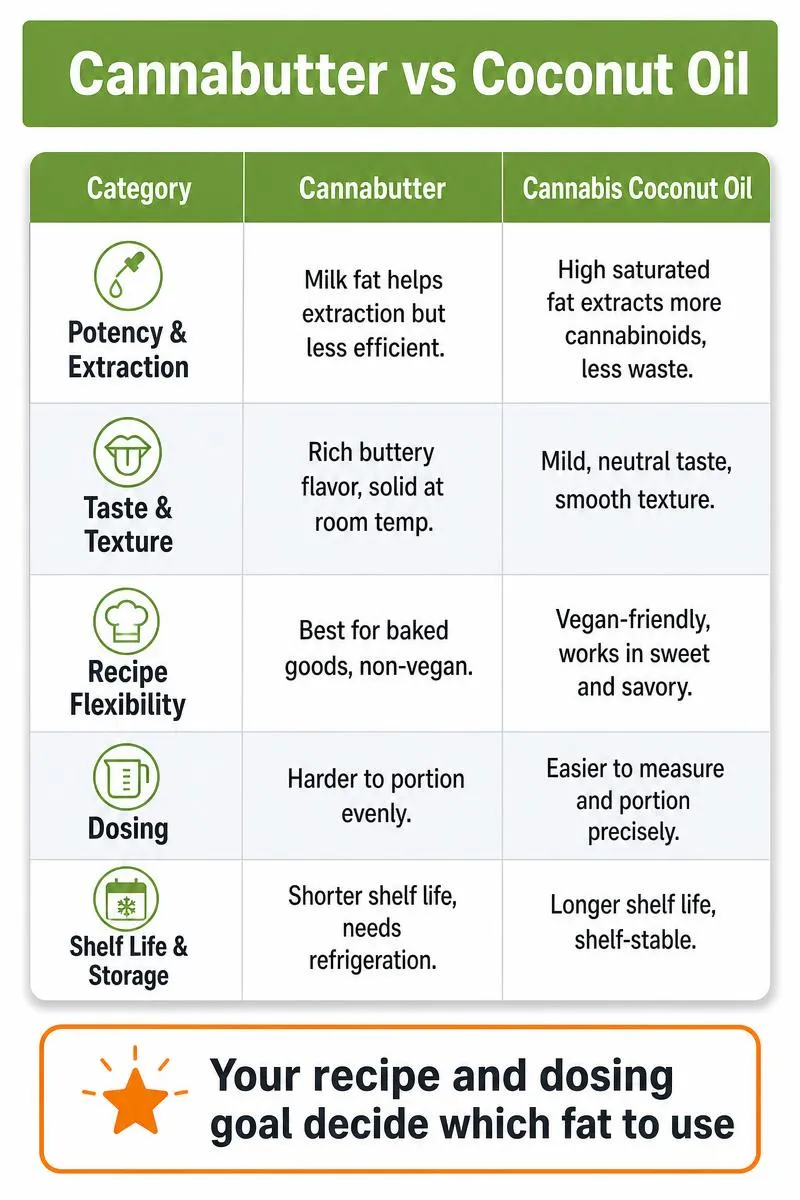
| Category | Cannabutter | Cannabis Coconut Oil |
|---|---|---|
| Potency & Extraction | Milk fat helps extraction but less efficient | High saturated fat extracts more cannabinoids, less waste |
| Taste & Texture | Rich buttery flavor, solid at room temp | Mild neutral taste, smooth texture |
| Recipe Flexibility | Best for baked goods, non‑vegan | Vegan‑friendly, works in sweet and savory |
| Dosing | Harder to portion evenly | Easier to measure and portion precisely |
| Shelf Life & Storage | Shorter shelf life, needs refrigeration | Longer shelf life, shelf‑stable |
What Is Cannabutter?
Cannabutter is butter that’s been infused with cannabis. It’s the fat most home cooks reach for first, partly because every classic edible recipe calls for it.
Classic baked goods like brownies, cookies, and cakes are where cannabutter shines. The butter carries THC and other cannabinoids through the batter, and the dairy flavor blends into chocolate and sugar without fighting them.
The main strength is familiarity. If a recipe already calls for butter, swapping in cannabutter is straightforward: melt it, mix it, and bake. No texture or chemistry adjustments needed.
The weakness is dairy. Cannabutter contains milk solids and lactose, which rules out vegan recipes and anyone with a dairy sensitivity. The milk solids also absorb cannabinoids, which means some potency stays trapped in solids you strain out and throw away.
Also Worth Checking Out
Benefits of coconut oil for weight loss
Explains how coconut oil affects weight and metabolism and whether consuming it supports weight-loss goals.
What Is Cannabis Coconut Oil?
Cannabis coconut oil is coconut oil infused with cannabis. Some people call it cannaoil, though that term also gets used for other infused oils like olive oil.
This fat covers more ground than cannabutter. You can use cannabis coconut oil in sweet and savory dishes, from gummies and chocolates to stir-fries and salad dressings. Any recipe that accepts a liquid or solid fat works.
The biggest strength is versatility. Coconut oil is dairy-free, so it works for vegan edibles. Coconut oil is also solid at room temperature, which makes portioning into measured doses easier than with a liquid oil.
The weakness is flavor. Coconut oil tastes like coconut, and that taste comes through in lighter recipes. The oil also changes texture with temperature: solid when cool, liquid when warm. That shift can affect the mouthfeel of finished edibles, especially if they’re served at a different temperature than they were stored at.
Cannabutter vs Cannabis Coconut Oil: Potency and Extraction
THC, CBD, and other cannabinoids are fat-soluble, which means they bind to fat molecules during infusion. How well that binding happens depends on the fat’s molecular structure.
Butter is mostly long-chain triglycerides, including palmitic acid, oleic acid, and myristic acid, plus water and milk solids. The water content means some of your infusion volume is water, not fat, so the cannabinoids that do bind are spread across less usable fat.
Coconut oil is almost entirely fat, and most of that fat is saturated fat in the form of lauric acid, a medium-chain fatty acid. The high saturated fat content binds cannabinoids efficiently, and the lack of water means nothing dilutes the infusion.
The result: cannabis coconut oil generally extracts cannabinoids more efficiently than cannabutter. You get more potency from the same amount of flower, with less waste.
One condition changes the math. If your butter is clarified into ghee, the water and milk solids are already removed, which closes some of the gap. But even clarified butter doesn’t match coconut oil’s saturated fat density.
Cannabutter vs Cannabis Coconut Oil: Taste and Texture
Butter’s flavor is built into classic baked goods. Brownies, cookies, and cakes get richer, deeper flavor from cannabutter.
The dairy notes in cannabutter complement chocolate, caramel, and vanilla without competing. Coconut oil tastes like coconut, which works in some recipes and clashes in others.
Tropical flavors, chocolate, and curry embrace coconut oil’s taste. A delicate shortbread or a neutral savory dish, though, can end up with a coconut note that sits oddly on the palate.
Texture differs too. Cannabutter stays relatively stable across temperature ranges because the milk solids and water give it structure. Coconut oil melts and solidifies with temperature shifts, which can change the texture of edibles stored at room temperature versus the fridge.
The taste winner depends on your recipe. Butter wins baked goods where its flavor is part of the profile. Coconut oil wins anything where the coconut taste complements the dish or where you need a fat that fades into the background.
Explore More
Is coconut oil good for cholesterol
Summarizes research on coconut oil’s impact on cholesterol and heart health – useful for readers weighing health…
Cannabutter vs Cannabis Coconut Oil: Recipe Flexibility
Cannabutter fits one category well: recipes that already call for butter. That’s a big category since most baked goods use butter, but it’s still a single lane. You can’t easily swap cannabutter into a stir-fry, a salad dressing, or a vegan recipe without changing the recipe.
Cannabis coconut oil swaps into a much wider range. Recipes that use oil can take cannabis coconut oil: baked goods, gummies, capsules, savory cooking, and even hot drinks.
Refined coconut oil has a more neutral flavor than unrefined, which means it swaps into recipes where butter’s dairy character would clash. That neutral version expands your recipe range into savory dishes and lighter desserts that can’t handle a coconut taste.
Coconut oil wins on range. Cannabutter wins if you’re working strictly within butter-based classics and don’t need that flexibility.
Cannabutter vs Cannabis Coconut Oil: Dosing
Dosing comes down to how easily you can measure the fat and how consistent each dose is across the batch. Cannabutter is harder to portion precisely because the cannabinoids concentrate in the butterfat, not the water or milk solids. If you scoop from the top of a jar, you might get a different dose than from the bottom.
Cannabis coconut oil is more uniform. Because coconut oil is nearly pure fat, the cannabinoids distribute more evenly throughout. Coconut oil also solidifies into a consistent texture that’s easy to cut into measured portions or fill into capsules.
Winner: coconut oil for both consistency and ease of measurement.
Cannabutter vs Cannabis Coconut Oil: Shelf Life and Storage
Both fats keep longer than the edibles you make with them, but the timelines differ. Cannabutter has a shorter shelf life in the fridge because the dairy content is prone to spoilage. The milk solids also absorb flavors from other foods in your fridge, which can affect taste over time.
Cannabis coconut oil lasts longer at room temperature because coconut oil’s high saturated fat content makes it resistant to oxidation. Coconut oil stays stable on a shelf and keeps even longer refrigerated or frozen.
The deciding condition is batch size. If you make large batches and store them, coconut oil’s longer shelf life matters more. If you use your infusion quickly, the shelf life difference is less relevant.
Also Worth Checking Out
Coconut butter vs almond butter
Compares texture and baking uses of coconut butter and almond butter, helping readers choose which fat suits specific…
Which Should You Choose?
- For classic baking like brownies, cookies, and cakes where butter flavor is part of the recipe, go with cannabutter. The taste and texture match what those recipes expect.
- For vegan edibles, cannabis coconut oil is the only option between the two. Coconut oil gives you the fat you need without the dairy.
- For consistent, measurable doses, cannabis coconut oil is easier to portion evenly.
- For one versatile infusion, cannabis coconut oil swaps into more dishes. You can bake with it, cook with it, and use it in beverages.
- For recipes where butter flavor and texture are central, cannabutter is still the right call. Don’t force coconut oil into a shortbread that depends on butter’s character.
FAQs About Cannabutter and Cannabis Coconut Oil
Is cannabutter or cannabis coconut oil better for edibles?
Neither is universally better. Cannabutter is better for butter-based baked goods where flavor matters, while cannabis coconut oil is better for versatility, dosing consistency, and vegan recipes. Your recipe and goal decide.
How do you make potent cannabutter, and does a longer infusion help?
Decarboxylation is the step that matters most. You need to heat cannabis to convert THCA into THC before infusing. Using enough fat to bind the cannabinoids and keeping the infusion temperature steady matter more than extending the time.
A longer infusion can extract more chlorophyll and plant taste without meaningfully increasing potency. The cannabinoids bind to fat in the first portion of the infusion, so extra time mainly adds bitterness.
What is the best oil to use in edibles?
Coconut oil is the most popular choice because its high saturated fat content binds cannabinoids efficiently. Butter is the other strong option. Olive oil works but extracts less efficiently than either.
What kind of coconut oil should you use for edibles?
Unrefined coconut oil carries a coconut taste that comes through in lighter recipes. Refined coconut oil has a more neutral flavor but goes through more processing. If you don’t want the coconut taste, refined is the better pick.
If the coconut flavor complements your recipe, unrefined works fine.
Can infused coconut oil help with pain?
Some sources suggest that cannabinoids like THC and CBD may help with certain types of pain, but the evidence is still developing. If you’re considering infused coconut oil for pain, talk to a healthcare provider first.
What can you make with cannabis-infused coconut oil?
You can use cannabis-infused coconut oil in baked goods, gummies, chocolates, savory dishes like curries and stir-fries, salad dressings, capsules, and hot drinks. The solid-at-room-temperature texture makes it especially suited to gummies and capsules where portion control matters.
Can you infuse coconut oil with herbs other than cannabis?
Yes. Coconut oil infuses well with rosemary, thyme, garlic, lavender, and other herbs using the same low-heat method. The saturated fat content binds fat-soluble compounds from herbs just as coconut oil binds cannabinoids.
Final Thoughts
Choose cannabutter for classic baked flavor: brownies, cookies, anything where butter is part of the identity. Choose cannabis coconut oil for flexibility, easier dosing, and recipes that go beyond baking.
Vegans and large-batch makers get the most from coconut oil’s longer shelf life and dairy-free profile.
Pick the fat that matches your most common recipe, and run a small test batch first. One batch tells you more about potency and taste than any guide can.
External References
- a comparative study on stability of different types of coconut … – Academicjournals
- Cannabis decarboxylation: optimal temperature, time and … – Ripperseeds
- MCT Oil vs Coconut Oil – Citrinfoundation
- Decarboxylation Study of Acidic Cannabinoids – PMC – NIH – NIH
- Comparing Shelf Life in Fats vs Oils – Bakeryacademy