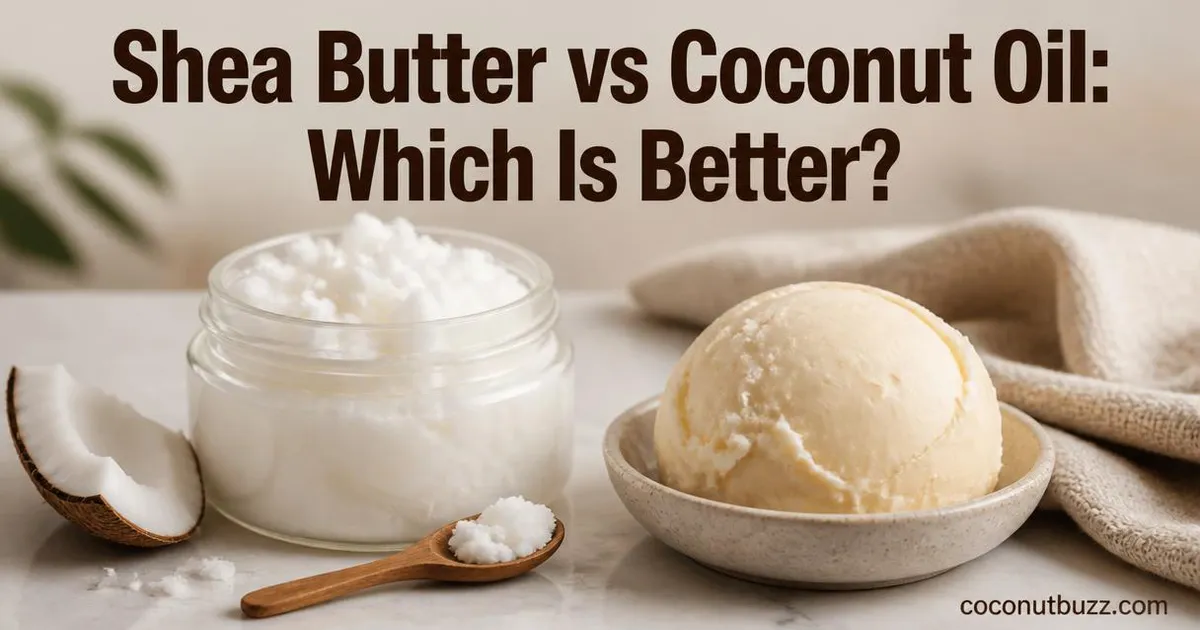
Shea Butter vs Coconut Oil: Which Is Better?
Coconut oil gets blamed for clogged pores and breakouts more often than shea butter does, even though both are thick enough to sit on skin for hours. That difference matters if you’re deciding what to put on your face, but less so if you’re making a body butter or sealing split ends.
Shea butter creates a heavier barrier and stays where you put it. Coconut oil spreads faster, absorbs quicker, and melts on contact. Neither is universally better – the right one depends on whether you need a protective seal or lighter moisture that disappears into skin.
Key Takeaways
- Some sources suggest shea butter is less likely to clog pores than coconut oil, making it preferable for facial and acne-prone skin.
- Coconut oil tends to feel lighter and absorb faster; shea butter creates a thicker, longer-lasting barrier on skin.
- Both ingredients can be blended in DIY body butters and hair treatments to combine their properties.
- For hair care, coconut oil is frequently chosen for deep conditioning, while shea butter is used for smoothing and sealing.
- Neither works best for every situation; the right pick depends on your skin type, hair texture, and intended use.
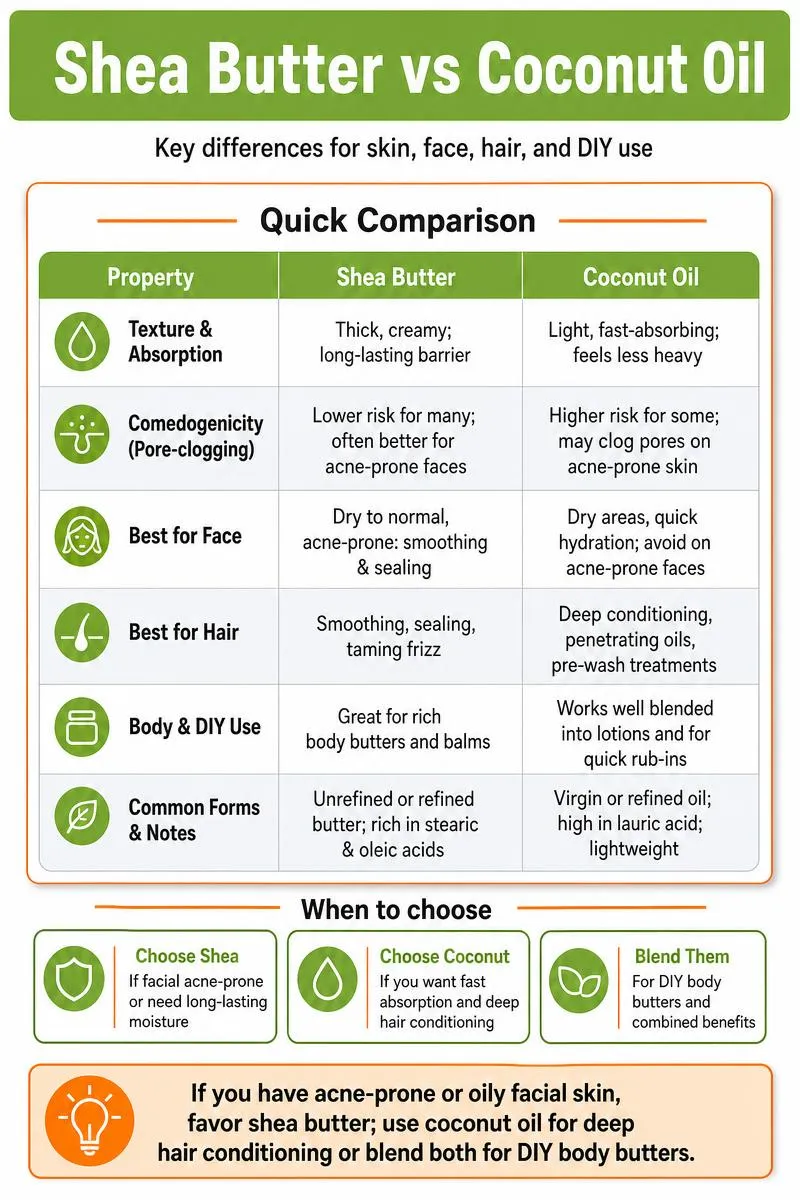
Quick Comparison: Shea Butter Vs Coconut Oil
| Property | Shea Butter | Coconut Oil |
|---|---|---|
| Texture & Absorption | Thick, creamy; long-lasting barrier | Light, fast-absorbing; feels less heavy |
| Comedogenicity (Pore-clogging) | Lower risk for many; often better for acne-prone faces | Higher risk for some; may clog pores on acne-prone skin |
| Best for Face | Dry to normal, acne-prone: smoothing & sealing | Dry areas, quick hydration; avoid on acne-prone faces |
| Best for Hair | Smoothing, sealing, taming frizz | Deep conditioning, penetrating oils, pre-wash treatments |
| Body & DIY Use | Great for rich body butters and balms | Works well blended into lotions and for quick rub-ins |
| Common Forms & Notes | Unrefined or refined butter; rich in stearic & oleic acids | Virgin or refined oil; high in lauric acid; lightweight |
What Is Shea Butter?
Shea butter is fat extracted from the nuts of the shea tree. It stays solid at room temperature with a creamy, dense texture that feels heavier on skin than most oils.
The main uses center on sealing in moisture, soothing irritated skin, and acting as a base in balms and body butters. Shea butter forms an occlusive barrier that keeps water from evaporating off your skin, which makes it useful for very dry patches or eczema-prone areas.
The texture is stable and doesn’t melt easily, giving it a long shelf life and making it easy to whip into fluffy body butters. It’s generally well-tolerated on sensitive areas and doesn’t trigger reactions as often as fragranced or synthetic moisturizers.
The downsides show up when you want something lightweight. Shea butter sits on skin longer, takes time to absorb, and can feel waxy on fine hair types that don’t need heavy sealing.
Explore More
A practical look at how coconut oil compares to common culinary oils, for readers curious about edible uses and heat…
What Is Coconut Oil?
Coconut oil is pressed from coconut meat and melts the moment it touches warm skin. It’s solid at room temperature but melts quickly on skin contact.
People use it for quick-absorbing skin moisture, hair masks, and as a kitchen ingredient that doubles as a beauty product. Coconut oil contains medium-chain fatty acids, including lauric acid, which contributes to its antimicrobial properties.
The lightweight texture spreads easily and works well as a carrier oil for essential oils or DIY blends. It absorbs faster than shea butter and leaves less residue on skin, which makes it popular for post-shower body application.
Coconut oil clogs pores for some people, especially on the face, and can feel greasy if you overapply. It’s less ideal as a standalone facial moisturizer for anyone with oily or combination skin.
Shea Butter vs Coconut Oil: Moisturizing and Dry Skin
Shea butter works as an occlusive, meaning it sits on top of skin and physically blocks water from escaping. That makes it better for very dry, flaky skin that needs a protective layer to prevent further moisture loss. You apply it after water-based products to seal everything in.
Coconut oil penetrates more than it seals. The medium-chain fatty acids absorb into skin relatively quickly, delivering moisture without the thick barrier shea butter leaves behind. That works well for mildly dry skin that needs hydration but doesn’t require heavy protection.
Winner for very dry skin: shea butter. It creates the thicker barrier needed when skin is cracked or peeling.
Winner for mildly dry skin: coconut oil. It hydrates without the weight or residue.
Keep Reading
A comparison that highlights differences in composition and topical uses between coconut and palm oils, useful when…
Shea Butter vs Coconut Oil: Face and Acne-Prone Skin
Coconut oil triggers breakouts more often than shea butter does, especially on acne-prone or oily skin. The oil clogs pores for some users and leaves a greasy film that can trap dirt and bacteria on the face.
Shea butter is considered less comedogenic, though no moisturizer is risk-free. It absorbs more slowly, so it can feel heavy on the face, but it’s less likely to cause new breakouts or worsen existing acne.
After application, coconut oil melts and spreads thin, which feels lighter at first but can turn greasy within an hour. Shea butter stays thick and takes longer to sink in, leaving a matte or slightly waxy finish that some people prefer on dry facial skin.
Winner for facial use: shea butter. It carries less pore-clogging risk and works better for most facial skin types, especially if acne is a concern.
Shea Butter vs Coconut Oil: Hair Care
Coconut oil excels at deep conditioning treatments. The medium-chain fatty acids penetrate the hair shaft, reducing protein loss during washing and heat styling. Pre-wash masks with coconut oil soften hair and add shine without weighing down most textures.
Shea butter works better for sealing ends and taming frizz, especially in thicker or coarser hair. It coats the outside of the strand rather than penetrating deeply, which smooths the cuticle and locks in moisture. Fine hair types often find shea butter too heavy, while thick or curly textures benefit from the extra weight and control.
For scalp application, coconut oil spreads more easily and rinses out with less effort. Shea butter can leave waxy buildup on the scalp if you overapply, making it harder to wash out completely.
Winner for deep conditioning: coconut oil. It penetrates and strengthens hair from the inside.
Winner for sealing and frizz control: shea butter. It smooths the surface and holds moisture in thicker textures.
Related Reading
A focused comparison of coconut oil and argan oil for skin and hair, including which is better for moisturizing and…
Shea Butter vs Coconut Oil: Body and DIY Use
Shea butter stays solid at room temperature and whips into fluffy, stable body butters that hold their shape in a jar. It acts as the structural base in DIY balms, salves, and thick lotions because it doesn’t melt easily and provides the creamy texture most people want.
Coconut oil melts too easily to work as a standalone base. It liquifies in warm rooms or during summer, which makes it messy to store and hard to whip into a stable butter. Instead, it works better as a liquid enhancer in blends or as a quick post-shower body oil you spread thin across damp skin.
In homemade recipes, shea butter combines well with lighter oils to balance texture. Coconut oil adds slip and faster absorption but needs shea butter or beeswax to keep the mixture solid.
Winner for body butter base: shea butter. It whips easily and stays solid.
Winner for quick body oil: coconut oil. It spreads thin and absorbs without heavy residue.
Which Should You Choose?
Acne-prone or sensitive facial skin: choose shea butter for lower pore-clogging risk.
Deep hair conditioning or pre-wash masks: choose coconut oil for protein loss reduction.
Making a whipped body butter or balm: choose shea butter as the base for structural stability.
Quick post-shower moisture without heavy residue: choose coconut oil for faster absorption.
Eczema-prone or irritated skin needing a thick barrier: choose shea butter for occlusive protection.
FAQs About Shea Butter and Coconut Oil
What is the main difference between coconut oil and shea butter?
Coconut oil is lighter, absorbs faster, and melts on contact with skin. Shea butter is thicker, stays solid at room temperature, and creates a longer-lasting protective barrier. Coconut oil penetrates more; shea butter seals more.
Which is better for dry skin, coconut oil or shea butter?
Shea butter works better for very dry or flaky skin because it forms an occlusive layer that prevents water loss. Coconut oil suits mildly dry skin that needs hydration without the heavy feel.
Which is better for the face, coconut oil or shea butter?
Shea butter is safer for most facial skin types, especially if you’re acne-prone. Coconut oil clogs pores more often and can leave a greasy film that worsens breakouts.
Can I use coconut oil if I have acne-prone skin?
Not on your face. Coconut oil triggers breakouts in many people with acne-prone skin because it clogs pores. You can use it on your body if those areas don’t break out easily, but patch test first.
Which is better for hair, coconut oil or shea butter?
Coconut oil wins for deep conditioning and pre-wash treatments because it penetrates the hair shaft. Shea butter wins for sealing ends and controlling frizz in thick or curly hair. Fine hair usually prefers coconut oil; coarse hair benefits from both.
Is shea butter or coconut oil better for body butter?
Shea butter makes a better base because it stays solid and whips into stable, fluffy textures. Coconut oil melts too easily and turns liquid in warm rooms, making it messy to store.
Can you use shea butter on your face every day?
Yes, if your skin tolerates it. Shea butter is generally safe for daily facial use, but its thick texture can feel too heavy for oily or combination skin. Start with a small amount and watch for any clogged pores or irritation.
Can I use coconut oil and shea butter together?
Yes. Blending them combines coconut oil’s quick absorption with shea butter’s sealing power. Many DIY body butters and hair masks mix both to balance texture and performance.
Is shea butter good for an aging face?
Shea butter moisturizes dry, aging skin and creates a protective barrier that may reduce moisture loss. It won’t reverse wrinkles or stimulate collagen, but it keeps mature skin softer and more comfortable than leaving it dry.
Why is shea butter darkening my face?
Shea butter itself doesn’t darken skin. If you notice darkening, check whether the product contains added oils or fragrances that cause photosensitivity, or whether you’re experiencing hyperpigmentation from clogged pores or irritation. Stop using it and see a dermatologist if the darkening persists.
Final Verdict
Keep both on hand if you have the space. Shea butter handles facial moisture, thick body creams, and sealing hair ends. Coconut oil covers deep conditioning, quick body hydration, and lighter applications where you don’t want residue.
If you only want one, match it to your main need: oily or acne-prone facial skin points toward shea butter, while damaged hair or mild body dryness favors coconut oil. Patch test either product on your face before committing to daily use.
External References
- Expert Lists the 7 Skincare Ingredients to Avoid – Blackbeautyandhair
- There is scientific literature that suggests that a coconut … – Instagram
- Effect of mineral oil, sunflower oil, and coconut oil on … – NIH
- A Comprehensive Review of Plant-Based Cosmetic Oils … – NIH
- Does Coconut Oil Treat Acne or Make It Worse? – Healthline