
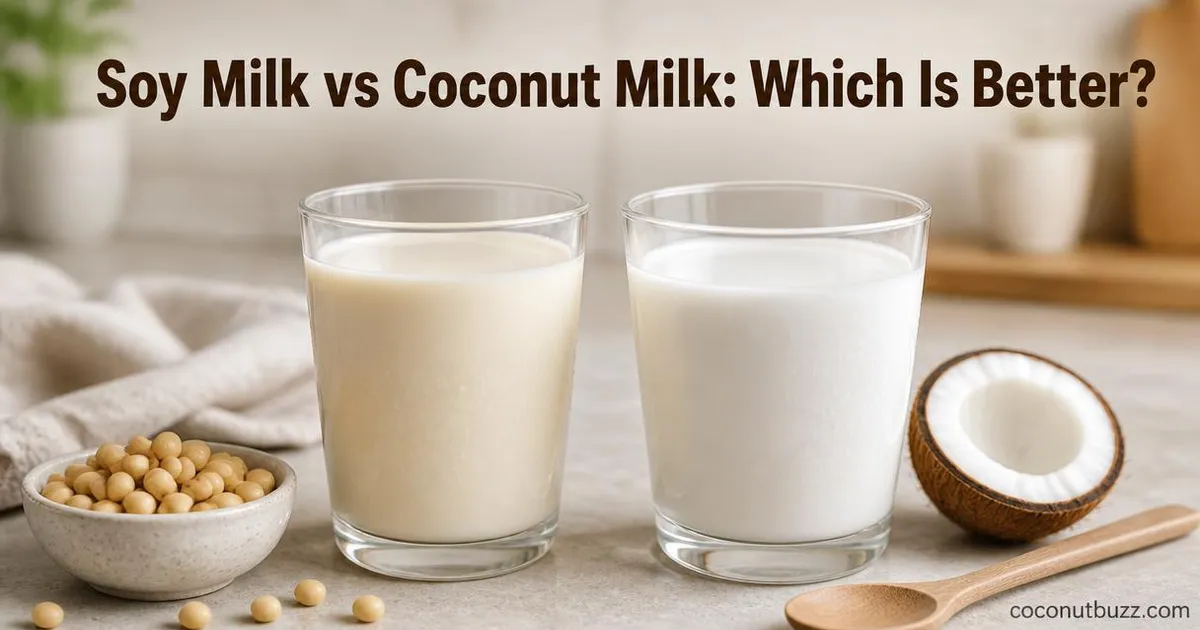
Soy Milk vs Coconut Milk: Which Is Better?
Soy milk wins on protein and overall nutrition. Coconut milk brings a distinct mineral profile and works better in tropical dishes. The one you should pick depends less on which is “healthier” and more on what you’re making, what nutrients you need, and whether you can tolerate soy.
Both are plant-based, but they don’t serve the same purpose. Soy milk behaves more like dairy milk in recipes and nutrition. Coconut milk adds flavor and richness wherever it goes.
Key Takeaways
- Soy milk delivers more protein and a broader nutritional profile, while coconut milk offers specific minerals and unique fatty acids.
- Flavor differs sharply – soy tastes neutral and beany, coconut adds sweetness and tropical notes that can dominate a recipe.
- Calorie density varies – unsweetened soy milk runs lower in calories, making it easier to fit into weight-loss plans.
- Allergies and sensitivities shift the decision – soy is a more common allergen, but some people report digestive issues with both.
- The better choice depends on whether you prioritize complete nutrition, specific cooking needs, or staying within a calorie target.
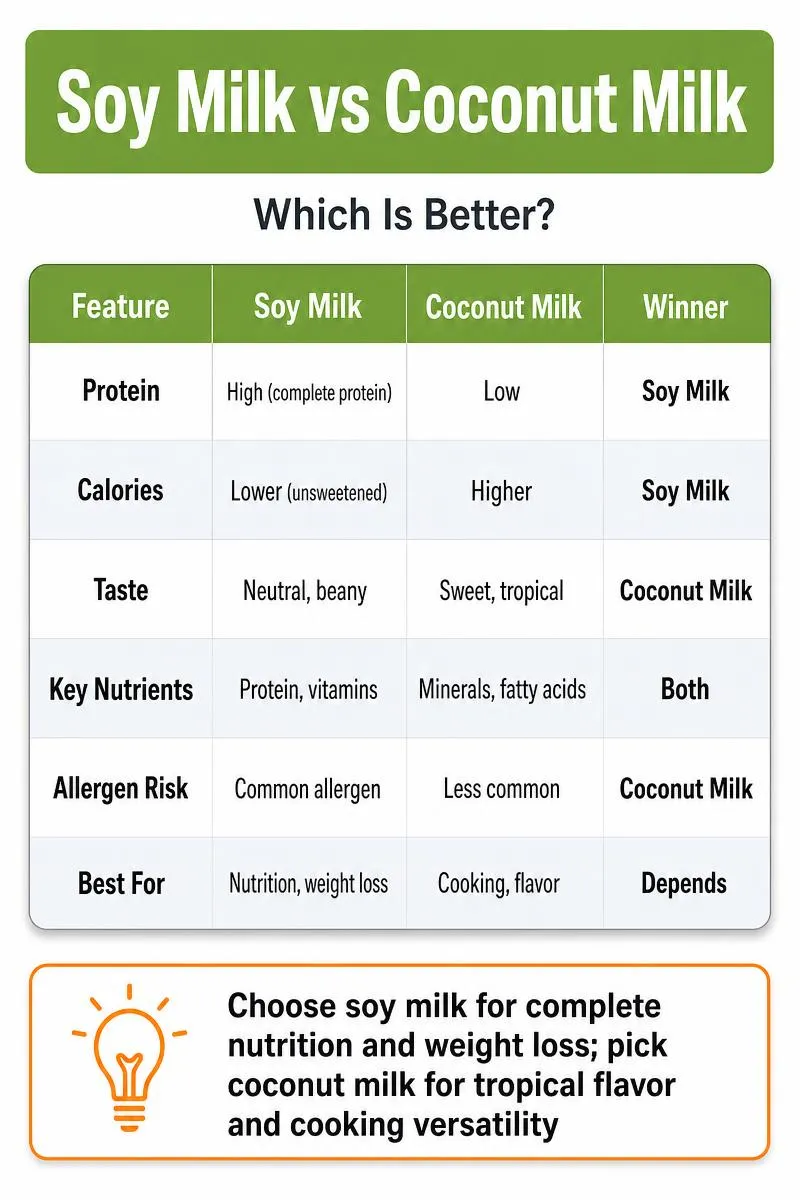
Soy Milk Vs Coconut Milk Quick Comparison
| Feature | Soy Milk | Coconut Milk | Winner |
|---|---|---|---|
| Protein | High (complete) | Low | Soy Milk |
| Calories | Lower (unsweetened) | Higher | Soy Milk |
| Taste | Neutral, beany | Sweet, tropical | Coconut Milk |
| Key Nutrients | Protein, vitamins | Minerals, MCTs | Both |
| Allergen Risk | Common allergen | Less common | Coconut Milk |
| Best For | Nutrition, weight loss | Cooking, flavor | Depends |
What Is Soy Milk?
Soy milk comes from soaking soybeans, grinding them with water, and filtering out the solids. The liquid retains protein, some fat, and a mild beany flavor that works well in neutral applications.
It fits easily into cereal, coffee, smoothies, and savory cooking where you don’t want added sweetness. Many brands fortify soy milk with calcium, vitamin D, and vitamin B12 to match dairy milk’s profile.
Soy milk offers a strong nutritional lineup and wide availability at most grocery stores. It works in nearly any recipe calling for dairy milk without altering flavor much.
The downsides: allergies affect some people, and others report bloating or digestive discomfort. The flavor isn’t universally loved – some find it chalky or too beany for coffee.
Explore More
Nutritional value of coconut water
A focused breakdown of coconut water’s nutrients that readers can consult for broader coconut-product nutrition context.
What Is Coconut Milk?
Coconut milk is made by blending coconut flesh with water, then straining the mixture. The result is creamy, slightly sweet, and unmistakably coconut-flavored.
It works best in curries, baking, smoothies, and coffee where you want that tropical note. Coconut milk sold in cartons is thinner than canned coconut milk and often sweetened or flavored.
Coconut milk brings minerals like manganese and copper, plus medium-chain triglycerides that digest differently than long-chain fats. It works in both sweet and savory dishes and shows up in most supermarkets.
The flavor can overpower recipes if you’re not expecting it. Coconut milk is also more calorie-dense than unsweetened soy milk, and while coconut allergies are rare, they do exist.
Soy Milk vs Coconut Milk: Nutrition
Soy milk generally leads on overall nutrition. It contains all essential amino acids, making it a complete protein source. Most fortified versions add calcium, vitamin D, and vitamin B12 to mirror dairy milk.
Coconut milk offers less protein but provides medium-chain triglycerides, which some sources suggest may support energy metabolism differently than other fats. Coconut milk also delivers more manganese and copper than soy milk.
If you need a balanced nutritional profile that covers protein, vitamins, and minerals in one drink, soy milk wins. If you’re after specific minerals or medium-chain triglycerides, coconut milk offers something soy doesn’t.
Winner: Soy milk for general nutrition, coconut milk for distinct mineral content and medium-chain triglycerides.
Soy Milk vs Coconut Milk: Taste
Soy milk tastes neutral with a slight beany edge. It blends into coffee without adding sweetness or competing flavors. In cereal, it mimics dairy milk closely enough that most people adjust quickly.
Coconut milk adds a sweet, tropical flavor to everything it touches. In coffee, that means a hint of coconut in every sip. In cereal, you get a subtle sweetness even if the milk is unsweetened.
For savory recipes like creamy pasta or mashed potatoes, soy milk stays in the background. Coconut milk works better in curries, Thai soups, and baked goods where the coconut flavor enhances the dish.
Winner: Depends on the recipe. Soy milk for neutral applications, coconut milk when you want that flavor as part of the dish.
Explore More
A side-by-side comparison of almond and coconut milk that complements the soy vs coconut milk taste and nutrition…
Soy Milk vs Coconut Milk: Calories and Weight Loss
Unsweetened soy milk typically contains fewer calories per serving than unsweetened coconut milk. Soy milk’s calorie count comes mostly from protein and a small amount of fat.
Coconut milk is more calorie-dense because of its fat content – mostly medium-chain triglycerides. A single serving can contain significantly more calories even when unsweetened.
For weight management, lower-calorie options make it easier to stay within daily targets. Soy milk fits that goal more easily while still delivering protein that helps with satiety.
Winner: Soy milk for lower-calorie diets, though coconut milk can still work if you account for the higher calorie load.
Which Should You Choose?
If you prioritize overall nutritional density: Pick soy milk.
If you cook creamy curries or tropical dishes: Choose coconut milk. The flavor enhances those recipes instead of clashing with them.
If you have an allergy or sensitivity: Coconut milk is the safer option for those with soy issues. Soy allergies are more common than coconut allergies.
If you want a neutral flavor for coffee and cereal: Go with soy milk. It blends in without adding sweetness or competing notes.
If you want higher mineral content: Coconut milk offers more manganese and copper, plus medium-chain triglycerides.
FAQs About Soy Milk and Coconut Milk
What is the healthiest milk you can drink?
No single milk is healthiest for everyone. Soy milk offers complete protein and broader nutrition when fortified. Coconut milk provides specific minerals. The best choice depends on your dietary needs, allergies, and what nutrients you’re missing elsewhere.
Is there a downside to soy milk?
Allergies affect some people, and soy contains compounds called phytoestrogens that mimic estrogen in the body. Research on phytoestrogens is mixed – some sources suggest they may offer benefits, while others raise concerns for people with hormone-sensitive conditions. Digestive discomfort also occurs in some individuals.
Why did people stop drinking soy milk?
Many people didn’t stop – soy milk remains widely sold. However, concerns about phytoestrogens, GMO soybeans, and digestive issues pushed some consumers toward other plant milks. The rise of almond, oat, and coconut milk also gave people more options that fit different taste preferences and nutritional goals.
Is there a downside to drinking coconut milk?
Coconut milk is more calorie-dense than other plant milks, which can complicate weight management. The saturated fat content is higher. Some people dislike the flavor, and coconut allergies, while rare, do exist.
Which milk is best for gut health?
No plant milk directly improves gut health the way fermented foods or fiber-rich whole foods do. Some brands add probiotics or prebiotics, but those additions vary by product. If gut health is your priority, focus on whole foods like vegetables, legumes, and fermented options rather than relying on any milk alternative.
Explore More
A deeper look at how coconut-derived products can affect weight loss, useful for readers considering calories and diet…
Final Verdict
For a daily default that covers nutrition and stays neutral in flavor, soy milk makes more sense for most people. It delivers protein, fortifies easily, and works in nearly any recipe without altering taste.
Coconut milk fits better when you’re cooking specific dishes or need the minerals and fats it offers. If you have a soy allergy, coconut milk becomes the clear winner by default.
Buy a small carton of each and test them in your usual coffee or cereal before committing to a larger size. Taste matters more than nutrition when you’re deciding what you’ll actually drink every day.
External References