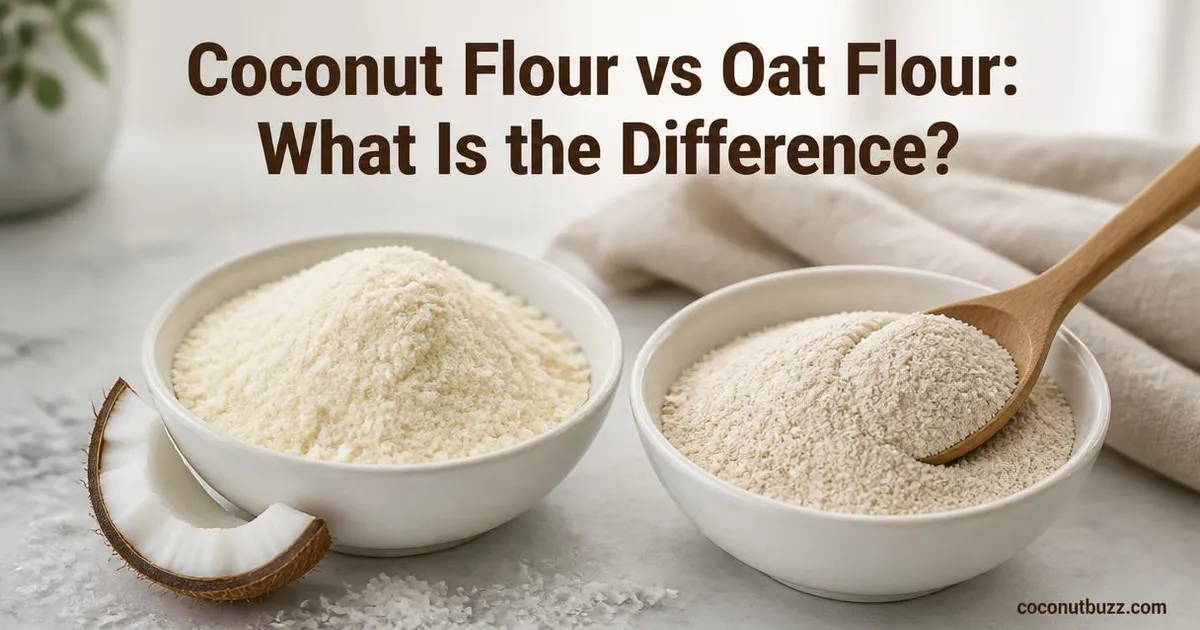
Coconut Flour vs Oat Flour: What Is the Difference?
Two gluten-free flours sit on the shelf, and most people grab one assuming they’ll behave the same way in a recipe. They don’t. Coconut flour and oat flour come from completely different plants, absorb liquid at vastly different rates, and produce baked goods with almost nothing in common beyond being gluten-free.
Absorbency, texture, and flavor all shift depending on which flour you choose. Coconut flour drinks up liquid like a sponge and adds a sweet coconut taste to everything it touches. Oat flour stays mild and soft, closer to wheat flour in how it handles – but it brings its own quirks when you push it too far.
Key Takeaways
- Coconut flour absorbs far more liquid than oat flour, so you can never swap them 1:1 without rewriting the recipe.
- Oat flour produces a softer crumb and milder taste; coconut flour adds coconut flavor and makes denser baked goods.
- Both flours are gluten-free, but they require different amounts of liquid, eggs, and baking time.
- The right choice depends on your dietary priorities and the specific recipe you’re making.
You Might Also Like
A practical comparison showing coconut flour’s absorbency and substitution ratios vs all-purpose flour to help with…
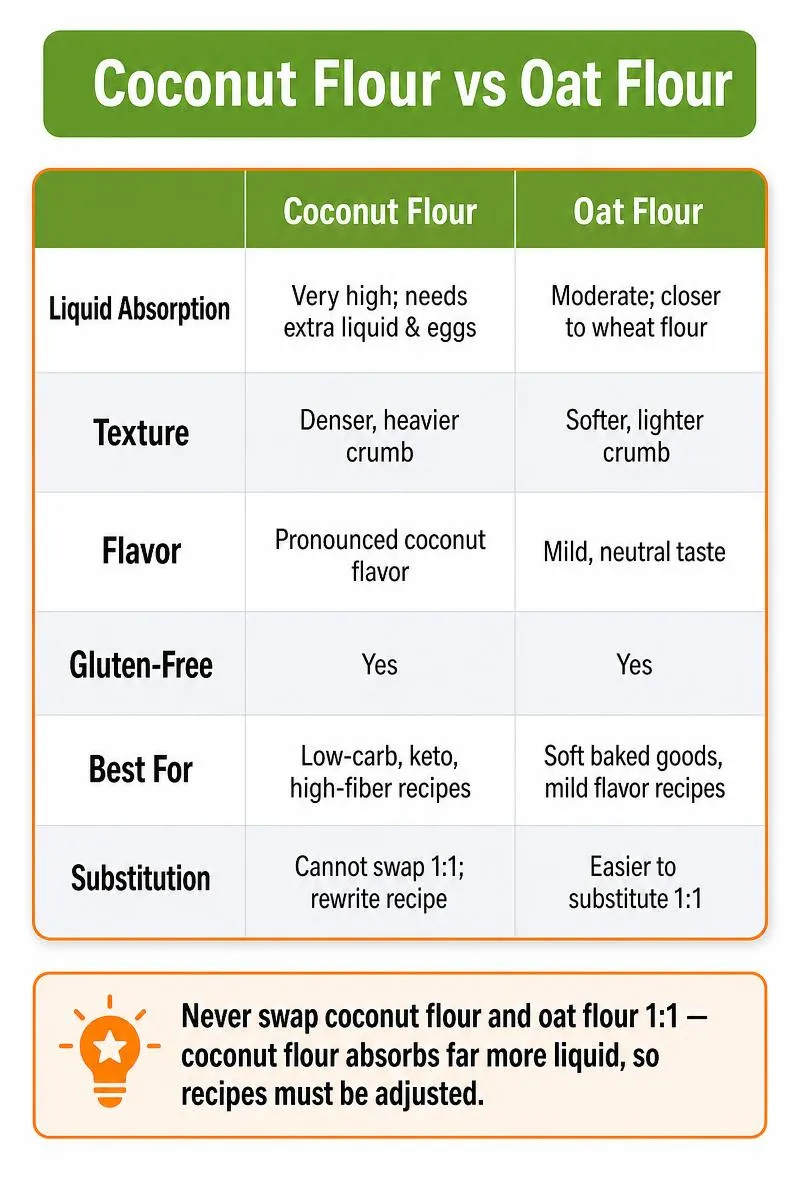
Coconut Flour Vs Oat Flour at a Glance
| Feature | Coconut Flour | Oat Flour |
|---|---|---|
| Liquid Absorption | Very high; needs extra liquid & eggs | Moderate; closer to wheat flour |
| Texture | Denser, heavier crumb | Softer, lighter crumb |
| Flavor | Pronounced coconut flavor | Mild, neutral taste |
| Gluten-Free | Yes | Yes |
| Best For | Low-carb, keto, high-fiber recipes | Soft baked goods, mild flavor recipes |
| Substitution | Cannot swap 1:1; rewrite recipe | Easier to substitute 1:1 |
What Is Coconut Flour?
Coconut flour starts as coconut meat that gets pressed to remove oil, then ground into a fine powder. What’s left is a flour that’s high in dietary fiber and highly absorbent – a combination that makes it popular for grain-free and paleo baking.
The absorbency is both the main advantage and the main headache. Coconut flour cannot replace wheat flour at a 1:1 ratio. Batters made with coconut flour dry out fast without enough liquid or eggs to balance the flour’s tendency to soak up everything around it.
Where coconut flour shines is in recipes built around it from the start. Pancakes, muffins, and cakes that call for coconut flour specifically tend to work because the ratios of liquid, eggs, and flour are already calibrated. Trying to drop coconut flour into a standard recipe almost always fails unless you adjust everything else.
What Is Oat Flour?
Oat flour is simply whole oats ground into a fine powder. That simplicity makes it one of the most accessible wheat flour alternatives – the flavor is mild, the texture stays soft, and most people already recognize how oats taste.
Oat flour can produce gummy or crumbly results if you don’t mix carefully or add a binder. Without gluten to hold structure together, baked goods made with oat flour sometimes collapse or turn dense in the center. Oats also need to be certified gluten-free if cross-contamination is a concern, because standard oats are often processed alongside wheat.
Oat flour works well in cookies, quick breads, and as a partial substitute in wheat-based recipes where you don’t need a perfect 1:1 swap. It’s forgiving enough for beginners, especially in recipes that already have strong binders like eggs or xanthan gum.
Coconut Flour vs Oat Flour: Nutrition
Coconut flour and oat flour take different nutritional approaches. Coconut flour contains more dietary fiber per serving than oat flour, and it also contains more fat – a reflection of the coconut oil that remains after pressing. Oat flour contains more carbohydrates and a moderate amount of protein, with less fat than coconut flour.
Some sources suggest coconut flour has a lower glycemic impact than oat flour, meaning it may cause a slower rise in blood sugar after eating. The higher fiber content in coconut flour likely contributes to that effect, since fiber slows digestion.
Coconut flour wins on fiber content and lower glycemic impact. Oat flour wins if you want lower fat content and a more familiar carbohydrate profile closer to wheat flour.
Also Worth Checking Out
Direct side-by-side of coconut and almond flours covering texture, nutrition, and when to choose each in recipes.
Coconut Flour vs Oat Flour: Baking and Substitution
A direct 1:1 swap between coconut flour and oat flour fails every time. Coconut flour absorbs so much more liquid that using the same amount as oat flour produces a dry, crumbly mess. The typical conversion is a fraction of the amount of wheat or oat flour, plus extra eggs and liquid to keep the batter hydrated.
Oat flour, by contrast, can substitute for wheat flour at closer ratios – usually slightly more oat flour than wheat flour by volume. The batter consistency stays closer to what you’d expect from wheat flour, with less dramatic adjustments to liquid or eggs.
Coconut flour recipes almost always call for more eggs than a standard recipe – often more than a standard recipe calls for – because eggs provide both moisture and structure that the flour can’t create on its own. Oat flour recipes may need a binder like xanthan gum or an extra egg, but the adjustments are smaller and more forgiving.
For an easier direct wheat flour substitute, oat flour wins. The learning curve is gentler, and the ratios are more intuitive.
Coconut Flour vs Oat Flour: Texture and Flavor
Coconut flour produces a dense, tightly textured crumb. Baked goods made with coconut flour tend to hold moisture well when the recipe is balanced, but they dry out quickly when the ratio is off. The texture is heavier than what most people expect from wheat-based baking.
Oat flour produces a softer, lighter crumb that’s closer to wheat flour in finished texture. Moisture retention is decent, though oat flour baked goods can turn gummy if underbaked or if the batter is too wet.
Coconut flour adds a noticeable coconut taste to everything – sweet, nutty, and unmistakable. That’s a positive in recipes where coconut flavor is wanted, like tropical muffins or coconut macaroons. It’s a drawback in recipes where you want the other flavors to lead.
Oat flour stays neutral. It adds a mild, slightly toasted flavor that blends into the background. For versatility across different flavor profiles, oat flour is the more adaptable choice. For recipes where coconut flavor belongs, coconut flour is the clear pick.
Which Should You Choose?
Grain-free or paleo baking: Coconut flour. It contains no grains, making it compatible with paleo and grain-free diets.
Easy wheat flour swap: Oat flour. The substitution ratios are simpler, and the texture stays closer to what wheat flour produces.
Highest fiber per serving: Coconut flour. The fiber content in coconut flour is significantly higher than in oat flour.
Neutral flavor: Oat flour. Coconut flour’s taste is hard to hide; oat flour fades into the background.
Beginner-friendly baking: Oat flour. The margin for error is wider, and the adjustments needed are smaller.
You Might Also Like
Practical cooking and ingredient-use tips for coconut oil that readers can apply when adapting recipes with different…
FAQs About Coconut Flour and Oat Flour
Can I substitute coconut flour with oat flour, and how do I convert between them?
Not directly. Coconut flour absorbs far more liquid than oat flour, so you need several times more oat flour by volume to replace coconut flour – and you’ll need to reduce eggs and liquid. It’s easier to find a recipe written for the flour you want to use rather than converting.
What is healthier, oat flour or coconut flour?
That depends on your priorities. Coconut flour has more fiber and may have a lower glycemic impact. Oat flour has less fat and a more familiar carbohydrate profile. Neither is universally healthier – it comes down to what your diet needs.
What is the healthiest flour to use for baking?
There’s no single healthiest flour. Coconut flour offers the most fiber, oat flour provides a balance of carbohydrates and protein, and almond flour brings monounsaturated fats. The best choice depends on your nutritional goals and what you’re baking.
What are common mistakes when baking with coconut flour?
The biggest mistake is treating coconut flour like wheat flour – using too much, not adding enough liquid or eggs, and expecting the batter to look like a standard batter. Coconut flour also needs time to absorb liquid, so letting batter rest for a few minutes before baking helps prevent dry results.
Does coconut flour spike your blood sugar?
Some sources suggest coconut flour has a lower glycemic impact than other flours, likely because of its high fiber content. Fiber slows digestion, which may lead to a more gradual blood sugar response. That said, individual responses vary.
Which works better for cookies, coconut flour or oat flour?
Oat flour generally works better for cookies. The softer texture and milder flavor translate well, and the substitution is more forgiving. Coconut flour can work in cookie recipes designed for it, but it produces a denser, cake-like cookie that some people don’t expect.
How do coconut flour and oat flour compare to wheat flour?
Neither coconut flour nor oat flour behaves like wheat flour on its own. Wheat flour contains gluten, which provides structure and elasticity that gluten-free flours can’t replicate without binders. Oat flour gets closest in texture; coconut flour is the furthest from wheat flour in how it handles.
Final Thoughts
Neither flour replaces the other. Coconut flour serves bakers who need grain-free, high-fiber, paleo-friendly results and don’t mind working with an absorbent flour that demands specific ratios. Oat flour serves bakers who want a forgiving, mild-flavored wheat flour alternative that works across a wide range of recipes.
One option worth trying: blending both flours in a single recipe can balance coconut flour’s absorbency and density with oat flour’s softer texture and neutral taste. Some gluten-free bakers use a mix to get the benefits of each without the extremes of either.
Pick one tested recipe for coconut flour and one for oat flour. Bake both, compare the texture and flavor side by side, and you’ll know within one afternoon which flour fits your baking style.
External References