
Coconut Kefir vs Milk Kefir: Which Should You Drink?
Kefir is a probiotic-rich fermented drink you can make at home or buy in a store. Two versions dominate the conversation: one built on dairy milk, one built on coconut. They share a name and a fermentation method, but the base liquid shifts the calories, taste, and where you can find them.
The comparison comes down to a handful of practical questions. Do you tolerate dairy? Are you counting calories? Do you want to brew at home or grab a bottle off the shelf? Coconut kefir and milk kefir answer those questions differently, and neither one wins across the board.
Key Takeaways
- Avoid dairy entirely? Coconut kefir is the pick. Dairy sits fine with you? Taste and convenience decide.
- Nutrition and calories trace to the base liquid. Coconut kefir made from coconut milk differs sharply from coconut kefir made from coconut water.
- Coconut kefir tastes tangy with a coconut note. Milk kefir tastes tangy and creamy, closest to drinkable yogurt.
- Both brew at home with grains. Coconut milk kefir also works with a starter culture if you skip grains.
- Milk kefir fills most dairy aisles. Coconut kefir means specialty stores, online orders, or DIY.
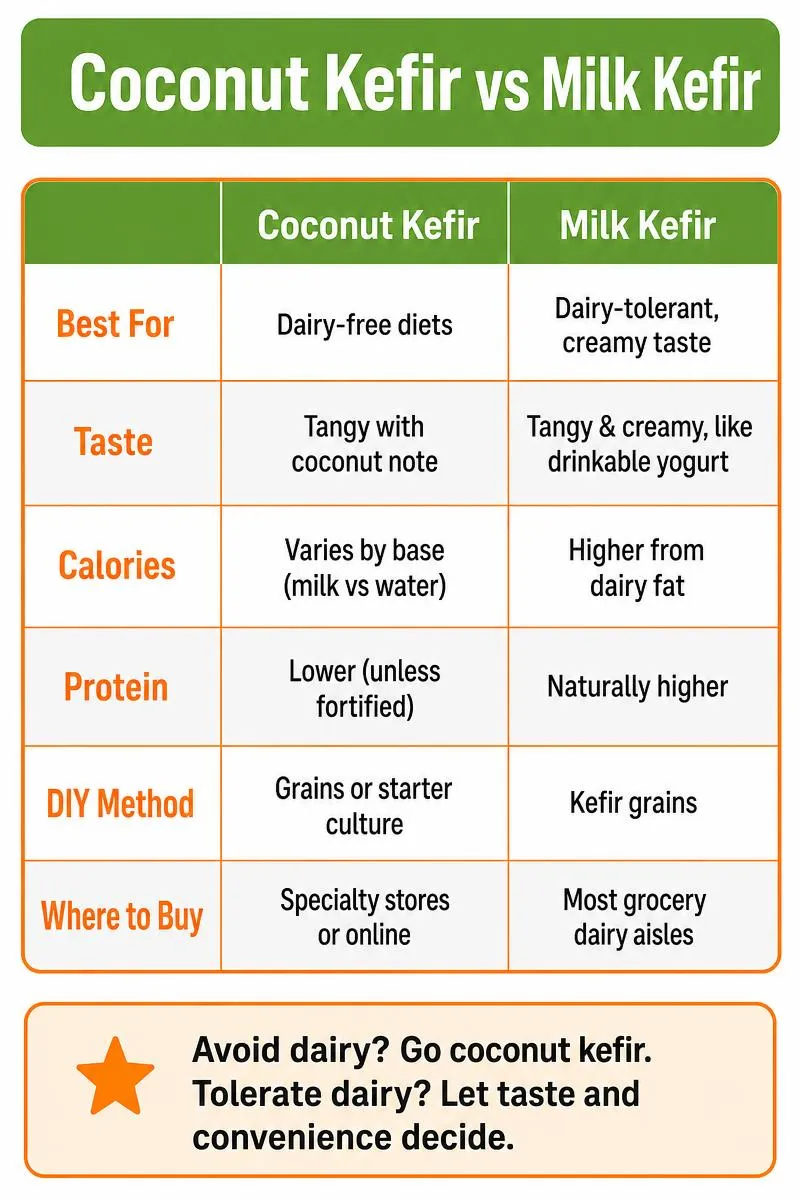
Coconut Kefir Vs Milk Kefir at a Glance
| Feature | Coconut Kefir | Milk Kefir |
|---|---|---|
| Best For | Dairy-free diets | Dairy-tolerant, creamy taste |
| Taste | Tangy with coconut note | Tangy & creamy, like drinkable yogurt |
| Calories | Varies by base (milk vs water) | Higher from dairy fat |
| Protein | Lower (unless fortified) | Naturally higher |
| DIY Method | Grains or starter culture | Kefir grains |
| Where to Buy | Specialty stores or online | Most grocery dairy aisles |
What Is Coconut Kefir?
Coconut kefir is coconut milk or coconut water fermented with kefir grains or a powdered starter culture. The grains are a mix of lactic acid bacteria and yeasts that consume sugars in the liquid and produce lactic acid, giving the finished drink its tang.
The two versions differ a lot in body and nutrition. Coconut milk kefir uses the thick, fatty milk pressed from coconut meat, so the result is creamy and calorie-dense. Coconut water kefir starts with the thin, slightly sweet liquid inside young coconuts, so the finished drink is light, tangy, and low in calories.
Best uses are: Dairy-free and plant-based diets, smoothies, drinking straight. Coconut water kefir works especially well as a light, refreshing drink on its own.
Strengths are: Dairy free and coconut flavor. Weaknesses are: Coconut water kefir runs thin, and both versions are harder to find in stores than milk kefir.
You Might Also Like
Best coconut water powder on amazon
Where to buy concentrated coconut water powder useful for making water-based coconut kefir at home.
What Is Milk Kefir?
Milk kefir is dairy milk cultured with kefir grains. Milk kefir grains – a symbiotic colony of bacteria and yeasts – ferment the lactose in dairy milk, converting the milk sugar into lactic acid and producing a tangy, slightly effervescent drink.
This is the traditional form of kefir, originating in the Caucasus Mountains and consumed for centuries across Eastern Europe and Central Asia.
Best uses are: Daily drinking, smoothies, and any recipe that calls for a tangy dairy liquid like buttermilk or drinkable yogurt.
Strengths are: Easy to buy, grains reuse indefinitely, familiar taste. Weaknesses are: Contains dairy and lactose, which rules it out for anyone with a milk allergy or lactose intolerance.
Coconut Kefir vs Milk Kefir: Nutrition and Calories
The nutrition in each drink comes from the base liquid, not from fermentation. Fermentation adds lactic acid bacteria and some B vitamins, but the calories, fat, and minerals trace back to what the grains fermented in the first place.
Milk kefir carries protein and calcium from dairy milk. The fat content depends on whether you start with whole, skim, or reduced-fat milk. Lactose levels drop during fermentation but do not disappear entirely, so milk kefir still contains some dairy sugar.
Coconut milk kefir brings saturated fat from lauric acid, a medium-chain fatty acid found in coconut. Coconut milk also provides manganese and copper. Coconut water kefir, by contrast, is low in calories and fat and supplies potassium and other electrolytes from the coconut water itself.
Winner: Your base liquid and diet goals decide. Milk kefir wins for protein and calcium. Coconut water kefir wins for low calories. Coconut milk kefir wins for medium-chain fatty acids if you avoid dairy.
Coconut Kefir vs Milk Kefir: Taste
Coconut kefir tastes tangy and fermented, with a coconut note underneath. Coconut milk kefir has a creamy texture and a richer mouthfeel, while coconut water kefir is light, slightly tart, and refreshing. The coconut flavor is unmistakable in both versions but milder in the water-based drink.
Milk kefir tastes tangy and creamy – the closest thing to drinkable yogurt. The fermentation gives it a sharp lactic bite, and the dairy fat rounds out the texture. Some batches develop a slight fizz from the yeast activity.
Winner: Preference call. If you dislike coconut flavor, milk kefir is the safer bet. If you enjoy coconut, the water-based version is light and easy to drink, while the milk-based version is richer.
Also Worth Checking Out
Full-fat coconut milk vs coconut milk
A detailed comparison of full‑fat and lighter coconut milks and how fat content affects texture and fermentation.
Coconut Kefir vs Milk Kefir: Making Them at Home
Both drinks brew at home with kefir grains. You add the grains to your base liquid, let the mixture ferment at room temperature, strain out the grains, and repeat. Milk kefir grains ferment dairy milk; water kefir grains ferment coconut water. Some milk kefir grains also adapt to coconut milk, though they need occasional rests in dairy milk to stay active because coconut milk lacks lactose.
Grain reuse is one of the biggest draws of home brewing. A single batch of grains can ferment batch after batch for months or years if you keep them fed and clean.
Coconut milk kefir also brews without grains using a powdered starter culture. The starter contains freeze-dried lactic acid bacteria that ferment the sugars in coconut milk. This method skips the straining step since there are no grains to remove, but the starter is single-use for each batch.
Winner: Milk kefir for ease. The grains thrive in their native dairy environment, and the process is straightforward. Coconut kefir wins if dairy free matters most to you, especially the starter method for coconut milk kefir.
Coconut Kefir vs Milk Kefir: Where to Buy
Milk kefir sits in the standard dairy aisle of most grocery stores. Brands like Lifeway and other regional dairies stock it alongside yogurt and buttermilk. You will find plain and flavored versions in sizes from single-serve cups to quart bottles.
Coconut kefir is harder to track down. Health food stores and co-ops sometimes carry coconut water kefir in the refrigerated section. Online retailers offer both coconut water kefir and coconut milk kefir, often shipped cold.
If you want to buy coconut milk kefir specifically, check specialty grocers, vegan-focused shops, and online fermentation suppliers.
Winner: Milk kefir on availability. Coconut kefir requires more effort to source, or you brew your own.
Which Should You Choose?
- You avoid dairy or eat plant-based. Coconut kefir is your drink. Both coconut milk and coconut water versions are fully dairy free.
- You want an easy store option. Milk kefir. Grab it at almost any grocery store without hunting.
- You want the simplest home brewing setup. Milk kefir. The grains stay healthy in dairy milk with minimal fuss.
- You want coconut flavor in smoothies. Coconut kefir. The coconut note pairs well with tropical fruit and adds creaminess when made from coconut milk.
- You brew at home but skip dairy. Coconut milk kefir using a starter culture. No grains to maintain, and the result is rich and tangy.
Explore More
An overview of coconut varieties, explaining differences in milk and water that can influence kefir flavor and…
FAQs About Coconut Kefir and Milk Kefir
Does kefir lower cortisol?
Some sources suggest fermented foods may help modulate stress hormones like cortisol through gut-brain communication, but the evidence is thin and mostly animal or small-scale. Do not count on kefir as a cortisol management tool.
How do you eat coconut kefir?
Drink it straight or blend it into smoothies. Coconut milk kefir also works as a dairy-free base for salad dressings and overnight oats.
How often should you drink kefir?
Daily works for most people. Start with a small amount and increase gradually as your digestive system adjusts. Give yourself a week or more before moving to a full serving.
Which is healthier, kefir or yogurt?
Both are fermented dairy products with live cultures. Kefir typically carries a wider variety of bacterial strains than yogurt because the grains support a more diverse microbial community. Nutritionally, they are similar in protein and calcium when made from the same base.
Is there a downside to kefir?
Digestive adjustment is the most common issue. Bloating or loose stools can happen when you first start, especially if you drink a full serving right away. People with compromised immune systems or histamine intolerance should talk to a doctor before adding fermented foods regularly.
What should you not mix with kefir?
Avoid pairing kefir with very hot liquids, since heat kills the live lactic acid bacteria and yeasts. Some people also find that drinking kefir alongside heavy meals slows digestion uncomfortably. Morning consumption on a relatively empty stomach works well for most.
Is it better to take kefir at night or in the morning?
Consistency matters more than timing. Pick a time you will stick with daily. There is no strong evidence favoring morning over evening – the routine itself is what counts.
How long after drinking kefir will I poop?
It varies by person. Some people notice changes within a day as the live cultures and lactic acid stimulate digestion. Others see no change for several days, especially if the gut is not used to fermented foods.
Final Thoughts
Dairy tolerance is the deciding factor. If you avoid dairy for any reason, coconut kefir gives you a fermented, probiotic drink without the milk. If dairy sits fine with you, milk kefir is easier to find, simpler to brew, and tastes like something familiar.
If you already have milk kefir grains, try them in coconut milk for a batch. The grains may need a dairy milk rest every few cycles, but the result is a dairy-free kefir with a familiar tang.
Buy a small bottle of each and taste them side by side. Your own palate settles it fastest.
External References