Coconut Tree vs Palm Tree: 5 Real Differences
Every seaside palm gets called a coconut tree, and almost none of them deserve the name. The title belongs to exactly one species – Cocos nucifera – while the palms shading hotel driveways and beach boardwalks are usually cousins that will never grow a single coconut.
This guide separates the two by fruit, size and trunk, leaves, climate, and everyday uses, so you can ID a tree in a photo or decide which one belongs in your yard. No winner declared yet – the right choice depends on what you want.
Key Takeaways
- All coconut trees are palms, but most palms never grow a coconut.
- Coconut palms grow tall with curved, leaning trunks; many landscape palms stay shorter, thicker, and straighter.
- Quickest ID check: feather-shaped fronds point to coconut palms, while fan-shaped fronds mean a different species.
- Coconut palms demand year-round tropical warmth; many other palms tolerate cooler, drier, or indoor conditions.
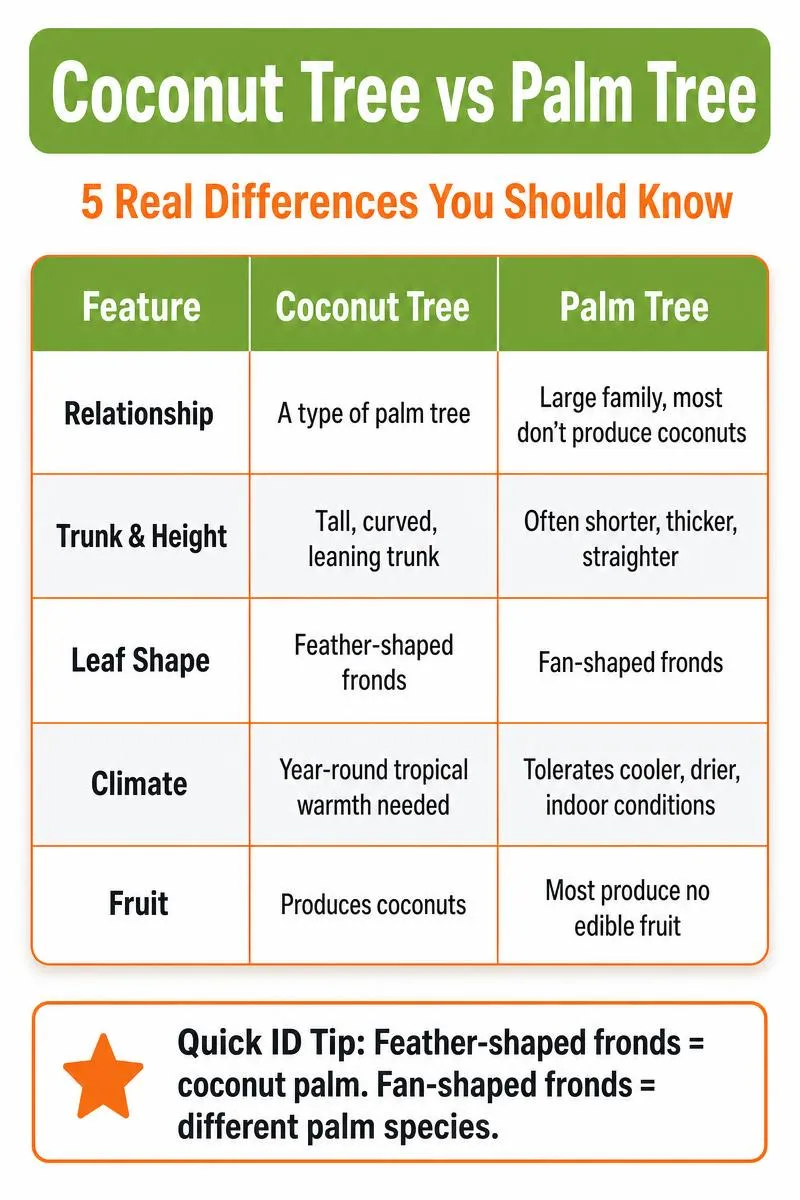
Coconut Tree Vs Palm Tree at a Glance
| Feature | Coconut Tree | Palm Tree |
|---|---|---|
| Relationship | A type of palm | Large family; most don’t produce coconuts |
| Trunk & Height | Tall, curved, leaning trunk | Often shorter, thicker, straighter |
| Leaf Shape | Feather-shaped fronds | Fan-shaped fronds |
| Climate | Year-round tropical warmth needed | Tolerates cooler, drier, indoor conditions |
| Fruit | Produces coconuts | Most produce no edible fruit |
What Is a Coconut Tree?
A coconut tree is Cocos nucifera – a single species with no close substitutes. Every coconut on a store shelf, in a curry paste, or cracked open on a beach came from it. When someone asks what a coconut tree is called, that botanical name is the answer.
Its best use is a tropical coastal planting aimed at homegrown coconut products. Few trees pay back so thoroughly: one palm yields food, water, oil, husk fiber, and timber.
The species wants steady tropical heat and reaches a large mature size. It also takes several years before the first harvest arrives.
Also Worth Checking Out
Coconut water vs sports drinks
A straight comparison of coconut water and sports drinks that helps readers understand coconut water-the coconut tree’s…
What Is a Palm Tree?
“Palm tree” covers an entire plant family, and the coconut palm is just one member. Date palms, fan palms, and a wide range of ornamental varieties share the label.
Their best use is landscaping, containers, and shade across many climates. The strength is the spread – sizes, shapes, and cold tolerance differ enormously between species.
The weakness shows up at snack time: most palms offer little or nothing edible, so a yard full of them still sends you to the store for coconut milk.
Coconut Tree vs Palm Tree: Fruit Production
Only Cocos nucifera makes true coconuts. Date palms make dates. Most ornamental palms make nothing worth cracking open.
Resort and subdivision palms rarely fruit because they’re usually not coconut palms in the first place. Landscapers pick showy species for looks and skip the falling-nut mess. Genuine coconut palms planted outside consistently warm zones may survive, but they won’t set reliable fruit.
Winner for anyone planning an actual harvest: the coconut tree, and it isn’t close.
Keep Reading
A focused comparison of oils from different palm species that explains how oil production and uses differ between…
Coconut Tree vs Palm Tree: Height and Trunk
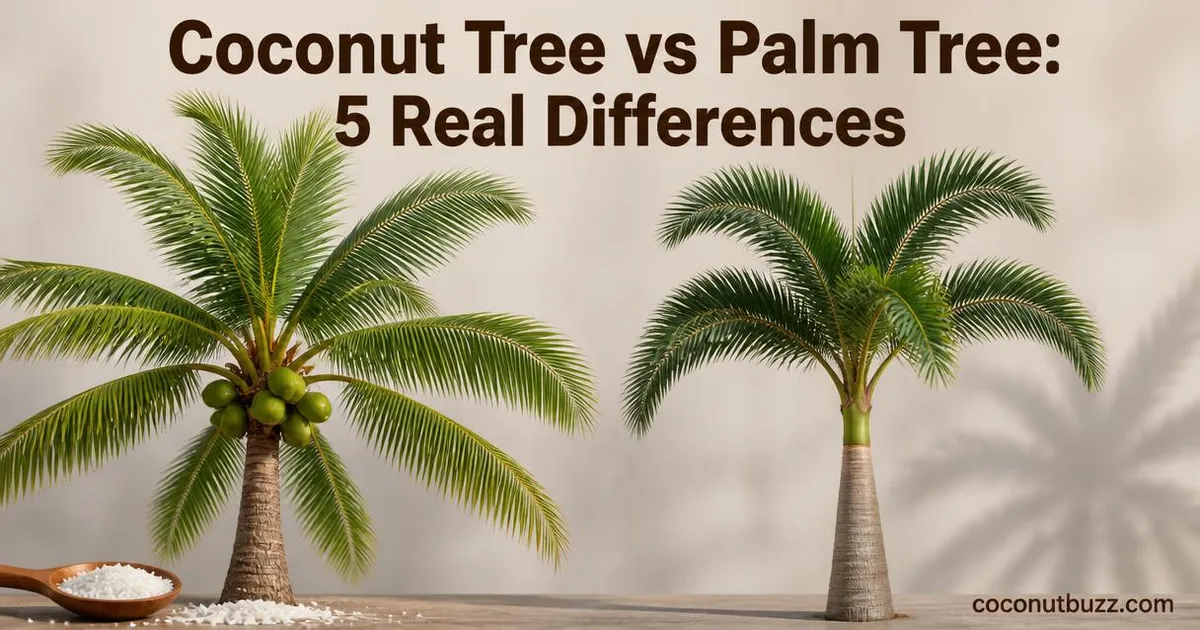
Coconut palms run tall and slim, with trunks that curve and lean as they grow. Many landscape palms stay shorter, thicker, and perfectly straight.
The deciding condition is clearance. Measure against roofs, pools, and power lines before choosing. A mature coconut palm leans over whatever sits below it; a shorter fan palm never will.
Coconut Tree vs Palm Tree: Leaves and Growth Habit
Fronds settle the identification fastest. Coconut palms carry feather-shaped fronds – narrow leaflets running down both sides of a central stem. Fan-shaped fronds, where the leaflets radiate from a single point, rule out coconut palms on sight.
You Might Also Like
A concise overview of possible side effects and cautions when using coconut-derived products, useful for readers…
Coconut Tree vs Palm Tree: Climate and Habitat
Coconut palms grow strictly in tropical coastal zones. In the United States, that limits outdoor planting to South Florida, Hawaii, Puerto Rico, and the Virgin Islands – anywhere winter brings frost, the tree dies. One cold snap is enough.
Other palms tolerate far wider territory. Desert-adapted date palms handle dry heat, and compact species such as the parlor palm and areca palm live indoors as houseplants.
The winner here is geographic. Match the tree to your map, not to the vacation photo you’re trying to recreate.
Coconut Tree vs Palm Tree: Everyday Uses
Coconut palms win on yield. One tree supplies cooking oil, coconut water, milk and cream for the kitchen, coir fiber from the husk, and trunk wood for building. Some sources suggest coconut water carries extra health benefits beyond plain hydration – the evidence is still early.
Other palms pull different duty: date palms feed, ornamentals decorate, and a few species supply specialty waxes or fibers. The verdict splits – coconut tree for yield, other palms for looks.
You Might Also Like
Practical tips and everyday uses for coconut oil that readers can explore after learning about differences in growth,…
Which Should You Choose?
- Frost-free tropical coast plus a craving for homegrown coconuts: plant a coconut palm.
- Cooler or marginal climate: choose a hardier palm species instead, because the coconut palm won’t survive winter.
- Small yard or container setup: pick a compact palm – a full-size coconut palm overwhelms both.
- Unknown palms already on the property: check trunk curve and frond shape before counting on coconuts.
FAQs About Coconut Trees and Palm Trees
Most mixups trace back to a few predictable questions about fruit, timing, and local rules.
1. Do all palm trees grow coconuts?
No. Only Cocos nucifera grows true coconuts. Date palms grow dates, and most ornamental species grow nothing edible.
2. Can you grow a tree from a grocery store coconut?
Sometimes. A fresh, unprocessed coconut with liquid still sloshing inside can sprout; dried or heat-treated ones cannot. Plant it on its side, half-buried, somewhere warm – and start with a few, because not every nut takes.
3. How long until a coconut tree bears coconuts?
Not quickly. A young palm usually needs several years of growth before its first usable crop, which is why nursery-started saplings beat seeds for impatient gardeners. Plan the wait into your decision the same way you plan the space.
4. Where in the US do coconut trees grow?
Outdoor coconut growing ends anywhere winters reach freezing – the frost line is the hard border. That leaves South Florida, Hawaii, Puerto Rico, and the US Virgin Islands as the only places it survives outdoors.
5. Is it illegal to pick up coconuts in Florida?
No statewide law bans collecting fallen coconuts. The catch is location: taking them from private property without permission risks trespass trouble, and many cities treat public trees as municipal property. Ask first unless the tree is clearly yours.
6. Can you eat coconuts from any palm tree?
No. Never assume a palm fruit is edible just because coconuts are. Dates are the famous exception, but identify the species before tasting anything.
7. Is a date palm the same as a coconut tree?
No. Date palms grow dates in hot, dry climates; coconut palms grow coconuts in humid tropics. Same family, different species, completely different fruit.
Final Thoughts
The matchup was never tree versus tree – it’s one species against an entire family, so the winner depends on the goal. Real coconuts for eating, drinking, oil, and fiber make the coconut palm the clear choice. Decoration, cold winters, or tight spaces favor the wider palm family.
Before buying anything, check winter lows against coconut palm needs. That single check saves years of waiting on a tree that was never going to fruit.
External References